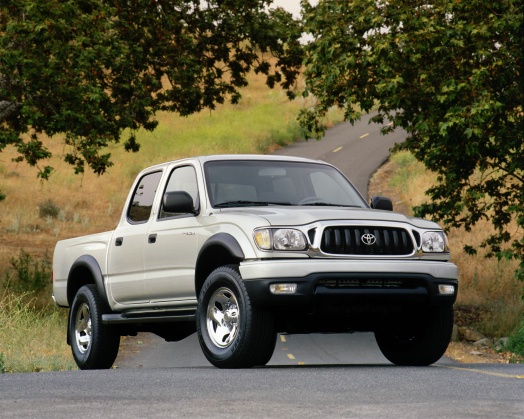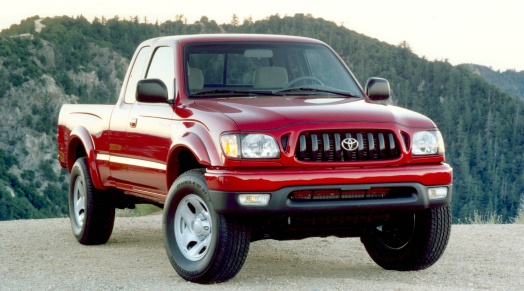
The Toyota Tacoma I xTracab, specifically the facelifted version released in 2000, represents a significant iteration in Toyota’s compact pickup truck lineage. Introduced as a replacement for the Hilux in the North American market, the Tacoma quickly gained popularity for its reliability, durability, and capable off-road performance. This generation, produced from 1995 to 2004, established the Tacoma as a dominant force in the mid-size truck segment, offering a blend of practicality and ruggedness that resonated with American buyers. The 2000 facelift brought subtle but important refinements to the original design, enhancing its appeal and solidifying its position against competitors like the Ford Ranger and Nissan Frontier.
Toyota Tacoma I xTracab (2000 Facelift): A Detailed Overview
The Tacoma I xTracab, particularly the 2000 facelift model, was designed to cater to a diverse range of needs, from daily commuting to demanding work tasks and recreational off-roading. The “xTracab” designation refers to the extended cab configuration, offering limited rear seating and additional storage space behind the front seats. This configuration provided a practical compromise for those needing occasional passenger capacity without the full size of a crew cab. The 2000 facelift included minor cosmetic updates, such as revised grille and headlight designs, and interior enhancements aimed at improving comfort and ergonomics.
Engine & Performance
The heart of the 2000 Toyota Tacoma xTracab is the 3.4-liter 5VZ-FE V6 engine. This naturally aspirated powerplant delivers 190 horsepower at 4800 rpm and 298 Nm (219.79 lb.-ft.) of torque at 3600 rpm. The engine’s longitudinal front-engine layout contributes to a balanced weight distribution, enhancing handling and stability. Power is delivered to all four wheels via a four-speed automatic transmission, providing smooth and reliable shifting. The 4WD system, a key feature of the Tacoma, allows for confident traction in a variety of terrains. While fuel economy isn’t a strong point – rated at approximately 13.8 l/100 km (17 US mpg) in urban conditions and 11.7 l/100 km (20.1 US mpg) on the highway – the Tacoma prioritizes durability and capability over fuel efficiency. The engine’s 9.6:1 compression ratio and multi-port fuel injection system contribute to its responsive performance and relatively smooth operation. The 5VZ-FE engine is renowned for its longevity and is often cited as a major factor in the Tacoma’s enduring reputation for reliability.
Design & Features
The 2000 Toyota Tacoma xTracab maintains the classic pickup truck silhouette, characterized by a robust body-on-frame construction. The two-door configuration and five-seat capacity offer a practical balance between passenger and cargo space. The truck’s dimensions – 5138 mm (202.28 in) in length, 1689 mm (66.5 in) in width, and 1715 mm (67.52 in) in height – position it squarely within the compact pickup truck segment. A key design element is the relatively high ride height (215 mm / 8.46 in), providing ample ground clearance for off-road adventures. Features for this era focused on functionality and durability. The interior, while not luxurious, was designed for practicality and ease of use. Safety features, while limited by the standards of the time, included ventilated front disc brakes and drum brakes in the rear. Tire sizes ranged from 205/75 R15 to 235/55 R16, depending on the trim level. The xTracab configuration offered a small rear bench seat, suitable for occasional passengers, and additional storage space behind the front seats. The Tacoma’s overall design emphasized ruggedness and functionality, appealing to buyers who needed a versatile and dependable truck.
Technical Specifications
| Brand | Toyota |
| Model | Tacoma |
| Generation | Tacoma I xTracab (facelift 2000) |
| Type (Engine) | 3.4 V6 (190 Hp) 4WD Automatic |
| Start of production | 2000 |
| End of production | 2004 |
| Powertrain Architecture | Internal Combustion engine |
| Body type | Pick-up |
| Seats | 5 |
| Doors | 2 |
| Fuel consumption (urban) | 13.8 l/100 km (17 US mpg) |
| Fuel consumption (extra urban) | 11.7 l/100 km (20.1 US mpg) |
| Fuel Type | Petrol (Gasoline) |
| Power | 190 Hp @ 4800 rpm |
| Torque | 298 Nm @ 3600 rpm (219.79 lb.-ft. @ 3600 rpm) |
| Engine layout | Front, Longitudinal |
| Engine Model/Code | 5VZ-FE |
| Engine displacement | 3378 cm3 (206.14 cu. in.) |
| Number of cylinders | 6 |
| Engine configuration | V-engine |
| Cylinder Bore | 93.4 mm (3.68 in.) |
| Piston Stroke | 82.04 mm (3.23 in.) |
| Compression ratio | 9.6:1 |
| Number of valves per cylinder | 4 |
| Fuel injection system | Multi-port manifold injection |
| Engine aspiration | Naturally aspirated engine |
| Valvetrain | DOHC |
| Max. weight | 2315 kg (5103.7 lbs.) |
| Fuel tank capacity | 68 l (17.96 US gal | 14.96 UK gal) |
| Length | 5138 mm (202.28 in.) |
| Width | 1689 mm (66.5 in.) |
| Height | 1715 mm (67.52 in.) |
| Wheelbase | 3096 mm (121.89 in.) |
| Front track | 1461 mm (57.52 in.) |
| Rear track | 1455 mm (57.28 in.) |
| Ride height (ground clearance) | 215 mm (8.46 in.) |
| Drive wheel | All wheel drive (4×4) |
| Number of gears and type of gearbox | 4 gears, automatic transmission |
| Front brakes | Ventilated discs |
| Rear brakes | Drum |
| Tires size | 205/75 R15; 235/55 R16 |
| Wheel rims size | 15; 16 |
The Toyota Tacoma I xTracab (2000 facelift) remains a popular choice among truck enthusiasts and those seeking a reliable and capable vehicle. Its blend of durability, off-road prowess, and practical design has cemented its place as a classic in the mid-size pickup truck segment. The 5VZ-FE engine’s reputation for longevity ensures that many of these trucks continue to provide years of dependable service.