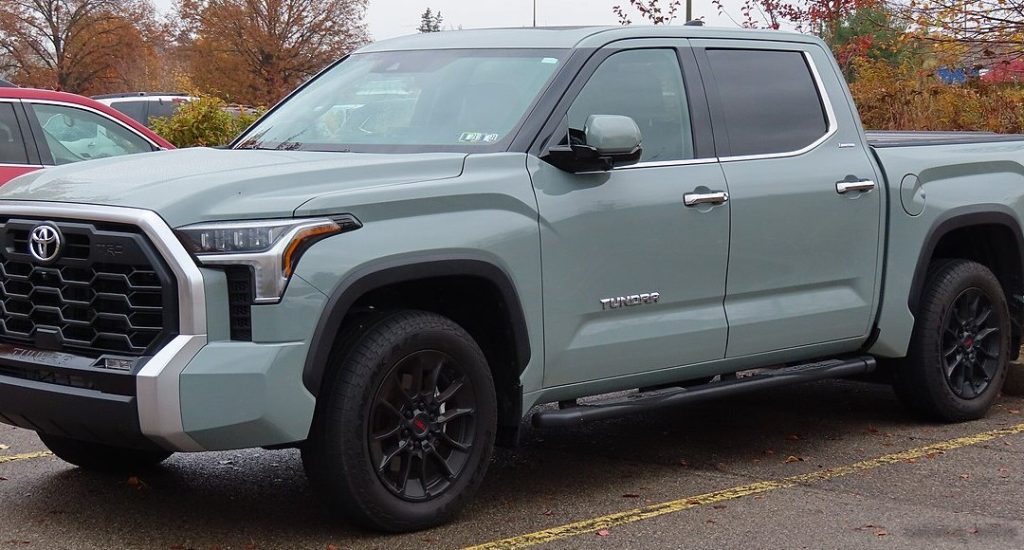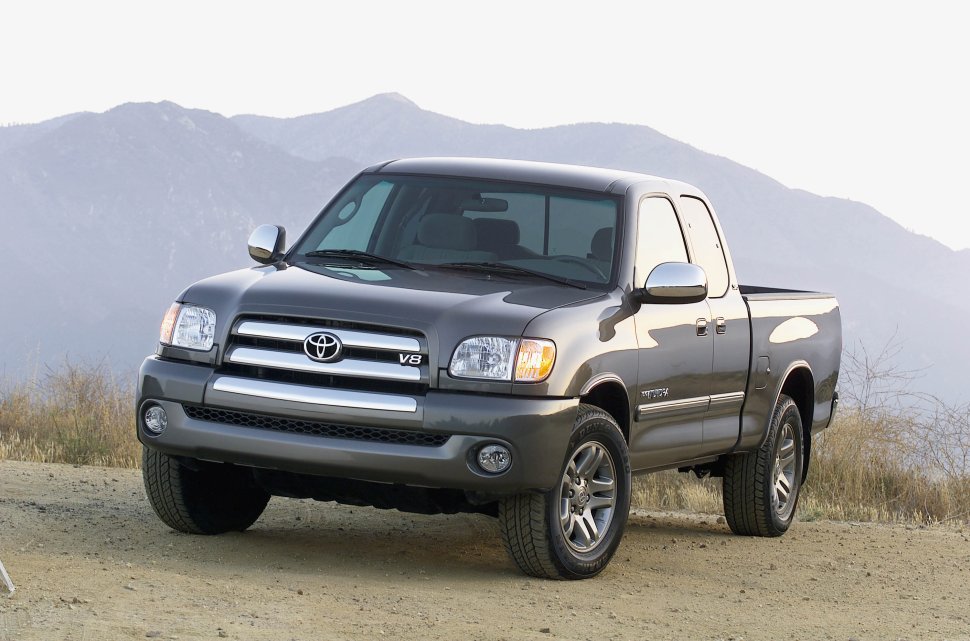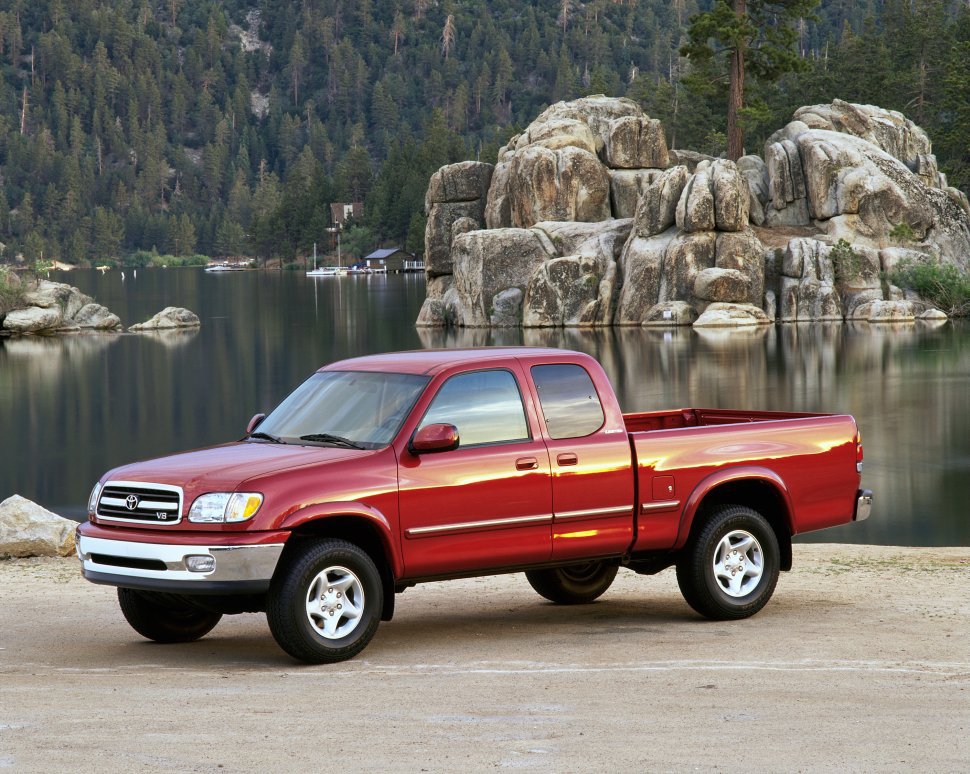
The Toyota Tundra I 3.4i 4×4, produced from 1999 to 2002, marked Toyota’s initial foray into the full-size pickup truck market in North America. Designed to compete with established American manufacturers like Ford, Chevrolet, and Dodge, the Tundra I represented a significant investment by Toyota to capture a share of this lucrative segment. This first-generation Tundra aimed to offer a blend of Japanese reliability, build quality, and a more refined driving experience compared to its domestic rivals. While not immediately a market leader, the Tundra I laid the groundwork for the Tundra’s eventual success and reputation as a dependable and capable truck.
Toyota Tundra I 3.4i: A New Contender
The Tundra I was a direct response to Toyota’s recognition of the growing demand for full-size pickups in the United States. Prior to the Tundra, Toyota had offered smaller trucks like the Hilux (sold as the Toyota Pickup in the US), but these were insufficient to meet the needs of buyers seeking a larger, more powerful vehicle. The Tundra was specifically engineered for the North American market, with a focus on providing ample interior space, towing capacity, and overall durability. It was available in a variety of configurations, including regular cab, extended cab (Access Cab), and various bed lengths, catering to a wide range of customer needs.
Engine & Performance
The 3.4i designation refers to the truck’s engine: a 3.4-liter (3378 cm3 or 206.14 cu. in.) V6 gasoline engine, internally known as the 5VZ-FE. This engine produced 190 horsepower at 4800 rpm and 298 Nm (219.79 lb.-ft.) of torque at 3600 rpm. While not the most powerful engine in its class, the 5VZ-FE was known for its smooth operation and reliability. The engine featured a double overhead camshaft (DOHC) valvetrain and multi-port fuel injection. Power was delivered to all four wheels via a 5-speed manual transmission in this configuration, providing the driver with full control. Acceleration from 0 to 60 mph was achieved in approximately 13.2 seconds, and the truck had a top speed of 170 km/h (105.63 mph). The weight-to-power ratio stood at 10.3 kg/Hp, and the weight-to-torque ratio was 6.6 kg/Nm.
Design & Features
The Toyota Tundra I was a conventional full-size pickup truck in terms of its body-on-frame construction. It featured a double-wishbone front suspension and a solid rear axle, providing a comfortable ride and adequate load-carrying capacity. The truck was available with either a standard cab or an extended Access Cab, offering increased passenger space and rear-seat access. Interior features were relatively basic compared to modern trucks, but included standard amenities such as air conditioning, power windows, and a sound system. Safety features for the time included front disc brakes and rear drum brakes. The Tundra I’s design was functional and utilitarian, prioritizing practicality over flashy styling. Ground clearance was a substantial 290 mm (11.42 in), and approach and departure angles were 28° and 23° respectively, enhancing its off-road capability. The truck’s dimensions were considerable, with a length of 5525 mm (217.52 in) and a width of 1910 mm (75.2 in).
Technical Specifications
| Brand | Toyota |
| Model | Tundra |
| Generation | Tundra I |
| Type (Engine) | 3.4i (190 Hp) 4×4 |
| Start of production | May, 1999 |
| End of production | 2002 |
| Powertrain Architecture | Internal Combustion engine |
| Body type | Pick-up |
| Seats | 5 |
| Doors | 4 |
| Fuel consumption (urban) | 16.8 l/100 km (14 US mpg, 16.8 UK mpg, 6 km/l) |
| Fuel consumption (extra urban) | 14.7 l/100 km (16 US mpg, 19.2 UK mpg, 6.8 km/l) |
| Fuel consumption (combined) | 15.6 l/100 km (15.1 US mpg, 18.1 UK mpg, 6.4 km/l) |
| Fuel Type | Petrol (Gasoline) |
| Acceleration 0 – 100 km/h | 13.9 sec |
| Acceleration 0 – 62 mph | 13.9 sec |
| Acceleration 0 – 60 mph | 13.2 sec |
| Maximum speed | 170 km/h (105.63 mph) |
| Weight-to-power ratio | 10.3 kg/Hp |
| Weight-to-torque ratio | 6.6 kg/Nm |
| Power | 190 Hp @ 4800 rpm |
| Torque | 298 Nm @ 3600 rpm (219.79 lb.-ft. @ 3600 rpm) |
| Engine layout | Front, Longitudinal |
| Engine Model/Code | 5VZ-FE |
| Engine displacement | 3378 cm3 (206.14 cu. in.) |
| Number of cylinders | 6 |
| Engine configuration | V-engine |
| Cylinder Bore | 93.4 mm (3.68 in.) |
| Piston Stroke | 82 mm (3.23 in.) |
| Compression ratio | 9.6:1 |
| Number of valves per cylinder | 4 |
| Fuel injection system | Multi-port manifold injection |
| Engine aspiration | Naturally aspirated engine |
| Valvetrain | DOHC |
| Engine oil capacity | 5.2 l (5.49 US qt | 4.58 UK qt) |
| Coolant capacity | 9.9 l (10.46 US qt | 8.71 UK qt) |
| Kerb Weight | 1959 kg (4318.86 lbs.) |
| Max. weight | 2722 kg (6000.98 lbs.) |
| Max load | 763 kg (1682.13 lbs.) |
| Fuel tank capacity | 100 l (26.42 US gal | 22 UK gal) |
| Permitted trailer load with brakes (12%) | 2268 kg (5000.08 lbs.) |
| Length | 5525 mm (217.52 in.) |
| Width | 1910 mm (75.2 in.) |
| Height | 1825-1835 mm (71.85 – 72.24 in.) |
| Wheelbase | 3260 mm (128.35 in.) |
| Front track | 1675 mm (65.94 in.) |
| Rear track | 1648 mm (64.88 in.) |
| Ride height (ground clearance) | 290 mm (11.42 in.) |
| Number of gears | 5 |
| Type of gearbox | Manual transmission |
The Toyota Tundra I 3.4i 4×4, while not a revolutionary vehicle, was a crucial step for Toyota in establishing itself as a serious player in the full-size pickup truck market. Its blend of reliability, practicality, and a relatively comfortable ride appealed to a growing number of buyers, and it paved the way for the more refined and capable Tundra models that followed. The Tundra I remains a popular choice among truck enthusiasts seeking a dependable and affordable workhorse.