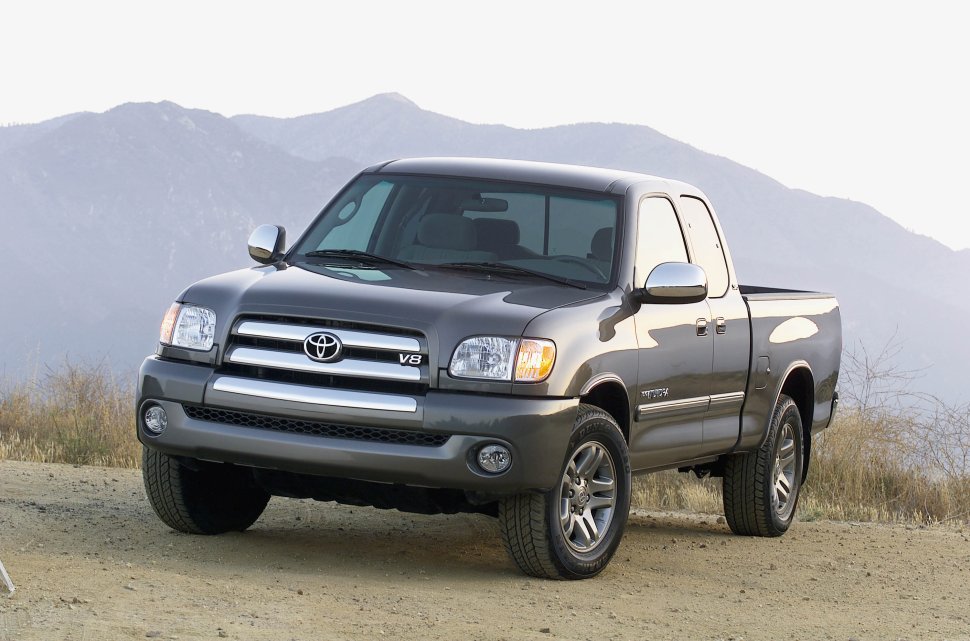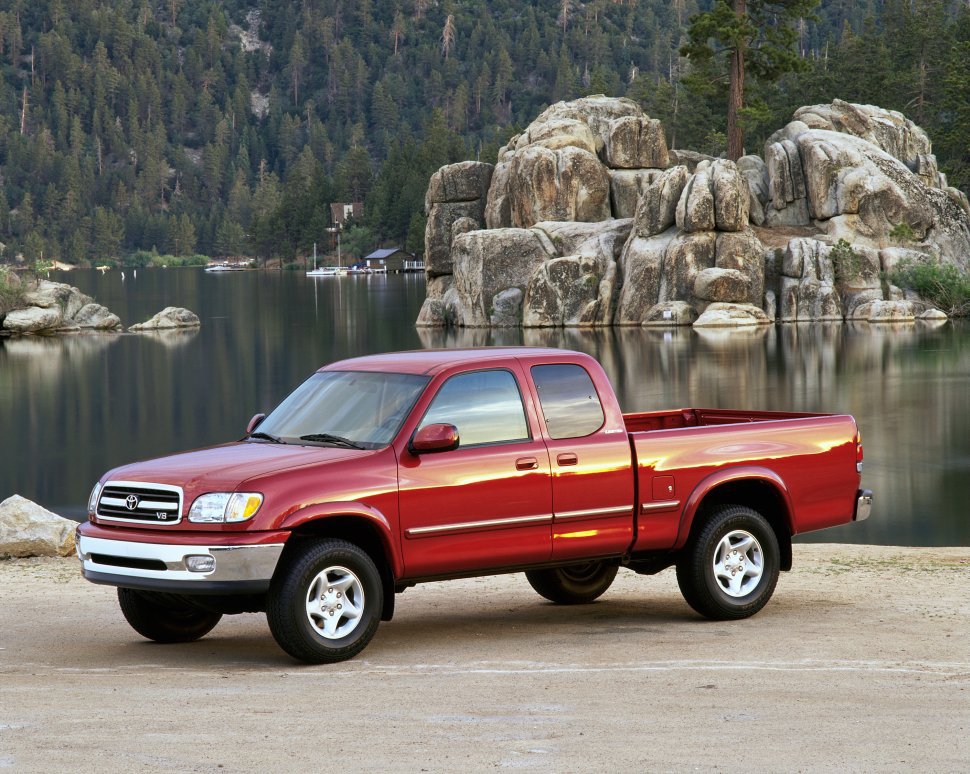
The Toyota Tundra, launched in 1999 as a 2000 model year vehicle, represented Toyota’s initial foray into the full-size pickup truck market in North America. Designed to compete with established American manufacturers like Ford, Chevrolet, and Dodge, the first-generation Tundra (designated the Tundra I, produced from 1999-2006) aimed to offer a blend of Japanese reliability, refinement, and capability. The 4.7i V8 4×4 Automatic model, producing 245 horsepower, was a key variant within the lineup, targeting buyers seeking a powerful and versatile truck for both work and personal use. This generation Tundra was significant for its larger size compared to the compact pickups Toyota previously offered in the US, and it laid the groundwork for the Tundra’s eventual success as a major player in the full-size truck segment.
Toyota Tundra I 4.7i V8: An Overview
The Tundra I was available in a variety of configurations, including different cab styles (Regular Cab, Access Cab, and CrewMax – the latter introduced later in the generation’s run) and bed lengths. The 4.7i V8 4×4 Automatic model typically came with a standard four-door (Access Cab) configuration, offering increased passenger space and practicality. It was positioned as a premium offering within the Tundra range, emphasizing performance and all-weather capability through its four-wheel-drive system. While not initially a market leader, the Tundra I gained a reputation for durability and build quality, attracting customers who were dissatisfied with the reliability issues sometimes associated with domestic trucks of the era.
Engine & Performance
The heart of the Tundra I 4.7i V8 4×4 Automatic is the 2UZ-FE 4.7-liter V8 engine. This naturally aspirated powerplant delivers 245 horsepower at 4800 rpm and 427 Nm (314.94 lb.-ft.) of torque at 3400 rpm. The engine features a robust cast-iron block and aluminum cylinder heads, contributing to its longevity. Power is delivered to all four wheels via a four-speed automatic transmission. The weight-to-power ratio of 8.4 kg/Hp (119.6 Hp/tonne) provides adequate acceleration, while the weight-to-torque ratio of 4.8 kg/Nm (208.4 Nm/tonne) ensures strong pulling power. Fuel economy, however, is relatively low by modern standards, averaging 16.8 l/100 km (14 US mpg) in combined driving conditions. City driving yields approximately 18 l/100 km (13.1 US mpg), while highway driving improves to 14.7 l/100 km (16 US mpg). The engine utilizes a multi-port fuel injection system and a Double Overhead Camshaft (DOHC) valvetrain, optimizing combustion efficiency.
Design & Features
The Toyota Tundra I adopted a conventional pickup truck design, prioritizing functionality and ruggedness. The body-on-frame construction provided a solid foundation for hauling and towing. The 4.7i V8 4×4 Automatic model typically featured a spacious cabin with seating for five passengers. Standard features included air conditioning, power windows and locks, and an AM/FM stereo. Safety features, while limited by the standards of the time, included front disc brakes and a driver-side airbag. The truck’s exterior styling was conservative, aiming to appeal to a broad range of buyers. Ground clearance of 284 mm (11.18 in) and approach/departure angles of 28° and 23° respectively, provided reasonable off-road capability. The Tundra’s interior focused on practicality and durability, with materials chosen for their resistance to wear and tear. The truck’s dimensions – a length of 5525 mm (217.52 in), a width of 1910 mm (75.2 in), and a height ranging from 1825-1835 mm (71.85 – 72.24 in) – positioned it firmly within the full-size pickup truck category.
Technical Specifications
| Brand | Toyota |
| Model | Tundra |
| Generation | Tundra I |
| Type (Engine) | 4.7i V8 (245 Hp) 4×4 Automatic |
| Start of production | May, 1999 |
| End of production | 2002 |
| Powertrain Architecture | Internal Combustion engine |
| Body type | Pick-up |
| Seats | 5 |
| Doors | 4 |
| Fuel consumption (economy) – urban | 18 l/100 km (13.1 US mpg, 15.7 UK mpg) |
| Fuel consumption (economy) – extra urban | 14.7 l/100 km (16 US mpg, 19.2 UK mpg) |
| Fuel consumption (economy) – combined | 16.8 l/100 km (14 US mpg, 16.8 UK mpg) |
| Fuel Type | Petrol (Gasoline) |
| Weight-to-power ratio | 8.4 kg/Hp |
| Weight-to-torque ratio | 4.8 kg/Nm |
| Power | 245 Hp @ 4800 rpm |
| Torque | 427 Nm @ 3400 rpm (314.94 lb.-ft. @ 3400 rpm) |
| Engine layout | Front, Longitudinal |
| Engine Model/Code | 2UZ-FE |
| Engine displacement | 4664 cm3 (284.61 cu. in.) |
| Number of cylinders | 8 |
| Engine configuration | V-engine |
| Cylinder Bore | 94 mm (3.7 in.) |
| Piston Stroke | 84 mm (3.31 in.) |
| Compression ratio | 9.6:1 |
| Number of valves per cylinder | 4 |
| Fuel injection system | Multi-port manifold injection |
| Engine aspiration | Naturally aspirated engine |
| Valvetrain | DOHC |
| Engine oil capacity | 6.1 l (6.45 US qt | 5.37 UK qt) |
| Coolant | 11.6 l (12.26 US qt | 10.21 UK qt) |
| Kerb Weight | 2049 kg (4517.27 lbs.) |
| Max. weight | 2735 kg (6029.64 lbs.) |
| Max load | 686 kg (1512.37 lbs.) |
| Fuel tank capacity | 100 l (26.42 US gal | 22 UK gal) |
| Permitted trailer load with brakes (12%) | 3220 kg (7098.88 lbs.) |
| Length | 5525 mm (217.52 in.) |
| Width | 1910 mm (75.2 in.) |
| Height | 1825-1835 mm (71.85 – 72.24 in.) |
| Wheelbase | 3260 mm (128.35 in.) |
| Front track | 1675 mm (65.94 in.) |
| Rear (Back) track | 1648 mm (64.88 in.) |
| Ride height (ground clearance) | 284 mm (11.18 in.) |
| Minimum turning circle (turning diameter) | 13.5 m (44.29 ft.) |
| Approach angle | 28° |
| Departure angle | 23° |
| Drive wheel | All wheel drive (4×4) |
| Number of gears and type of gearbox | 4 gears, automatic transmission |
| Front suspension | Double wishbone |
| Front brakes | Ventilated discs |
| Rear brakes | Drum |
| Tires size | 245/70 R16; 265/70 R16 |
| Wheel rims size | 7.0J x 16 |
The Toyota Tundra I 4.7i V8 4×4 Automatic, while superseded by later generations, remains a significant vehicle in Toyota’s history. It demonstrated the company’s commitment to entering and competing in the lucrative North American full-size truck market, and its reputation for reliability helped establish the Tundra as a credible alternative to domestic offerings.