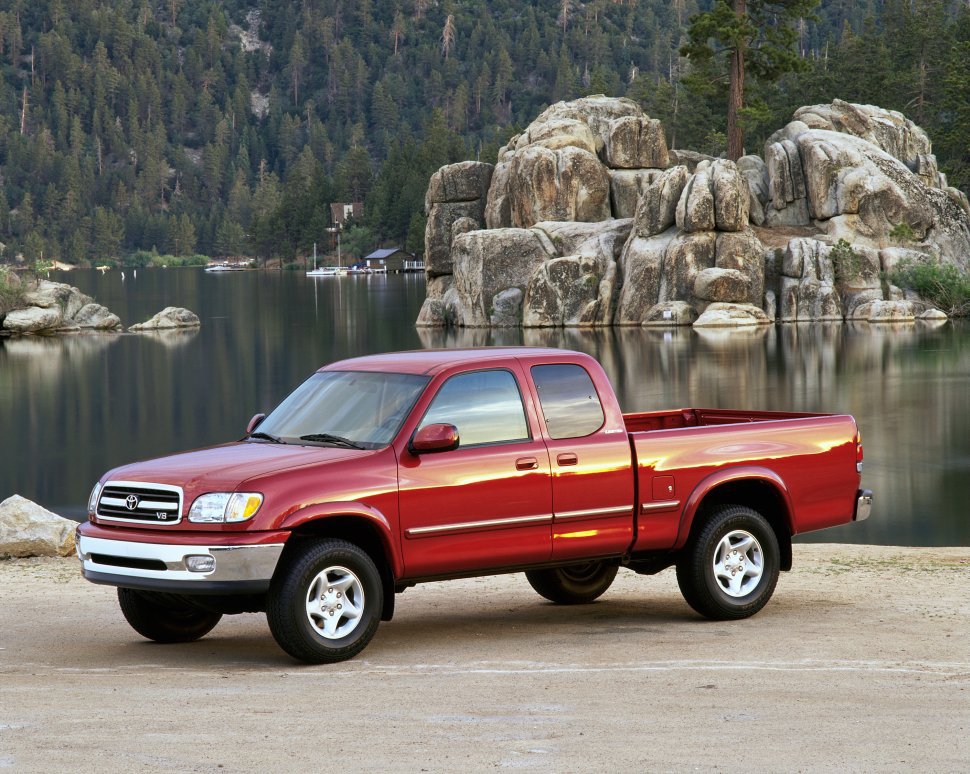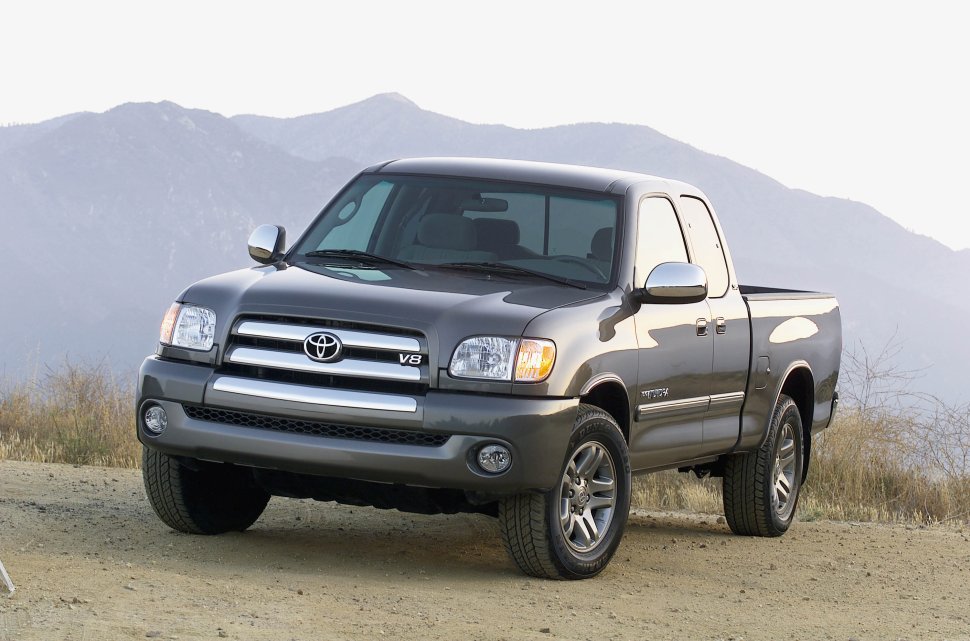
The Toyota Tundra, launched in 1999, represented Toyota’s initial full-size pickup truck offering, specifically designed to penetrate the highly competitive North American market. The first generation, designated the Tundra I, was a significant undertaking for Toyota, aiming to provide a vehicle capable of matching the capabilities and durability of established American manufacturers like Ford, Chevrolet, and Dodge. The 2002 facelift brought refinements to the original design, enhancing both aesthetics and functionality. The Tundra I Access Cab, with its extended cab configuration, offered increased passenger space and versatility, appealing to buyers needing both work capabilities and family transport. This model competed directly with extended cab offerings from domestic brands, focusing on reliability and a comfortable ride as key selling points.
Toyota Tundra I Access Cab (2002-2004)
The 2002-2004 Toyota Tundra I Access Cab facelift continued to build on the foundation laid by the original Tundra, offering a robust and dependable full-size pickup. The Access Cab configuration, distinguished by its longer cab, provided seating for up to five passengers, making it a more practical option for families or crews. This generation Tundra aimed to balance the ruggedness expected of a pickup truck with the refinement and reliability Toyota was already known for. It served as a crucial stepping stone for Toyota in establishing a strong foothold in the full-size truck segment, paving the way for subsequent generations.
Engine & Performance
The 2002-2004 Toyota Tundra I Access Cab facelift was primarily equipped with the 3.4-liter 5VZ-FE V6 engine. This naturally aspirated engine produced 190 horsepower at 4800 rpm and 298 Nm (219.79 lb.-ft.) of torque at 3600 rpm. The engine featured a double overhead camshaft (DOHC) valvetrain and multi-port fuel injection. Power was delivered to all four wheels via a four-speed automatic transmission with ECT (Electronic Control Transmission) functionality. The longitudinal engine layout contributed to a balanced weight distribution. The weight-to-power ratio of 10.7 kg/Hp and a weight-to-torque ratio of 6.8 kg/Nm provided adequate performance for typical pickup truck duties. Fuel economy was rated at 15.6 l/100 km (15.1 US mpg) in urban driving and 13 l/100 km (18.1 US mpg) in extra-urban conditions. The 3.4-liter engine was known for its durability and relatively smooth operation, contributing to the Tundra’s reputation for reliability.
Design & Features
The Toyota Tundra I Access Cab was a traditional body-on-frame pickup truck, offering a robust and durable construction. The Access Cab configuration featured four doors and a longer cab than the standard cab models, providing increased rear passenger space. The truck bed offered a substantial 2625 liters (92.7 cu. ft.) of cargo volume. The interior was designed with practicality in mind, featuring durable materials and a functional layout. Safety features for the time included ABS (Anti-lock Braking System). The suspension consisted of a double wishbone setup at the front and a leaf spring arrangement at the rear, providing a balance between ride comfort and load-carrying capacity. The Tundra’s styling was conservative, aiming for a blend of ruggedness and contemporary aesthetics. Ground clearance was a generous 289 mm (11.38 in), enhancing its off-road capability. The Tundra’s approach and departure angles of 28° and 23° respectively, further aided its ability to navigate challenging terrain.
Technical Specifications
| Brand | Toyota |
| Model | Tundra |
| Generation | Tundra I Access Cab (facelift 2002) |
| Type (Engine) | 3.4i (190 Hp) 4×4 Automatic |
| Start of production | 2002 |
| End of production | 2004 |
| Powertrain Architecture | Internal Combustion engine |
| Body type | Pick-up |
| Seats | 5 |
| Doors | 4 |
| Fuel consumption (urban) | 15.6 l/100 km (15.1 US mpg, 18.1 UK mpg) |
| Fuel consumption (extra urban) | 13 l/100 km (18.1 US mpg, 21.7 UK mpg) |
| Fuel Type | Petrol (Gasoline) |
| Weight-to-power ratio | 10.7 kg/Hp |
| Weight-to-torque ratio | 6.8 kg/Nm |
| Power | 190 Hp @ 4800 rpm |
| Torque | 298 Nm @ 3600 rpm (219.79 lb.-ft. @ 3600 rpm) |
| Engine layout | Front, Longitudinal |
| Engine Model/Code | 5VZ-FE |
| Engine displacement | 3378 cm3 (206.14 cu. in.) |
| Number of cylinders | 6 |
| Engine configuration | V-engine |
| Cylinder Bore | 93.4 mm (3.68 in.) |
| Piston Stroke | 82 mm (3.23 in.) |
| Compression ratio | 9.6:1 |
| Number of valves per cylinder | 4 |
| Fuel injection system | Multi-port manifold injection |
| Engine aspiration | Naturally aspirated |
| Valvetrain | DOHC |
| Engine oil capacity | 5.2 l (5.49 US qt | 4.58 UK qt) |
| Coolant capacity | 9.9 l (10.46 US qt | 8.71 UK qt) |
| Kerb Weight | 2032 kg (4479.79 lbs.) |
| Max. weight | 2721 kg (5998.78 lbs.) |
| Max load | 689 kg (1518.98 lbs.) |
| Trunk (boot) space – maximum | 2625 l (92.7 cu. ft.) |
| Fuel tank capacity | 100 l (26.42 US gal | 22 UK gal) |
| Permitted trailer load with brakes (12%) | 2177 kg (4799.46 lbs.) |
| Length | 5545 mm (218.31 in.) |
| Width | 1910 mm (75.2 in.) |
| Height | 1816 mm (71.5 in.) |
| Wheelbase | 3259 mm (128.31 in.) |
| Front track | 1673 mm (65.87 in.) |
| Rear (Back) track | 1648 mm (64.88 in.) |
| Ride height (ground clearance) | 289 mm (11.38 in.) |
| Minimum turning circle | 13.6 m (44.62 ft.) |
| Approach angle | 28° |
| Departure angle | 23° |
| Drive wheel | All wheel drive (4×4) |
| Number of gears and type of gearbox | 4 gears, automatic transmission ECT |
| Front suspension | Double wishbone |
| Rear suspension | Leaf spring |
| Front brakes | Ventilated discs |
| Rear brakes | Drum |
| Assisting systems | ABS (Anti-lock braking system) |
| Steering type | Steering rack and pinion |
| Tires size | 245/70 R16 |
| Wheel rims size | 7.0J x 16 |