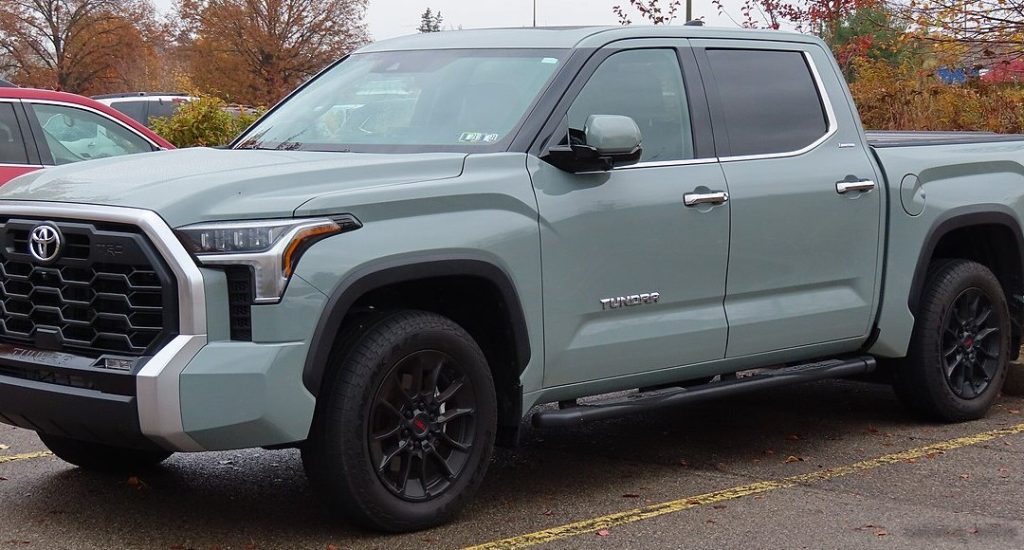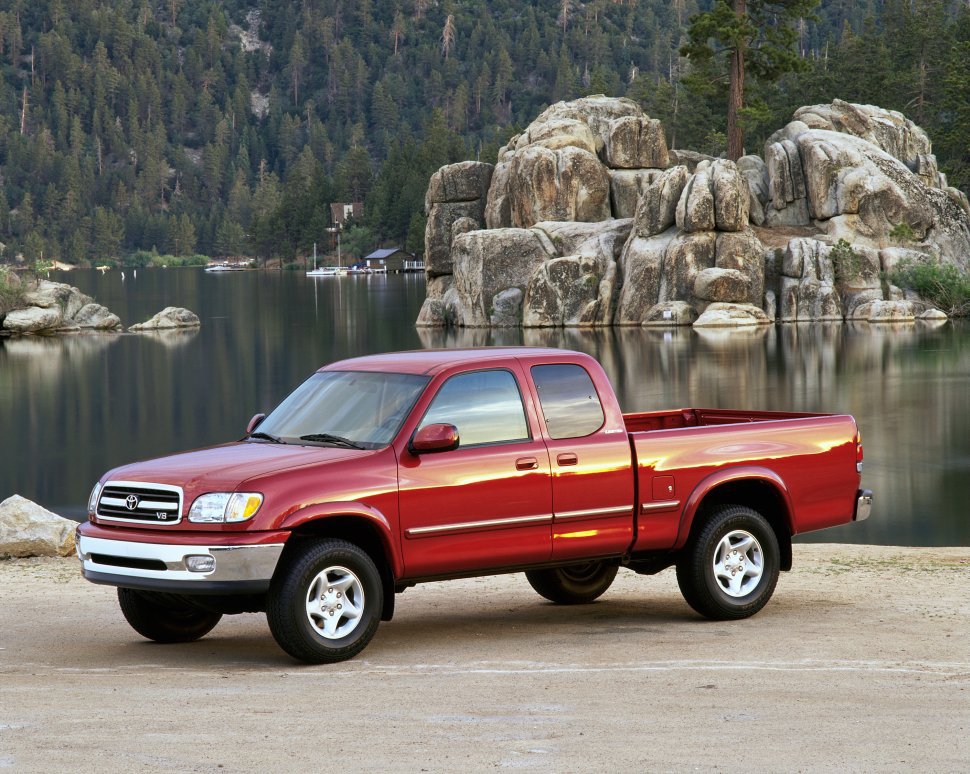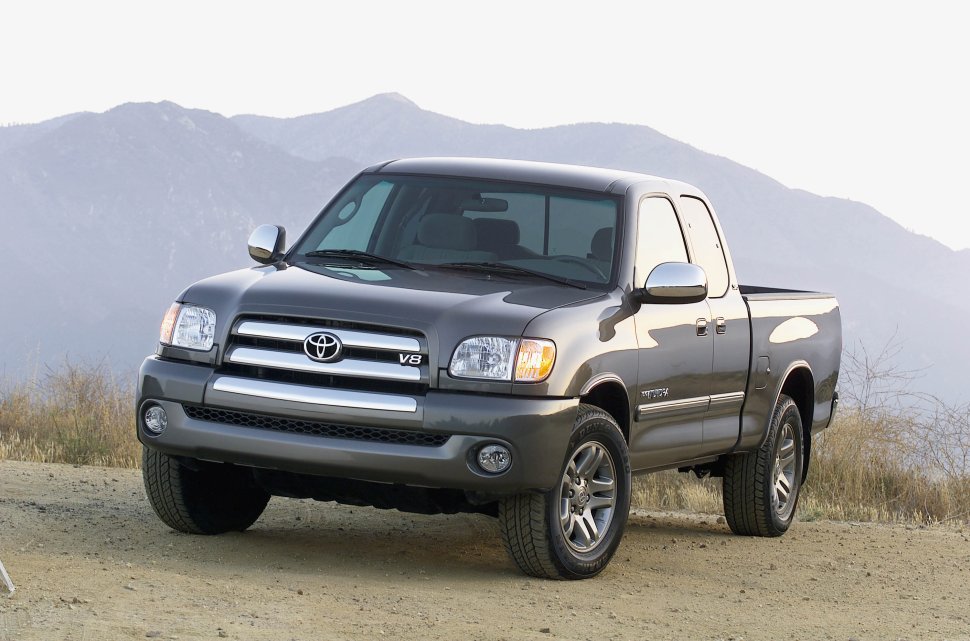
The Toyota Tundra, launched in 1999, represented Toyota’s initial foray into the full-size pickup truck market in North America. Designed specifically to appeal to American truck buyers, the Tundra aimed to offer a blend of Japanese reliability, robust construction, and competitive features. The first generation, designated the Tundra I, underwent a significant facelift in 2002, refining its styling and enhancing its capabilities. The 2002-2004 facelifted Tundra I Access Cab, equipped with the 4.0i V6 engine and automatic transmission, became a popular choice for those seeking a versatile and dependable truck. This model occupied the mid-range segment of the full-size pickup market, offering a balance between work capability and everyday usability.
Toyota Tundra I Access Cab (2002-2004): A Detailed Overview
The facelifted Toyota Tundra I Access Cab, produced from 2002 to 2004, built upon the foundation of the original Tundra, addressing some initial criticisms and improving overall refinement. The Access Cab configuration added a smaller rear seat and extended cab, increasing passenger capacity and interior storage flexibility. This version of the Tundra was primarily sold in North America, where it competed with established domestic brands like Ford, Chevrolet, and Dodge. It was not widely available in other global markets, as Toyota’s pickup strategy varied by region.
Engine & Performance
The heart of the 2002-2004 Tundra I Access Cab was the 1GR-FE 4.0-liter V6 engine. This naturally aspirated powerplant produced 245 horsepower at 5200 rpm and 382 Nm (281.75 lb.-ft.) of torque at 3800 rpm. The engine featured a double overhead camshaft (DOHC) valvetrain with four valves per cylinder and multi-port fuel injection. This configuration delivered a respectable power-to-weight ratio of 8.3 kg/Hp and a torque-to-weight ratio of 5.4 kg/Nm. The engine’s displacement of 3956 cm3 (241.41 cu. in.) provided ample low-end torque for towing and hauling, while the V6 configuration contributed to relatively smooth operation. Power was delivered to the rear wheels via a 5-speed automatic transmission with ECT (Electronic Control Transmission) functionality. Fuel economy was rated at 13 l/100 km (18.1 US mpg) in urban driving and 10.6 l/100 km (22.2 US mpg) on the highway.
Design & Features
The 2002 facelift brought subtle but noticeable changes to the Tundra’s exterior styling, including a revised grille, headlights, and front bumper. The Access Cab body style featured four doors and seating for five passengers. The truck bed offered a generous 2625 liters (92.7 cu. ft.) of cargo space. The interior was designed with practicality in mind, featuring durable materials and a functional layout. While not luxurious, the cabin offered a comfortable driving experience. Safety features for the time included ABS (Anti-lock Braking System), which was standard equipment. The Tundra’s robust frame and suspension were designed to handle demanding workloads and provide a comfortable ride, even when heavily loaded. The ride height, or ground clearance, was a substantial 264 mm (10.39 in), enhancing its off-road capability. The Tundra’s approach and departure angles of 27° and 23° respectively, further aided in navigating challenging terrain.
Technical Specifications
| Brand | Toyota |
| Model | Tundra |
| Generation | Tundra I Access Cab (facelift 2002) |
| Type (Engine) | 4.0i V6 (245 Hp) Automatic |
| Start of production | 2002 |
| End of production | 2004 |
| Powertrain Architecture | Internal Combustion engine |
| Body type | Pick-up |
| Seats | 5 |
| Doors | 4 |
| Fuel consumption (urban) | 13 l/100 km (18.1 US mpg) |
| Fuel consumption (extra urban) | 10.6 l/100 km (22.2 US mpg) |
| Fuel Type | Petrol (Gasoline) |
| Weight-to-power ratio | 8.3 kg/Hp |
| Weight-to-torque ratio | 5.4 kg/Nm |
| Power | 245 Hp @ 5200 rpm |
| Torque | 382 Nm @ 3800 rpm (281.75 lb.-ft. @ 3800 rpm) |
| Engine layout | Front, Longitudinal |
| Engine Model/Code | 1GR-FE |
| Engine displacement | 3956 cm3 (241.41 cu. in.) |
| Number of cylinders | 6 |
| Engine configuration | V-engine |
| Cylinder Bore | 94 mm (3.7 in.) |
| Piston Stroke | 95 mm (3.74 in.) |
| Compression ratio | 10:1 |
| Number of valves per cylinder | 4 |
| Fuel injection system | Multi-port manifold injection |
| Engine aspiration | Naturally aspirated |
| Valvetrain | DOHC |
| Engine oil capacity | 6.2 l (6.55 US qt | 5.46 UK qt) |
| Coolant capacity | 11.7 l (12.36 US qt | 10.29 UK qt) |
| Kerb Weight | 2045 kg (4508.45 lbs.) |
| Max. weight | 2857 kg (6298.61 lbs.) |
| Max load | 812 kg (1790.15 lbs.) |
| Trunk (boot) space – maximum | 2625 l (92.7 cu. ft.) |
| Fuel tank capacity | 100 l (26.42 US gal | 22 UK gal) |
| Permitted trailer load with brakes (12%) | 3221 kg (7101.09 lbs.) |
| Length | 5545 mm (218.31 in.) |
| Width | 1910 mm (75.2 in.) |
| Height | 1796 mm (70.71 in.) |
| Wheelbase | 3259 mm (128.31 in.) |
| Front track | 1681 mm (66.18 in.) |
| Rear (Back) track | 1648 mm (64.88 in.) |
| Ride height (ground clearance) | 264 mm (10.39 in.) |
| Minimum turning circle | 13.6 m (44.62 ft.) |
| Drivetrain Architecture | Rear wheel drive |
| Number of gears and type of gearbox | 5 gears, automatic transmission ECT |
| Front suspension | Double wishbone |
| Rear suspension | Leaf spring |
| Front brakes | Ventilated discs |
| Rear brakes | Drum |
| Assisting systems | ABS (Anti-lock braking system) |
| Steering type | Steering rack and pinion |
| Tires size | 245/70 R16 |
| Wheel rims size | 7.0J x 16 |
The 2002-2004 Toyota Tundra I Access Cab with the 4.0i V6 engine and automatic transmission offered a compelling package for truck buyers seeking a reliable, capable, and reasonably priced full-size pickup. While it may not have possessed the outright performance of some competitors, its durability and reputation for long-term dependability cemented its place in the North American truck market.