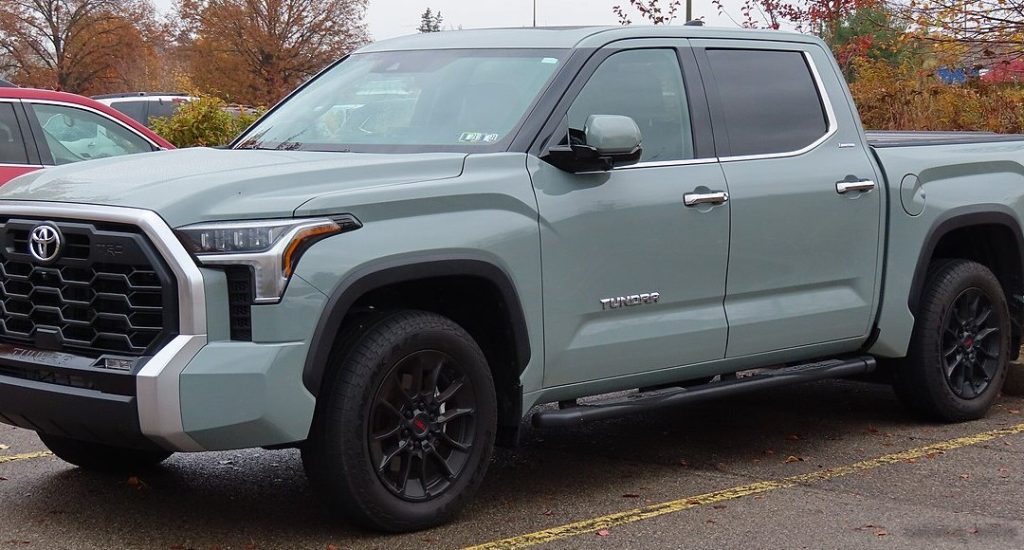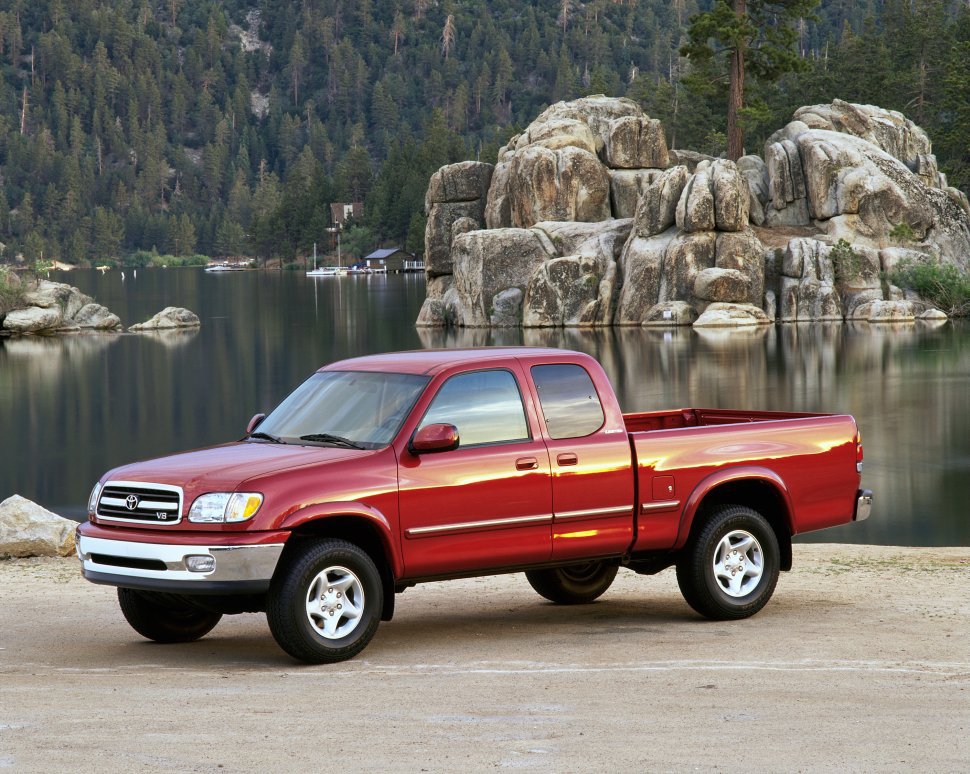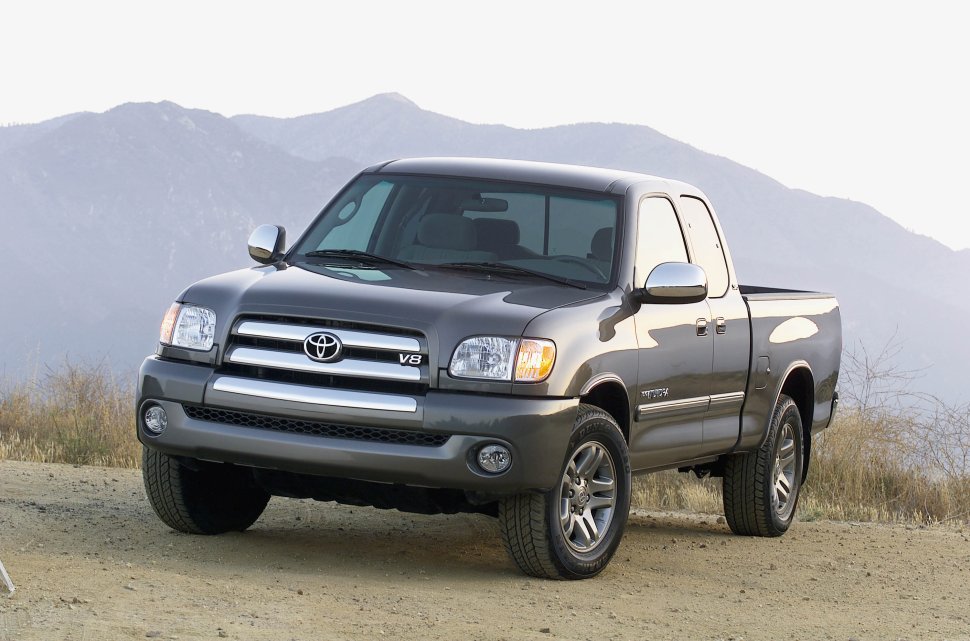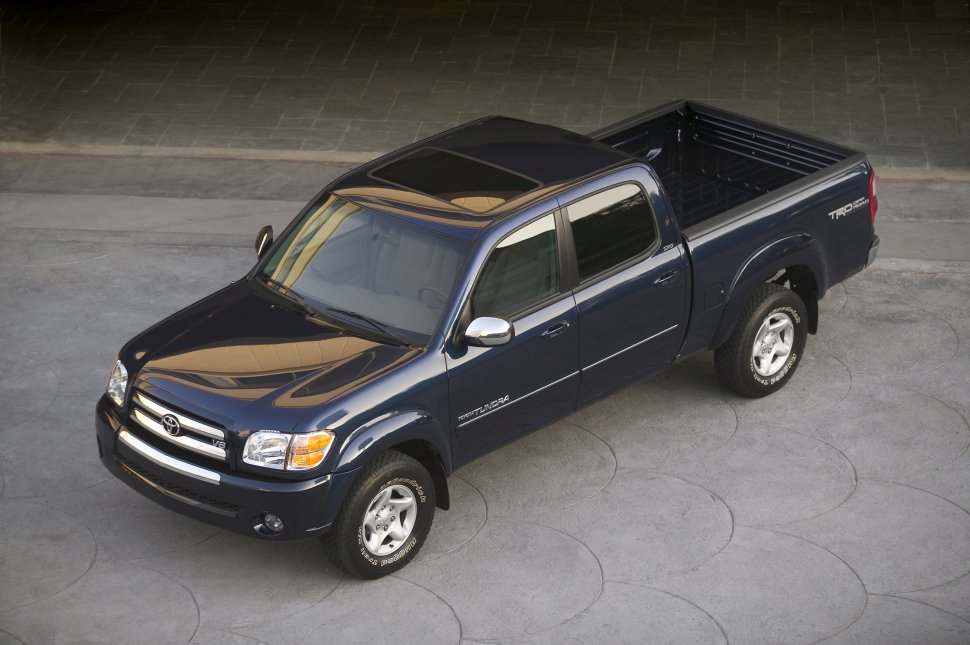
The Toyota Tundra I Double Cab (facelift 2002) SR5 4.7i V8 4×4 Automatic represents Toyota’s initial foray into the full-size pickup truck market in North America. Introduced in 2000 and receiving a significant facelift in 2002, the first-generation Tundra was designed to challenge established domestic manufacturers like Ford, Chevrolet, and Dodge. The 2005-2006 model year, specifically the SR5 trim with the 4.7-liter V8 engine, offered a compelling combination of power, space, and reliability. This model aimed to provide a more refined and import-inspired alternative within the traditionally rugged American pickup segment.
Toyota Tundra I Double Cab: A North American Contender
The Tundra was a pivotal vehicle for Toyota, demonstrating their commitment to understanding and catering to the specific needs of the American truck buyer. Unlike smaller pickups previously offered by Toyota, the Tundra was designed from the ground up to be a full-size vehicle, capable of competing directly with the dominant players in the market. The Double Cab configuration, introduced to offer increased passenger space, was particularly popular with families and those needing to transport both people and cargo. The 2002 facelift brought updated styling and refinements to the original design, enhancing its appeal and competitiveness.
Engine & Performance
At the heart of the 2005-2006 Tundra SR5 4.7i is the 2UZ-FE 4.7-liter V8 engine. This naturally aspirated powerplant produces 282 horsepower at 5400 rpm and 441 Newton-meters (325.26 lb.-ft.) of torque at 3400 rpm. The engine features a longitudinal front engine layout, a 9.6:1 compression ratio, and a double overhead camshaft (DOHC) valvetrain with four valves per cylinder. Fuel is delivered via a multi-port manifold injection system. This configuration provides a balance of power and reliability, suitable for both everyday driving and demanding tasks like towing. The engine’s power-to-weight ratio is 8 kg/Hp, or 125.2 Hp/tonne, while the torque-to-weight ratio is 5.1 kg/Nm, or 195.8 Nm/tonne. The engine has a displacement of 4664 cm3 (284.61 cu. in.). The engine requires 6.2 liters (6.55 US qt | 5.46 UK qt) of oil and 11.7 liters (12.36 US qt | 10.29 UK qt) of coolant.
Power is transmitted to all four wheels through a 5-speed automatic transmission with ECT (Electronic Control Transmission). This drivetrain configuration provides enhanced traction and capability in various driving conditions. Fuel economy is rated at 15.6 l/100 km (15.1 US mpg, 18.1 UK mpg, 6.4 km/l) in urban settings and 13 l/100 km (18.1 US mpg, 21.7 UK mpg, 7.7 km/l) in extra-urban driving.
Design & Features
The 2005-2006 Toyota Tundra Double Cab is a four-door pickup truck designed to accommodate five passengers. Its body-on-frame construction provides a robust and durable platform. The vehicle measures 5845 mm (230.12 in.) in length, 2014 mm (79.29 in.) in width, and 1889 mm (74.37 in.) in height, with a wheelbase of 3271 mm (128.78 in.). Ground clearance is a substantial 302 mm (11.89 in.), enhancing its off-road capability. The Tundra boasts a kerb weight of 2252 kg (4964.81 lbs.) and a maximum weight of 2994 kg (6600.64 lbs.), with a maximum load capacity of 742 kg (1635.83 lbs.).
The SR5 trim level includes features such as ventilated front disc brakes and drum brakes in the rear, complemented by an Anti-lock Braking System (ABS) for enhanced safety. The steering system utilizes a rack and pinion setup. The vehicle rides on 7.5J x 17 inch wheel rims fitted with 265/65 R17 tires. Approach and departure angles are 26° and 23° respectively, aiding in off-road navigation. The Tundra’s 100-liter (26.42 US gal | 22 UK gal) fuel tank provides a substantial driving range. It also has a permitted trailer load with brakes of 2948 kg (6499.23 lbs.).
Technical Specifications
| Brand | Toyota |
| Model | Tundra |
| Generation | Tundra I Double Cab (facelift 2002) |
| Type | SR5 4.7i V8 (282 Hp) 4×4 Automatic |
| Start of production | 2005 |
| End of production | 2006 |
| Powertrain Architecture | Internal Combustion engine |
| Body type | Pick-up |
| Seats | 5 |
| Doors | 4 |
| Fuel consumption (urban) | 15.6 l/100 km (15.1 US mpg, 18.1 UK mpg) |
| Fuel consumption (extra urban) | 13 l/100 km (18.1 US mpg, 21.7 UK mpg) |
| Fuel Type | Petrol (Gasoline) |
| Weight-to-power ratio | 8 kg/Hp |
| Weight-to-torque ratio | 5.1 kg/Nm |
| Power | 282 Hp @ 5400 rpm |
| Torque | 441 Nm @ 3400 rpm (325.26 lb.-ft. @ 3400 rpm) |
| Engine layout | Front, Longitudinal |
| Engine Model/Code | 2UZ-FE |
| Engine displacement | 4664 cm3 (284.61 cu. in.) |
| Number of cylinders | 8 |
| Engine configuration | V-engine |
| Cylinder Bore | 94 mm (3.7 in.) |
| Piston Stroke | 84 mm (3.31 in.) |
| Compression ratio | 9.6:1 |
| Number of valves per cylinder | 4 |
| Fuel injection system | Multi-port manifold injection |
| Engine aspiration | Naturally aspirated engine |
| Valvetrain | DOHC |
| Engine oil capacity | 6.2 l (6.55 US qt | 5.46 UK qt) |
| Coolant capacity | 11.7 l (12.36 US qt | 10.29 UK qt) |
| Kerb Weight | 2252 kg (4964.81 lbs.) |
| Max. weight | 2994 kg (6600.64 lbs.) |
| Max load | 742 kg (1635.83 lbs.) |
| Fuel tank capacity | 100 l (26.42 US gal | 22 UK gal) |
| Permitted trailer load with brakes (12%) | 2948 kg (6499.23 lbs.) |
| Length | 5845 mm (230.12 in.) |
| Width | 2014 mm (79.29 in.) |
| Height | 1889 mm (74.37 in.) |
| Wheelbase | 3271 mm (128.78 in.) |
| Front track | 1673 mm (65.87 in.) |
| Rear track | 1709 mm (67.28 in.) |
| Ride height (ground clearance) | 302 mm (11.89 in.) |
| Minimum turning circle | 14.3 m (46.92 ft.) |
| Drive wheel | All wheel drive (4×4) |
| Number of gears | 5 |
| Gearbox type | automatic transmission ECT |
| Front suspension | Double wishbone |
| Rear suspension | Leaf spring |
| Front brakes | Ventilated discs |
| Rear brakes | Drum |
| Assisting systems | ABS (Anti-lock braking system) |
| Steering type | Steering rack and pinion |
| Tires size | 265/65 R17 |
| Wheel rims size | 7.5J x 17 |