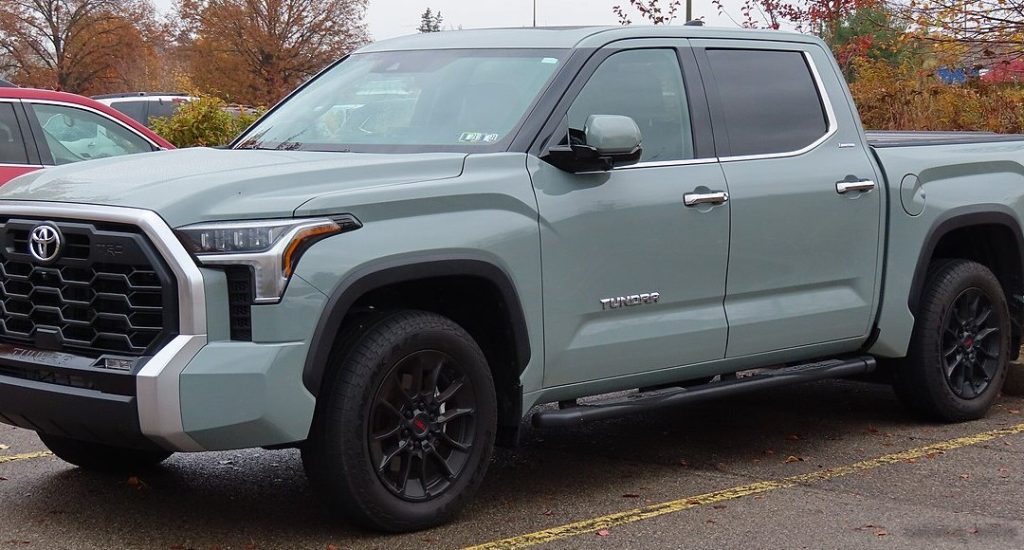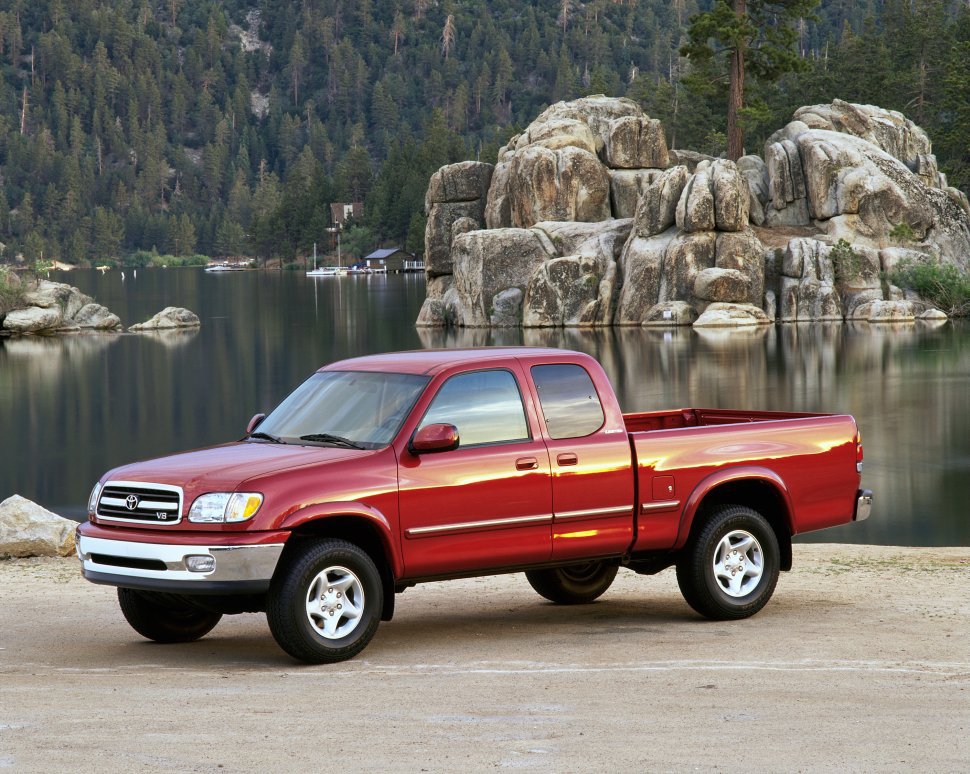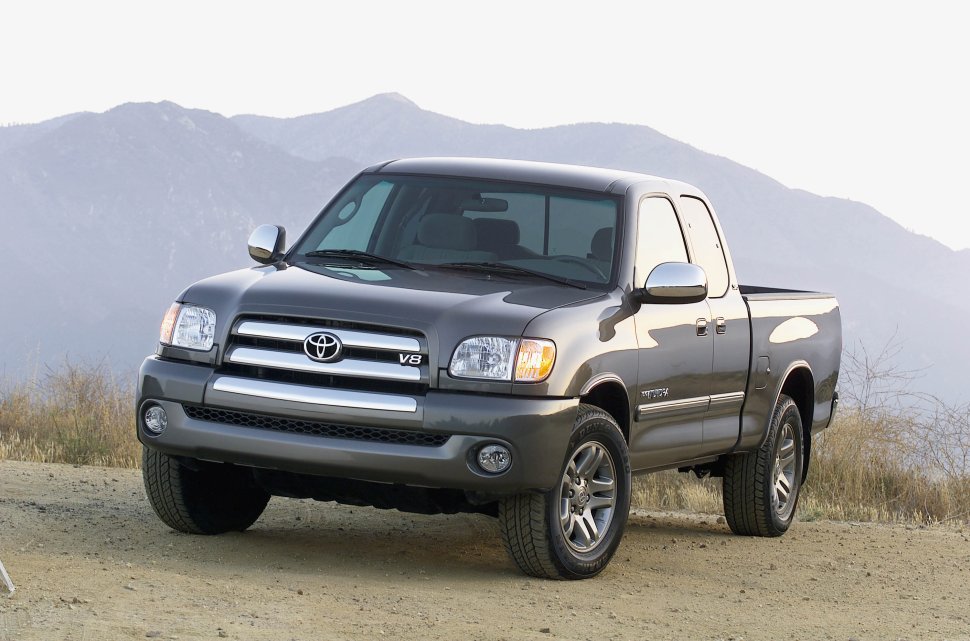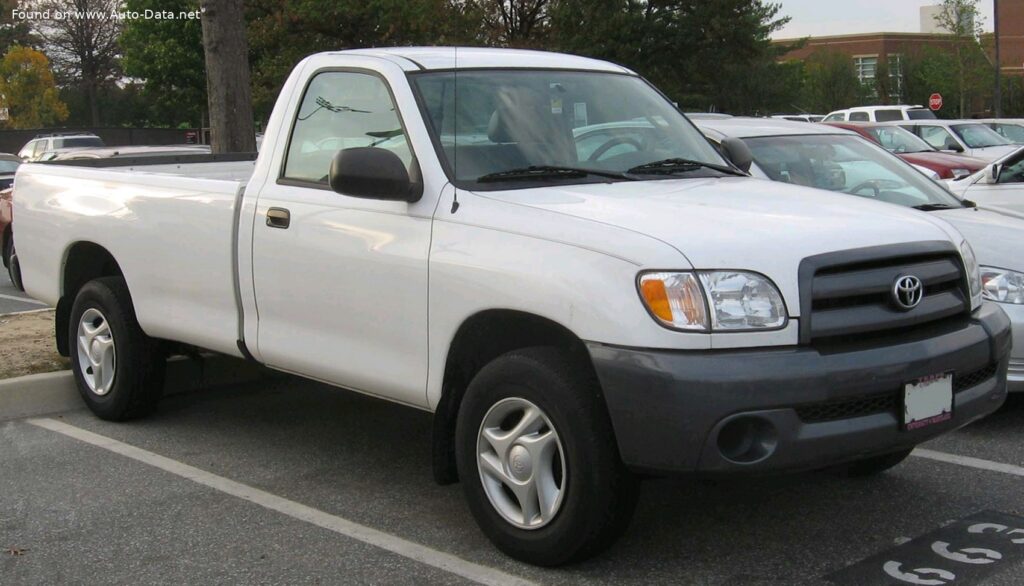
The Toyota Tundra I Regular Cab (facelift 2002) 3.4i 4×4 represents Toyota’s initial foray into the full-size pickup truck market in North America. Introduced in 1999 and receiving a facelift in 2002, the first-generation Tundra was designed to appeal to American truck buyers with its robust construction, ample interior space, and available V8 power. This particular iteration, equipped with the 3.4-liter inline-six engine and four-wheel drive, offered a balance of capability and affordability. The Tundra aimed to challenge established domestic manufacturers like Ford, Chevrolet, and Dodge, and quickly gained a reputation for reliability and build quality. While not initially a market leader, the Tundra laid the groundwork for Toyota’s future success in the highly competitive full-size truck segment.
Toyota Tundra I: A New Contender
The Tundra I, particularly the 2002 facelifted model, marked a significant step for Toyota in understanding and catering to the specific needs of the North American truck market. Prior to the Tundra, Toyota’s pickup offerings were smaller, more compact vehicles. The Tundra was intentionally larger, designed to compete directly with the Ford F-150, Chevrolet Silverado, and Dodge Ram. The facelift brought subtle styling updates and refinements to the interior, enhancing its appeal. The Regular Cab configuration, with its two doors and seating for four, was geared towards buyers prioritizing functionality and work-oriented use. The 3.4i engine, while not the most powerful option available in the Tundra lineup, provided a solid combination of performance and fuel efficiency for everyday tasks and moderate towing needs.
Engine & Performance
Powering the 2002 Toyota Tundra I Regular Cab 3.4i 4×4 is the 5VZ-FE 3.4-liter V6 engine. This naturally aspirated engine produces 190 horsepower at 4800 rpm and 298 Nm (219.79 lb.-ft.) of torque at 3600 rpm. The engine features a cast-iron block and aluminum cylinder heads, along with a double overhead camshaft (DOHC) valvetrain with four valves per cylinder. Fuel delivery is managed by a multi-port fuel injection system. The engine’s longitudinal front-engine layout contributes to a balanced weight distribution. The power-to-weight ratio is 9.4 kg/Hp, or 106.7 Hp/tonne, while the torque-to-weight ratio is 6 kg/Nm, or 167.4 Nm/tonne. This powertrain is coupled with a 5-speed manual transmission, directing power to all four wheels via a 4×4 drivetrain. Fuel economy is rated at 14.7 l/100 km (16 US mpg) in urban driving and 11.7 l/100 km (20.1 US mpg) in extra-urban conditions. The engine has a displacement of 3378 cm3 (206.14 cu. in.) with a bore of 93.4 mm (3.68 in.) and a stroke of 82 mm (3.23 in.).
Design & Features
The 2002 Toyota Tundra I Regular Cab is a traditional pick-up truck, characterized by its body-on-frame construction. The Regular Cab configuration features two doors and a spacious interior capable of seating four passengers. The truck bed offers a substantial 2625 liters (92.7 cu. ft.) of cargo space. The exterior design is functional and robust, reflecting the truck’s intended purpose. Key dimensions include a length of 5545 mm (218.31 in.), a width of 1910 mm (75.2 in.), and a height of 1796 mm (70.71 in.). Ground clearance is a generous 269 mm (10.59 in.), enhancing its off-road capability. Safety features for the time included an Anti-lock Braking System (ABS). The Tundra’s suspension consists of a double wishbone setup at the front and leaf springs at the rear, providing a comfortable ride and good load-carrying capacity. The truck’s curb weight is 1780 kg (3924.23 lbs), with a maximum weight of 2495 kg (5500.53 lbs) and a maximum load capacity of 715 kg (1576.31 lbs). It can tow a braked trailer weighing up to 2268 kg (5000.08 lbs).
Technical Specifications
| Brand | Toyota |
| Model | Tundra |
| Generation | Tundra I Regular Cab (facelift 2002) |
| Type (Engine) | 3.4i (190 Hp) 4×4 |
| Start of production | 2002 |
| End of production | 2004 |
| Powertrain Architecture | Internal Combustion engine |
| Body type | Pick-up |
| Seats | 4 |
| Doors | 2 |
| Fuel consumption (urban) | 14.7 l/100 km (16 US mpg) |
| Fuel consumption (extra urban) | 11.7 l/100 km (20.1 US mpg) |
| Fuel Type | Petrol (Gasoline) |
| Weight-to-power ratio | 9.4 kg/Hp |
| Power | 190 Hp @ 4800 rpm |
| Torque | 298 Nm @ 3600 rpm (219.79 lb.-ft. @ 3600 rpm) |
| Engine layout | Front, Longitudinal |
| Engine Model/Code | 5VZ-FE |
| Engine displacement | 3378 cm3 (206.14 cu. in.) |
| Number of cylinders | 6 |
| Engine configuration | V-engine |
| Cylinder Bore | 93.4 mm (3.68 in.) |
| Piston Stroke | 82 mm (3.23 in.) |
| Compression ratio | 9.6:1 |
| Number of valves per cylinder | 4 |
| Fuel injection system | Multi-port manifold injection |
| Engine aspiration | Naturally aspirated engine |
| Valvetrain | DOHC |
| Engine oil capacity | 5.2 l (5.49 US qt | 4.58 UK qt) |
| Coolant capacity | 9.9 l (10.46 US qt | 8.71 UK qt) |
| Kerb Weight | 1780 kg (3924.23 lbs.) |
| Max. weight | 2495 kg (5500.53 lbs.) |
| Max load | 715 kg (1576.31 lbs.) |
| Trunk (boot) space – maximum | 2625 l (92.7 cu. ft.) |
| Fuel tank capacity | 100 l (26.42 US gal | 22 UK gal) |
| Permitted trailer load with brakes (12%) | 2268 kg (5000.08 lbs.) |
| Length | 5545 mm (218.31 in.) |
| Width | 1910 mm (75.2 in.) |
| Height | 1796 mm (70.71 in.) |
| Wheelbase | 3259 mm (128.31 in.) |
| Front track | 1681 mm (66.18 in.) |
| Rear (Back) track | 1648 mm (64.88 in.) |
| Ride height (ground clearance) | 269 mm (10.59 in.) |
| Minimum turning circle (turning diameter) | 13.6 m (44.62 ft.) |
| Drive wheel | All wheel drive (4×4) |
| Number of gears and type of gearbox | 5 gears, manual transmission |
| Front suspension | Double wishbone |
| Rear suspension | Leaf spring |
| Front brakes | Ventilated discs |
| Rear brakes | Drum |
| Assisting systems | ABS (Anti-lock braking system) |
| Steering type | Steering rack and pinion |
| Tires size | 245/70 R16; 265/70 R16; 265/65 R17 |
| Wheel rims size | 7.0J x 16; 7.5J x 17 |