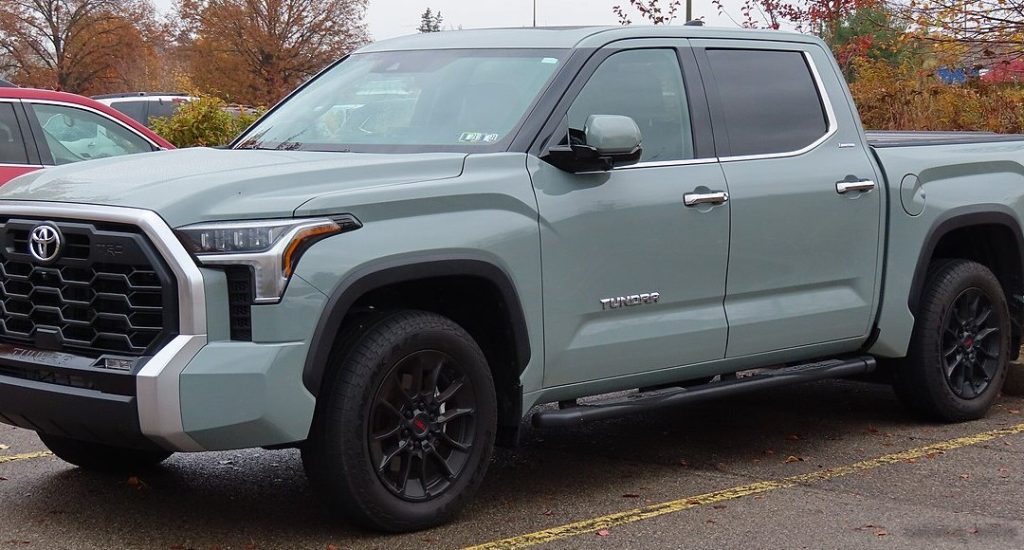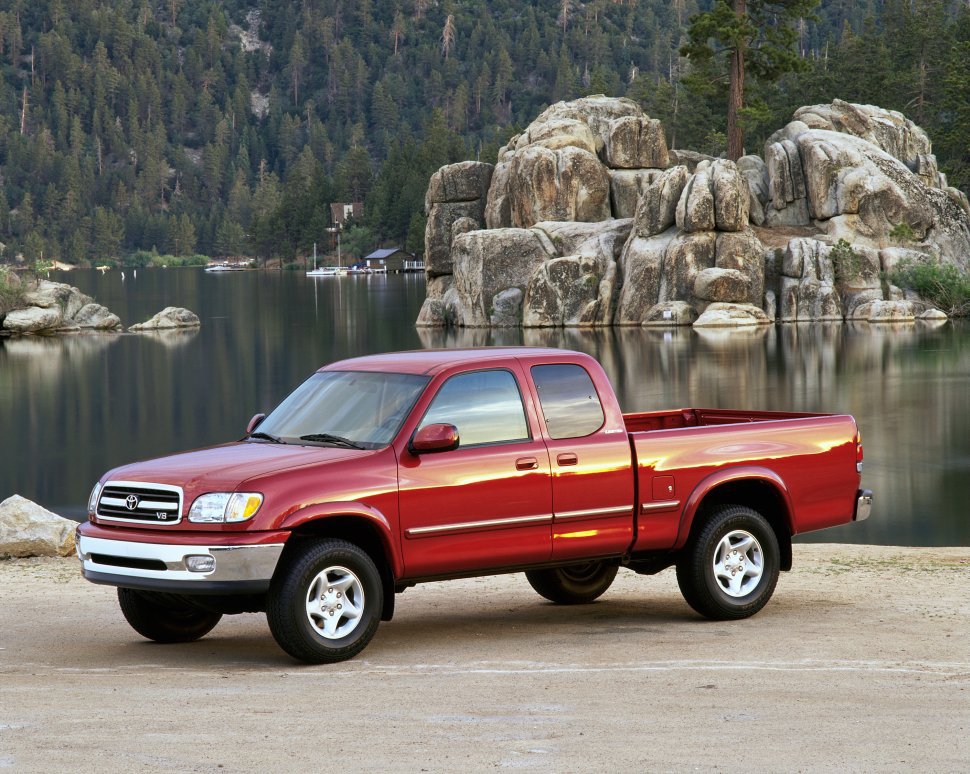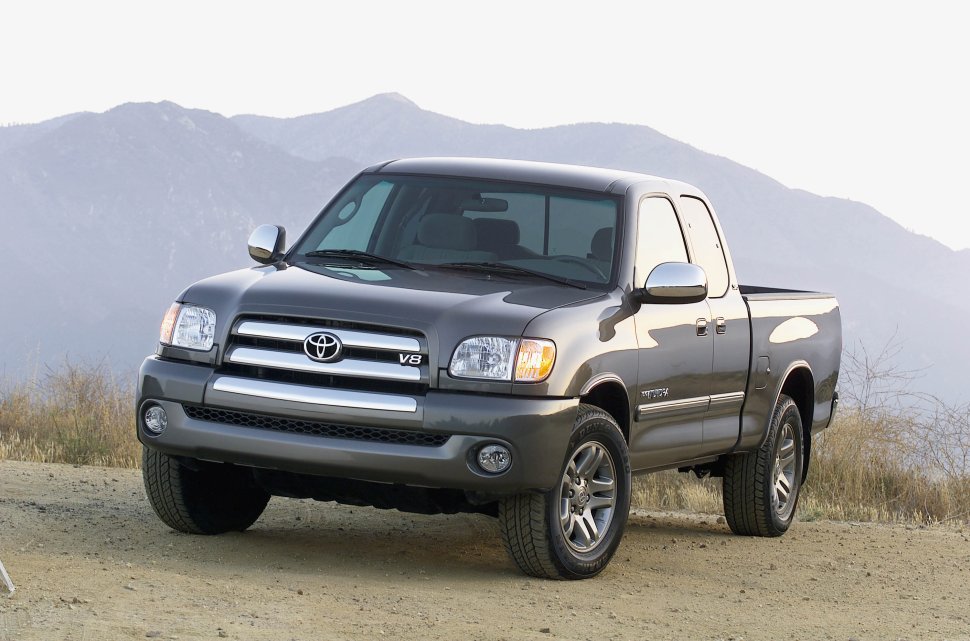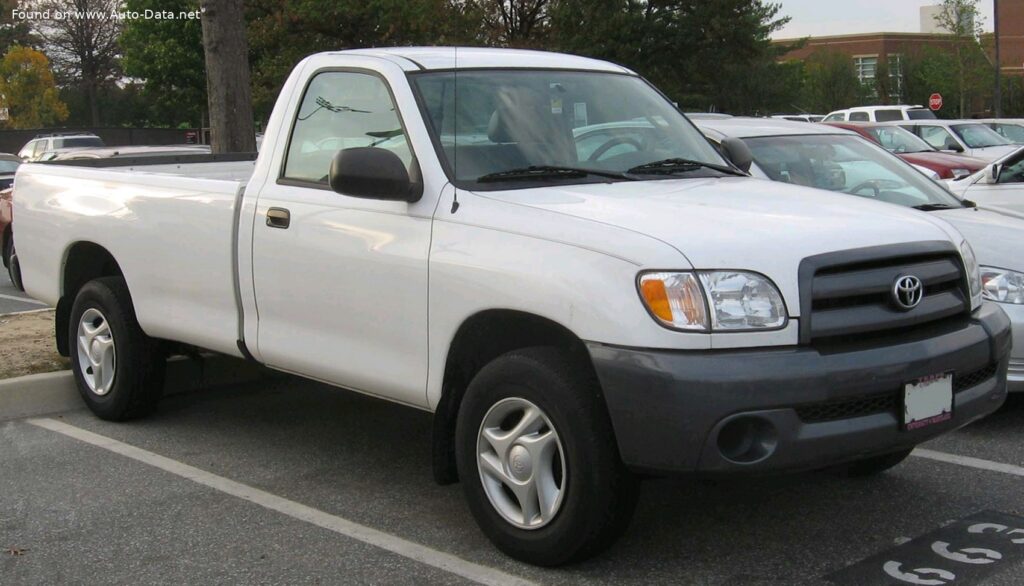
The Toyota Tundra I Regular Cab (facelift 2002) represents Toyota’s initial foray into the full-size pickup truck market in North America. Introduced to challenge established domestic manufacturers like Ford, Chevrolet, and Dodge, the Tundra was designed to offer a blend of reliability, durability, and value. The 2002 facelift brought refinements to the original model, enhancing its appeal and competitiveness. This generation Tundra, produced from 2002 to 2004 with this specific iteration, was primarily aimed at buyers seeking a robust work truck or a capable hauler, offering a more compact alternative to the larger American pickups.
Toyota Tundra I: A Focus on the 2002 Facelift
The first-generation Toyota Tundra, launched in 1999, quickly gained a reputation for its build quality and dependability. The 2002 facelift was a significant update, addressing some initial criticisms and improving the truck’s overall refinement. While not a radical redesign, the changes focused on enhancing the vehicle’s aesthetics, interior comfort, and powertrain efficiency. The Tundra I Regular Cab, in its facelifted form, continued to serve as a cornerstone of Toyota’s expanding North American truck lineup, establishing a foothold in a fiercely competitive segment.
Engine & Performance
The 2002 Toyota Tundra Regular Cab facelift equipped with the 4.0i V6 engine delivers 245 horsepower at 5200 rpm and 382 Nm (281.75 lb.-ft.) of torque at 3800 rpm. This engine, designated the 1GR-FE, is a 3.956-liter (241.41 cubic inches) naturally aspirated V6 featuring a double overhead camshaft (DOHC) valvetrain with four valves per cylinder. The engine utilizes a multi-port fuel injection system and boasts a compression ratio of 10:1. The powertrain is coupled with a 5-speed automatic transmission (ECT) that sends power to the rear wheels. The weight-to-power ratio of 7.3 kg/Hp and a weight-to-torque ratio of 4.7 kg/Nm provide adequate performance for typical pickup truck duties. Fuel economy is rated at 13 liters per 100 km (18.1 US mpg) in urban driving and 10.6 liters per 100 km (22.2 US mpg) in extra-urban conditions.
Design & Features
The Toyota Tundra I Regular Cab is a two-door pickup truck with a seating capacity of four passengers. Its body-on-frame construction provides a robust and durable platform, essential for hauling and towing. The 2002 facelift included minor cosmetic updates to the front fascia, grille, and headlights, giving the truck a slightly more modern appearance. The interior, while functional, prioritized durability over luxury. Key features included standard air conditioning, a basic audio system, and manually adjustable seats. Safety features for the era were relatively limited, primarily consisting of an Anti-lock Braking System (ABS). The truck bed offers a substantial 2625 liters (92.7 cubic feet) of cargo space. The Tundra’s relatively compact size compared to its American counterparts made it easier to maneuver in urban environments, while still providing ample payload and towing capacity. The permitted trailer load with brakes is rated at 2268 kg (5000.08 lbs).
Technical Specifications
| Brand | Toyota |
| Model | Tundra |
| Generation | Tundra I Regular Cab (facelift 2002) |
| Type (Engine) | 4.0i V6 (245 Hp) Automatic |
| Start of production | 2002 |
| End of production | 2004 |
| Powertrain Architecture | Internal Combustion engine |
| Body type | Pick-up |
| Seats | 4 |
| Doors | 2 |
| Fuel consumption (urban) | 13 l/100 km (18.1 US mpg) |
| Fuel consumption (extra urban) | 10.6 l/100 km (22.2 US mpg) |
| Fuel Type | Petrol (Gasoline) |
| Weight-to-power ratio | 7.3 kg/Hp |
| Weight-to-torque ratio | 4.7 kg/Nm |
| Power | 245 Hp @ 5200 rpm |
| Torque | 382 Nm @ 3800 rpm (281.75 lb.-ft. @ 3800 rpm) |
| Engine layout | Front, Longitudinal |
| Engine Model/Code | 1GR-FE |
| Engine displacement | 3956 cm3 (241.41 cu. in.) |
| Number of cylinders | 6 |
| Engine configuration | V-engine |
| Cylinder Bore | 94 mm (3.7 in.) |
| Piston Stroke | 95 mm (3.74 in.) |
| Compression ratio | 10:1 |
| Number of valves per cylinder | 4 |
| Fuel injection system | Multi-port manifold injection |
| Engine aspiration | Naturally aspirated |
| Valvetrain | DOHC |
| Engine oil capacity | 6.2 l (6.55 US qt | 5.46 UK qt) |
| Coolant capacity | 11.7 l (12.36 US qt | 10.29 UK qt) |
| Kerb Weight | 1798 kg (3963.91 lbs.) |
| Max. weight | 2494 kg (5498.33 lbs.) |
| Max load | 696 kg (1534.42 lbs.) |
| Trunk (boot) space – maximum | 2625 l (92.7 cu. ft.) |
| Fuel tank capacity | 100 l (26.42 US gal | 22 UK gal) |
| Length | 5545 mm (218.31 in.) |
| Width | 1910 mm (75.2 in.) |
| Height | 1796 mm (70.71 in.) |
| Wheelbase | 3259 mm (128.31 in.) |
| Front track | 1681 mm (66.18 in.) |
| Rear track | 1648 mm (64.88 in.) |
| Ride height (ground clearance) | 264 mm (10.39 in.) |
| Minimum turning circle | 13.6 m (44.62 ft.) |
| Front suspension | Double wishbone |
| Rear suspension | Leaf spring |
| Front brakes | Ventilated discs |
| Rear brakes | Drum |
| Assisting systems | ABS (Anti-lock braking system) |
| Steering type | Steering rack and pinion |
| Tires size | 245/70 R16; 265/70 R16; 265/65 R17 |
| Wheel rims size | 7.0J x 16; 7.5J x 17 |
The Toyota Tundra I Regular Cab (facelift 2002) with the 4.0i V6 engine offered a compelling package for buyers seeking a reliable and capable full-size pickup truck. While it may not have possessed the outright power of some of its domestic rivals, its reputation for longevity and dependability, combined with a reasonable price point, helped establish Toyota as a serious contender in the North American truck market.