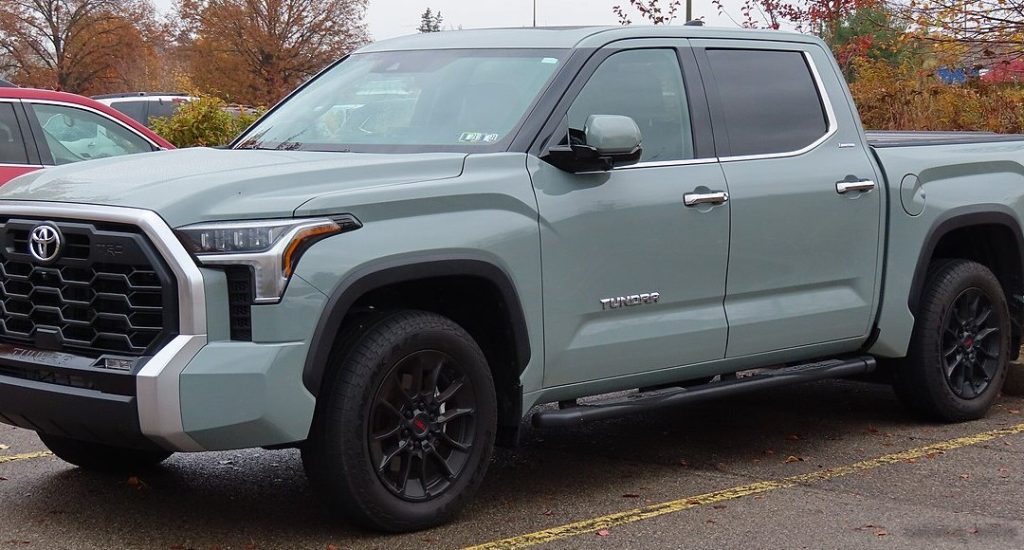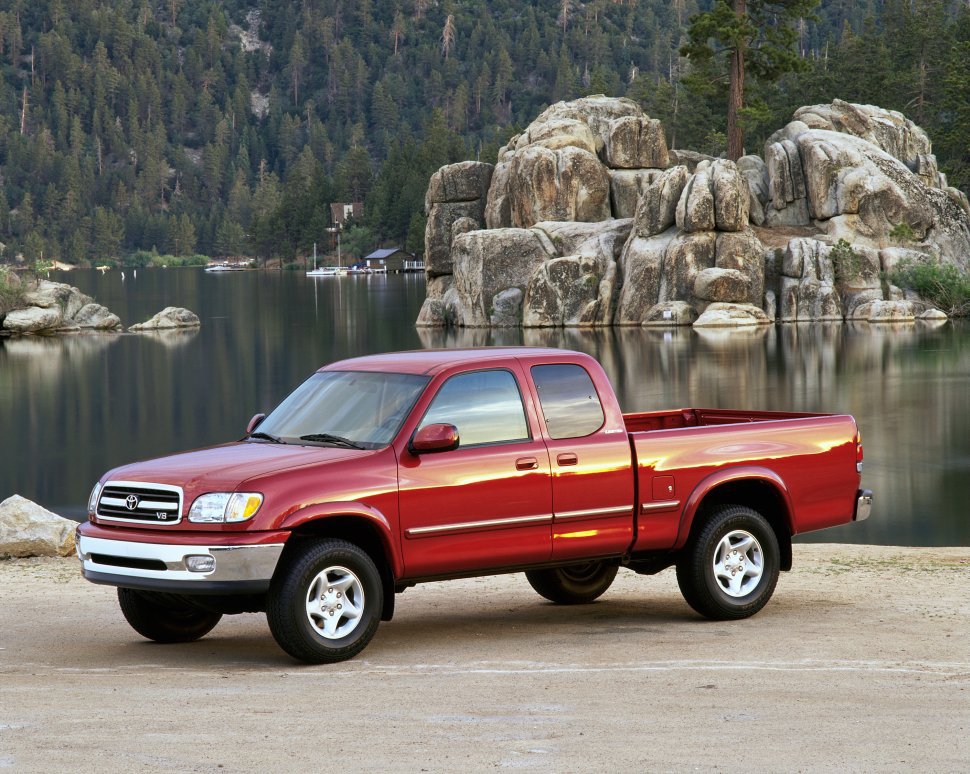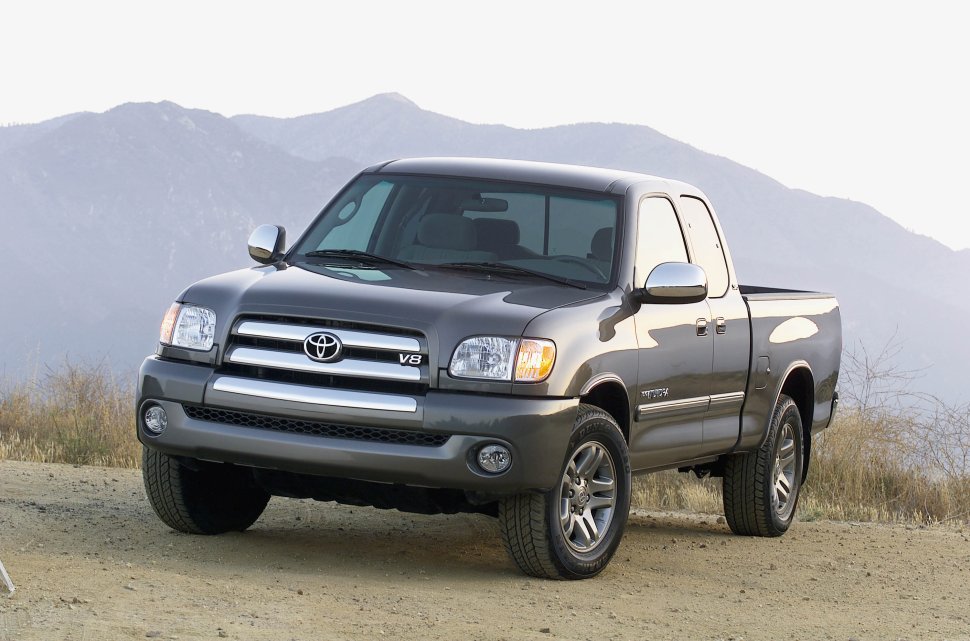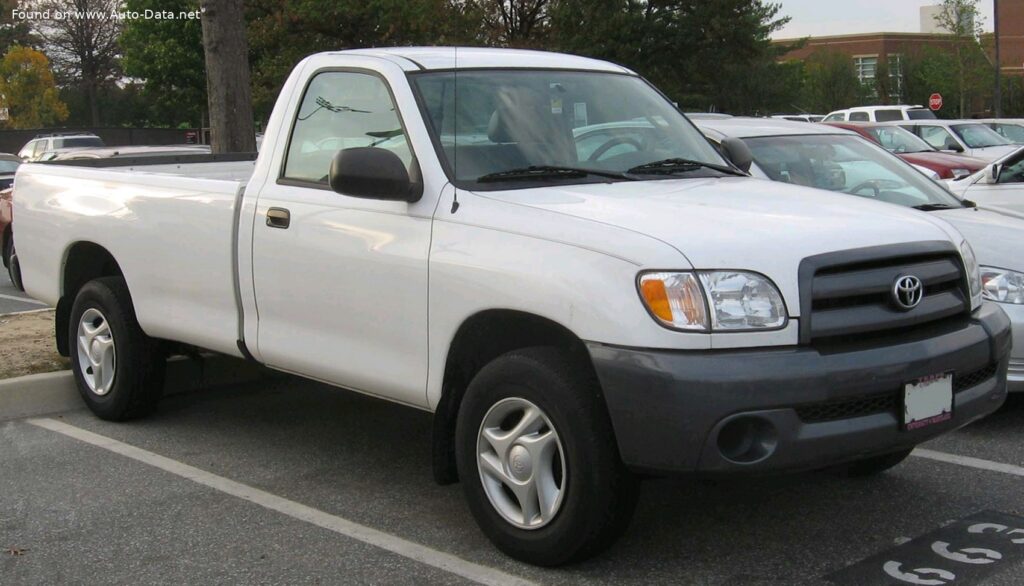
The Toyota Tundra I Regular Cab (facelift 2002) represents Toyota’s initial foray into the full-size pickup truck market in the United States, and a significant step in establishing the brand’s reputation for reliability and durability in this competitive segment. Introduced to challenge established American manufacturers like Ford, Chevrolet, and Dodge, the Tundra aimed to offer a compelling alternative with Japanese engineering and build quality. The 2006 model year, representing the final year of this first-generation facelift, featured a robust 4.7-liter V8 engine and was available in both two-wheel and four-wheel drive configurations. This particular iteration, the 4.7i V8 4×4 Regular Cab, was designed to appeal to buyers needing a capable work truck or a dependable vehicle for recreational pursuits.
Toyota Tundra I: A Foundation for Full-Size Success
The first-generation Tundra, produced from 2000 to 2006, was a pivotal model for Toyota. Prior to its arrival, Toyota’s pickup offerings in North America were smaller, based on the Hilux platform. The Tundra was specifically engineered for the North American market, with a larger footprint and increased payload capacity to meet the demands of American truck buyers. The 2002 facelift brought cosmetic and minor mechanical updates, refining the design and improving overall refinement. The Regular Cab configuration offered a no-nonsense, utilitarian approach, prioritizing functionality and affordability over the extended cab options available. The 4.7i V8 4×4 model combined a powerful engine with the added traction and capability of a four-wheel drive system, making it a versatile choice for a wide range of applications.
Engine & Performance
At the heart of the 2006 Toyota Tundra I Regular Cab 4.7i V8 4×4 lies the 2UZ-FE 4.7-liter V8 engine. This naturally aspirated powerplant produces 271 horsepower at 4800 rpm and 427 Nm (314.94 lb.-ft.) of torque at 3400 rpm. The engine features a robust cast-iron block and aluminum cylinder heads, along with a double overhead camshaft (DOHC) valvetrain with four valves per cylinder. Multi-port fuel injection ensures efficient fuel delivery. The engine’s longitudinal front-engine layout contributes to a balanced weight distribution. The 6-speed manual transmission allows for driver control and efficient power delivery. The weight-to-power ratio of 7 kg/Hp and 143.6 Hp/tonne demonstrates a respectable level of performance for a full-size truck of its era. The weight-to-torque ratio of 4.4 kg/Nm and 226.3 Nm/tonne highlights the engine’s ability to generate substantial pulling power.
Design & Features
The 2006 Toyota Tundra I Regular Cab is a classic example of early 21st-century pickup truck design. Its body-on-frame construction provides a solid and durable foundation. The Regular Cab configuration features two doors and seating for four passengers. The truck bed offers a generous 2625 liters (92.7 cubic feet) of cargo space, making it suitable for hauling large items. While not boasting the luxurious amenities of some contemporary trucks, the Tundra prioritized functionality and durability. Standard features included air conditioning, and a basic audio system. Safety features for the time included ABS (Anti-lock Braking System), providing enhanced stopping power and control. The truck’s ride height of 269 mm (10.59 inches) provides ample ground clearance for off-road driving. Approach and departure angles of 28° and 23° respectively, further enhance its off-road capability. The Tundra’s design was intentionally conservative, aiming to appeal to buyers seeking a reliable and understated work truck.
Technical Specifications
| Brand | Toyota |
| Model | Tundra |
| Generation | Tundra I Regular Cab (facelift 2002) |
| Type (Engine) | 4.7i V8 (271 Hp) 4×4 |
| Start of production | 2006 |
| End of production | 2006 |
| Powertrain Architecture | Internal Combustion engine |
| Body type | Pick-up |
| Seats | 4 |
| Doors | 2 |
| Fuel Type | Petrol (Gasoline) |
| Weight-to-power ratio | 7 kg/Hp |
| Weight-to-torque ratio | 4.4 kg/Nm |
| Power | 271 Hp @ 4800 rpm |
| Power per litre | 58.1 Hp/l |
| Torque | 427 Nm @ 3400 rpm / 314.94 lb.-ft. @ 3400 rpm |
| Engine layout | Front, Longitudinal |
| Engine Model/Code | 2UZ-FE |
| Engine displacement | 4664 cm3 / 284.61 cu. in. |
| Number of cylinders | 8 |
| Engine configuration | V-engine |
| Cylinder Bore | 94 mm / 3.7 in. |
| Piston Stroke | 84 mm / 3.31 in. |
| Compression ratio | 9.6:1 |
| Number of valves per cylinder | 4 |
| Fuel injection system | Multi-port manifold injection |
| Engine aspiration | Naturally aspirated engine |
| Valvetrain | DOHC |
| Engine oil capacity | 6.2 l / 6.55 US qt | 5.46 UK qt |
| Coolant | 11.7 l / 12.36 US qt | 10.29 UK qt |
| Kerb Weight | 1887 kg / 4160.12 lbs |
| Trunk (boot) space – maximum | 2625 l / 92.7 cu. ft |
| Fuel tank capacity | 100 l / 26.42 US gal | 22 UK gal |
| Length | 5545 mm / 218.31 in |
| Width | 1910 mm / 75.2 in |
| Height | 1796 mm / 70.71 in |
| Wheelbase | 3259 mm / 128.31 in |
| Front track | 1681 mm / 66.18 in |
| Rear (Back) track | 1648 mm / 64.88 in |
| Ride height (ground clearance) | 269 mm / 10.59 in |
| Minimum turning circle (turning diameter) | 13.6 m / 44.62 ft |
| Approach angle | 28° |
| Departure angle | 23° |
| Drive wheel | All wheel drive (4×4) |
| Number of gears and type of gearbox | 6 gears, manual transmission |
| Front suspension | Double wishbone |
| Rear suspension | Leaf spring |
| Front brakes | Ventilated discs |
| Rear brakes | Drum |
| Assisting systems | ABS (Anti-lock braking system) |
| Steering type | Steering rack and pinion |
| Tires size | 245/70 R16; 265/70 R16; 265/65 R17 |
| Wheel rims size | 7.0J x 16; 7.5J x 17 |