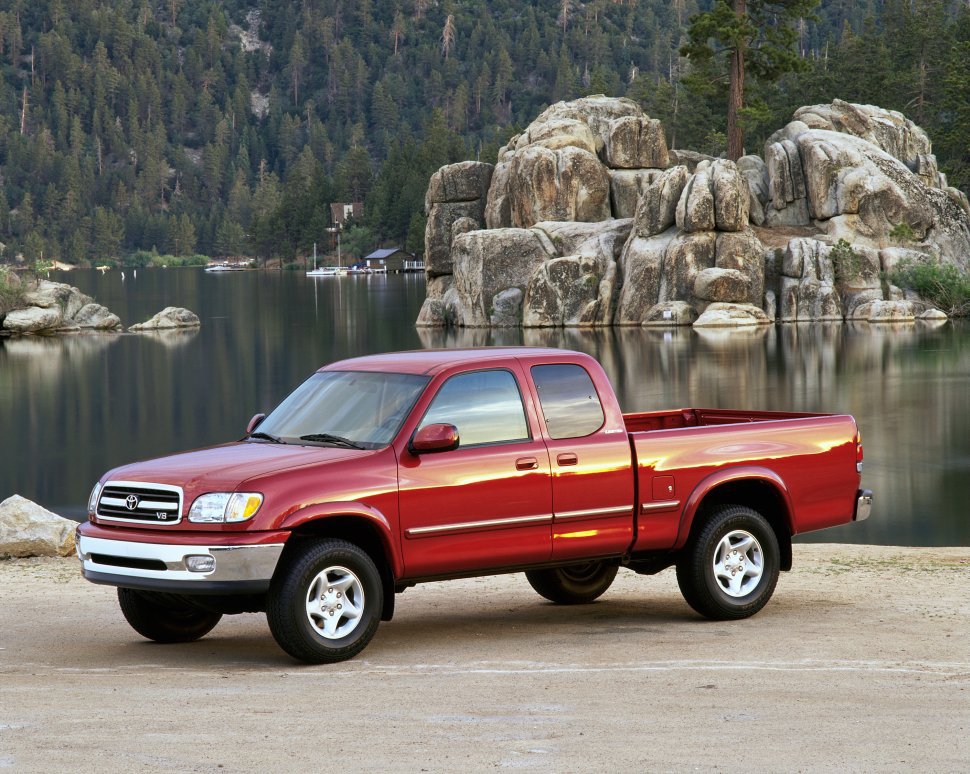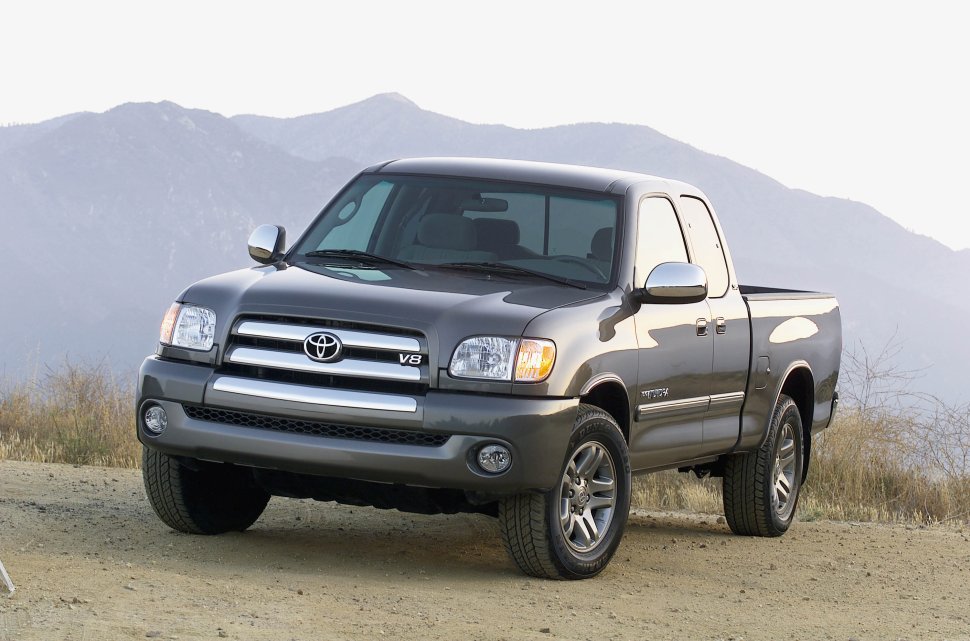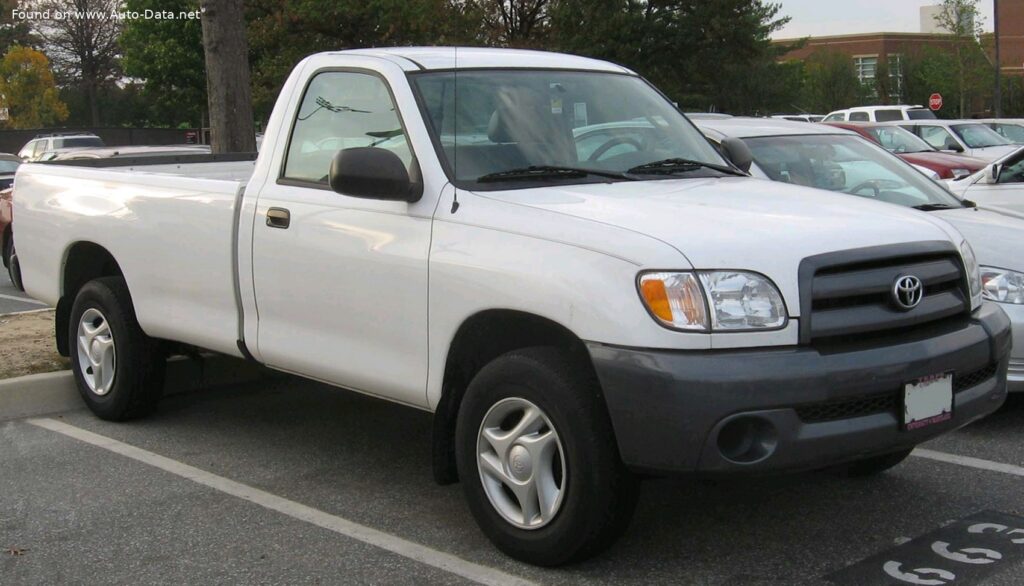
The Toyota Tundra, first introduced in 1999, marked Toyota’s entry into the full-size pickup truck market in North America. Designed specifically to appeal to American truck buyers, the Tundra aimed to offer a combination of reliability, durability, and capability. The first generation, designated the Tundra I, underwent a significant facelift in 2002, with production of this updated model running through 2006. The 2005-2006 Toyota Tundra Regular Cab 4.7i V8 4×4 represents a key iteration of this initial foray, offering a robust powertrain and a practical configuration for work and personal use. This vehicle competed directly with established American manufacturers like Ford, Chevrolet, and Dodge, and quickly gained a reputation for its dependability.
Toyota Tundra I: A North American Contender
The Tundra I was a deliberate attempt by Toyota to capture a significant share of the lucrative North American pickup truck market. Prior to the Tundra, Toyota’s truck offerings were smaller and less capable, aimed at a different segment of buyers. The Tundra was larger, more powerful, and designed to handle the demands of towing, hauling, and off-road driving. The 2002 facelift brought updated styling, improved interior features, and refinements to the powertrain, enhancing the Tundra’s appeal. The Regular Cab configuration, with its two doors and seating for four, provided a straightforward and functional option for buyers prioritizing utility over passenger space.
Engine & Performance
The heart of the 2005-2006 Tundra Regular Cab 4.7i is the 2UZ-FE 4.7-liter V8 engine. This naturally aspirated powerplant produces 282 horsepower at 5400 rpm and 440 Nm (324.53 lb.-ft.) of torque at 3400 rpm. The engine features a double overhead camshaft (DOHC) valvetrain with four valves per cylinder and utilizes a multi-port fuel injection system. This configuration delivers a good balance of power and reliability. The engine’s longitudinal mounting and pairing with a 5-speed automatic transmission (ECT – Electronically Controlled Transmission) directs power to all four wheels via a 4×4 drivetrain. The weight-to-power ratio of 7.3 kg/Hp and a weight-to-torque ratio of 4.7 kg/Nm contribute to respectable acceleration and towing capacity. Fuel economy is rated at 15.6 l/100 km (15.1 US mpg) in urban driving and 13 l/100 km (18.1 US mpg) on the highway.
Design & Features
The 2005-2006 Tundra Regular Cab is a traditional pick-up truck in terms of body style, featuring a two-door configuration and a separate bed for hauling cargo. The bed offers a maximum volume of 2625 liters (92.7 cu. ft.). The vehicle’s dimensions are substantial, measuring 5545 mm (218.31 in.) in length, 1910 mm (75.2 in.) in width, and 1796 mm (70.71 in.) in height. Ground clearance is a generous 284 mm (11.18 in.), enhancing its off-road capability. Safety features for the time included an Anti-lock Braking System (ABS). The interior, while functional, prioritized durability and ease of use over luxury. The Tundra’s design focused on providing a robust and reliable work truck, with a focus on practicality and longevity. The permitted trailer load with brakes is 3220 kg (7098.88 lbs), highlighting its towing capabilities.
Technical Specifications
| Brand | Toyota |
| Model | Tundra |
| Generation | Tundra I Regular Cab (facelift 2002) |
| Type (Engine) | 4.7i V8 (282 Hp) 4×4 Automatic |
| Start of production | 2005 |
| End of production | 2006 |
| Powertrain Architecture | Internal Combustion engine |
| Body type | Pick-up |
| Seats | 4 |
| Doors | 2 |
| Fuel consumption (urban) | 15.6 l/100 km (15.1 US mpg) |
| Fuel consumption (extra urban) | 13 l/100 km (18.1 US mpg) |
| Fuel Type | Petrol (Gasoline) |
| Weight-to-power ratio | 7.3 kg/Hp |
| Weight-to-torque ratio | 4.7 kg/Nm |
| Power | 282 Hp @ 5400 rpm |
| Torque | 440 Nm @ 3400 rpm (324.53 lb.-ft. @ 3400 rpm) |
| Engine layout | Front, Longitudinal |
| Engine Model/Code | 2UZ-FE |
| Engine displacement | 4664 cm3 (284.61 cu. in.) |
| Number of cylinders | 8 |
| Engine configuration | V-engine |
| Cylinder Bore | 94 mm (3.7 in.) |
| Piston Stroke | 84 mm (3.31 in.) |
| Compression ratio | 9.6:1 |
| Number of valves per cylinder | 4 |
| Fuel injection system | Multi-port manifold injection |
| Engine aspiration | Naturally aspirated |
| Valvetrain | DOHC |
| Engine oil capacity | 6.2 l (6.55 US qt | 5.46 UK qt) |
| Coolant capacity | 11.7 l (12.36 US qt | 10.29 UK qt) |
| Kerb Weight | 2063 kg (4548.14 lbs.) |
| Max. weight | 2857 kg (6298.61 lbs.) |
| Max load | 794 kg (1750.47 lbs.) |
| Trunk (boot) space – maximum | 2625 l (92.7 cu. ft.) |
| Fuel tank capacity | 100 l (26.42 US gal | 22 UK gal) |
| Permitted trailer load with brakes (12%) | 3220 kg (7098.88 lbs.) |
| Length | 5545 mm (218.31 in.) |
| Width | 1910 mm (75.2 in.) |
| Height | 1796 mm (70.71 in.) |
| Wheelbase | 3259 mm (128.31 in.) |
| Front track | 1681 mm (66.18 in.) |
| Rear track | 1648 mm (64.88 in.) |
| Ride height (ground clearance) | 284 mm (11.18 in.) |
| Minimum turning circle | 13.6 m (44.62 ft.) |
| Approach angle | 28° |
| Departure angle | 23° |
| Drive wheel | All wheel drive (4×4) |
| Number of gears | 5 |
| Gearbox type | Automatic transmission ECT |
| Front suspension | Double wishbone |
| Rear suspension | Leaf spring |
| Front brakes | Ventilated discs |
| Rear brakes | Drum |
| Assisting systems | ABS (Anti-lock braking system) |
| Steering type | Steering rack and pinion |
| Tires size | 245/70 R16; 265/70 R16; 265/65 R17 |
| Wheel rims size | 7.0J x 16; 7.5J x 17 |
The Toyota Tundra I, particularly the 2005-2006 facelifted models, established Toyota as a serious contender in the full-size pickup truck segment. Its blend of reliability, capability, and a comfortable ride resonated with American buyers, paving the way for the Tundra’s continued success in the North American market.