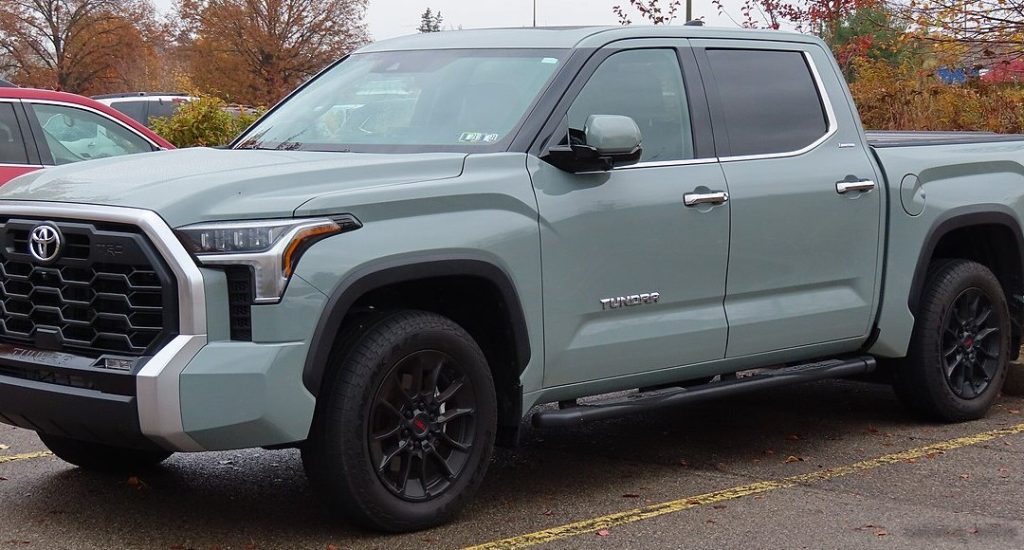
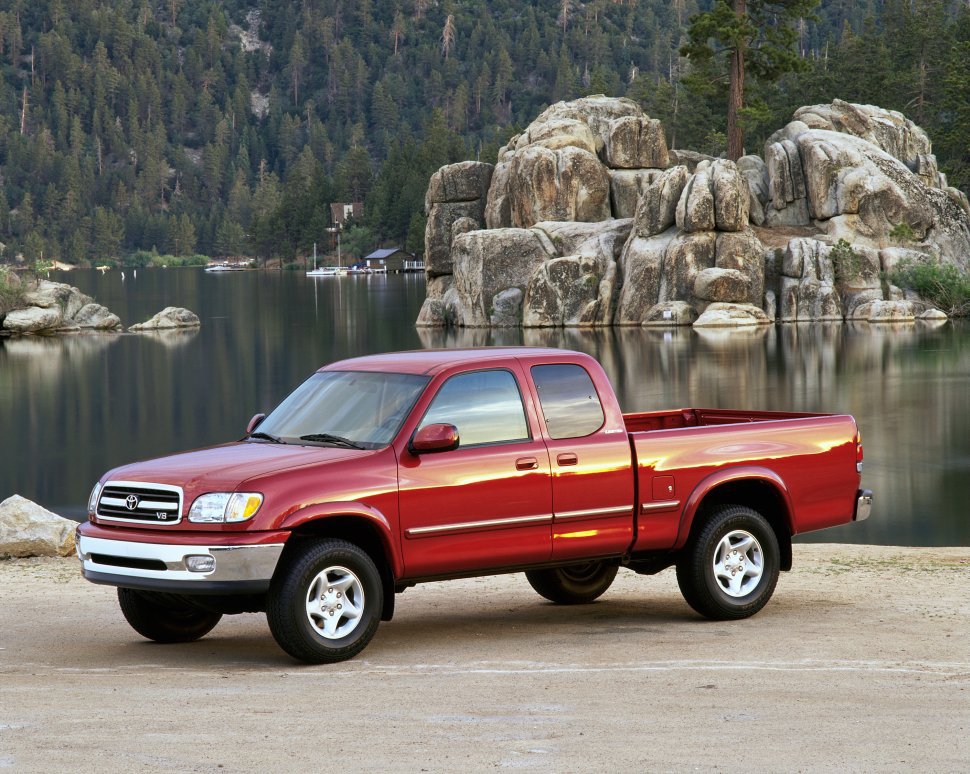
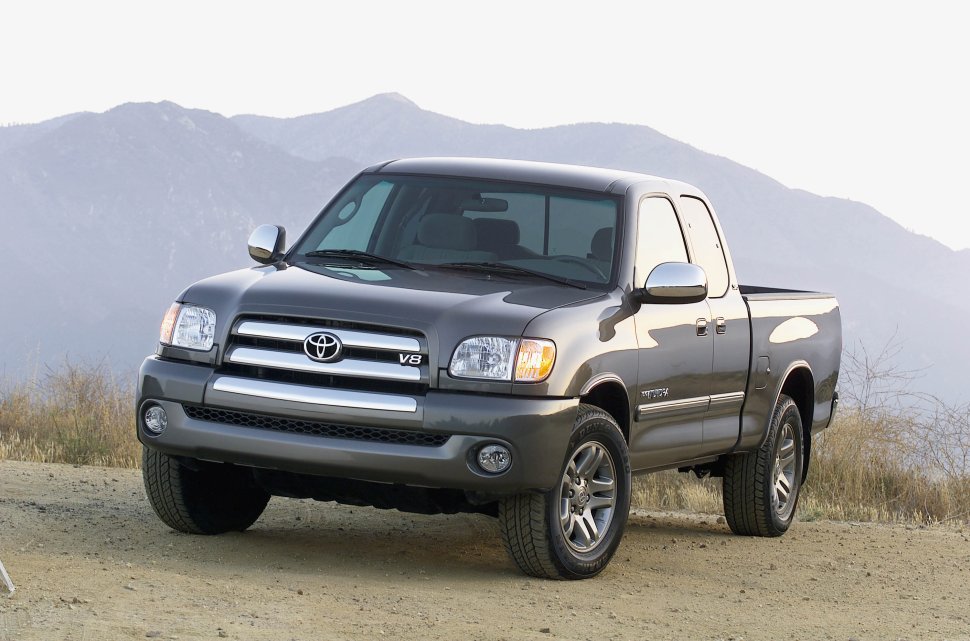
The Toyota Tundra II CrewMax, specifically the facelifted version produced from 2017 to 2019, represents Toyota’s significant entry into the full-size pickup truck market in North America. While Toyota has a strong presence globally with compact and mid-size trucks, the Tundra was designed specifically to compete with established American manufacturers like Ford, Chevrolet, and Ram. The CrewMax configuration, denoting a larger rear passenger cabin, caters to buyers needing both substantial hauling capacity and family-friendly space. This iteration, powered by the 4.6-liter V8 engine, balances power with reasonable fuel economy for a vehicle of its size and capability.
Toyota Tundra II CrewMax: A Detailed Overview
The Tundra II generation, launched in 2007, was a pivotal moment for Toyota. It signaled a commitment to building a truly American-style full-size truck, engineered and often assembled within the United States. The 2017 facelift brought updated styling, enhanced features, and refinements to the powertrain. The CrewMax body style, characterized by its extended cab, distinguishes itself from the standard Tundra cab configurations by offering significantly more rear-seat legroom, making it a practical choice for families or crews needing comfortable transportation alongside work capabilities.
Engine & Performance
At the heart of the 2017-2019 Toyota Tundra II CrewMax is the 1UR-FE 4.6-liter V8 engine. This naturally aspirated powerplant produces 310 horsepower at 5600 rpm and 443 Newton-meters (326.74 lb-ft) of torque at 3400 rpm. The engine features a robust cast-iron block and aluminum cylinder heads, contributing to its durability and longevity. Power is delivered through a six-speed automatic transmission with Toyota’s ECT-i (Electronic Controlled Transmission – intelligent) technology, which adapts shift patterns based on driving conditions. While not boasting the highest horsepower figures in its class, the 4.6L V8 prioritizes reliability and a broad torque curve, making it well-suited for towing and hauling. The weight-to-power ratio stands at 7.7 kg/Hp, and the weight-to-torque ratio is 5.4 kg/Nm, indicating a respectable balance between weight and performance. Fuel economy is rated at 14.7 liters per 100 kilometers (16 US mpg combined), typical for a full-size pickup truck.
Design & Features
The Toyota Tundra II CrewMax maintains the bold, truck-like styling expected in the American market. The 2017 facelift brought a more aggressive front grille, redesigned headlights, and updated taillights. The CrewMax body style features four doors and seating for five passengers. Inside, the cabin prioritizes functionality and durability, with materials chosen to withstand the demands of truck ownership. Features included standard air conditioning, power windows and locks, and a basic audio system. Higher trim levels offered leather upholstery, navigation, and advanced safety features. Safety features for this generation included ABS (Anti-lock Braking System) and a suite of airbags. The Tundra’s large dimensions – 5814 mm (228.9 in) in length and 2029 mm (79.88 in) in width – provide ample cargo space in the bed and a comfortable cabin. A key feature is its substantial towing capacity, rated at up to 4581 kg (10099.38 lbs) when equipped with brakes, making it a capable workhorse.
Technical Specifications
| Brand | Toyota |
| Model | Tundra |
| Generation | Tundra II CrewMax (facelift 2017) |
| Type (Engine) | 4.6 V8 (310 Hp) ECT-i |
| Start of production | 2017 |
| End of production | 2019 |
| Powertrain Architecture | Internal Combustion engine |
| Body type | Pick-up |
| Seats | 5 |
| Doors | 4 |
| Fuel consumption (urban) | 15.7 l/100 km (15 US mpg, 18 UK mpg) |
| Fuel consumption (extra urban) | 12.4 l/100 km (19 US mpg, 22.8 UK mpg) |
| Fuel consumption (combined) | 14.7 l/100 km (16 US mpg, 19.2 UK mpg) |
| Fuel Type | Petrol (Gasoline) |
| Emission standard | LEV 2 ULEV I |
| Weight-to-power ratio | 7.7 kg/Hp |
| Weight-to-torque ratio | 5.4 kg/Nm |
| Power | 310 Hp @ 5600 rpm |
| Torque | 443 Nm @ 3400 rpm (326.74 lb.-ft. @ 3400 rpm) |
| Engine layout | Front, Longitudinal |
| Engine Model/Code | 1UR-FE |
| Engine displacement | 4608 cm3 (281.2 cu. in.) |
| Number of cylinders | 8 |
| Engine configuration | V-engine |
| Cylinder Bore | 94 mm (3.7 in.) |
| Piston Stroke | 83 mm (3.27 in.) |
| Compression ratio | 10.2:1 |
| Number of valves per cylinder | 4 |
| Fuel injection system | Multi-port manifold injection |
| Engine aspiration | Naturally aspirated engine |
| Valvetrain | DOHC, Dual VVT-i |
| Engine oil capacity | 7.5 l (7.93 US qt | 6.6 UK qt) |
| Coolant capacity | 12.1 l (12.79 US qt | 10.65 UK qt) |
| Kerb Weight | 2377 kg (5240.39 lbs.) |
| Max. weight | 3084-3175 kg (6799.06 – 6999.68 lbs.) |
| Max load | 707-798 kg (1558.67 – 1759.29 lbs.) |
| Fuel tank capacity | 100 l (26.42 US gal | 22 UK gal) |
| Permitted trailer load with brakes (12%) | 4581 kg (10099.38 lbs.) |
| Permitted towbar download | 458 kg (1009.72 lbs.) |
| Length | 5814 mm (228.9 in.) |
| Width | 2029 mm (79.88 in.) |
| Height | 1925 mm (75.79 in.) |
| Wheelbase | 3701 mm (145.71 in.) |
| Front track | 1725 mm (67.91 in.) |
| Rear track | 1725 mm (67.91 in.) |
| Ride height (ground clearance) | 259 mm (10.2 in.) |
| Drag coefficient (Cd) | 0.37 |
| Approach angle | 26° |
| Departure angle | 16° |
| Drivetrain | Rear wheel drive |
| Number of gears | 6 |
| Gearbox type | Automatic transmission ECT-i |
| Front suspension | Double wishbone, Transverse stabilizer |
| Rear suspension | Rigid axle suspension, Leaf spring |
| Front brakes | Ventilated discs |
| Rear brakes | Ventilated discs |
| Steering type | Steering rack and pinion |
| Power steering | Hydraulic Steering |
| Tires size | 255/70 R18 |
| Wheel rims size | 8J x 18 |
The Toyota Tundra II CrewMax (2017-2019) with the 4.6L V8 engine remains a popular choice in the used truck market, offering a blend of Toyota reliability, spaciousness, and capable performance. While newer models have introduced more advanced technology and features, the Tundra II CrewMax continues to represent a solid and dependable full-size pickup truck option.