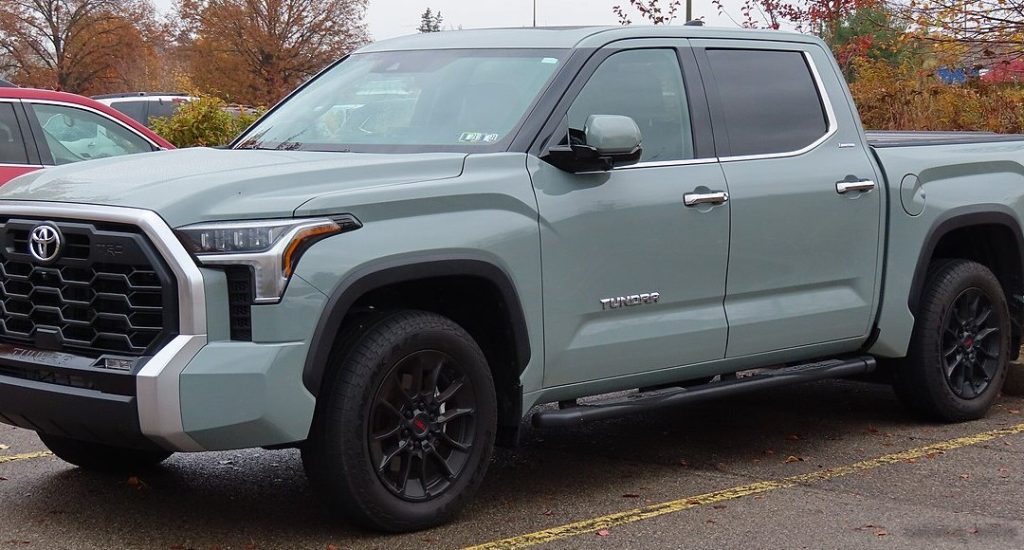
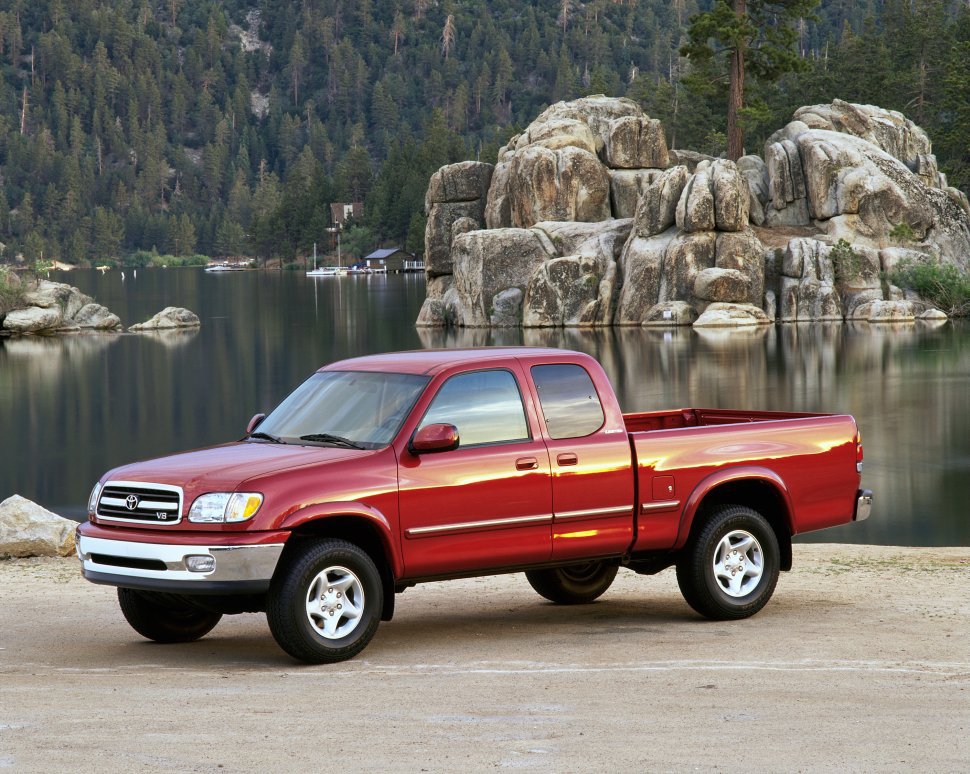
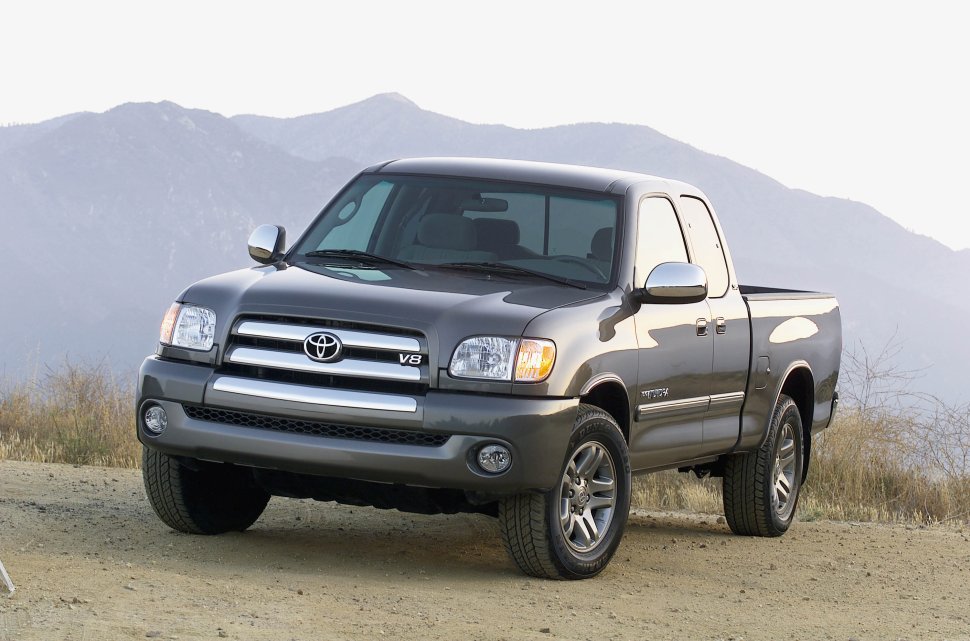
The Toyota Tundra II CrewMax, specifically the facelifted version released in 2017, represents Toyota’s significant offering in the full-size pickup truck segment. While not as ubiquitous in the United States as domestic brands like Ford, Chevrolet, and Ram, the Tundra has consistently earned a reputation for reliability and longevity. The 2017 facelift brought styling updates and enhanced features, aiming to bolster its competitiveness. This generation of the Tundra, produced from 2007 to 2021, was Toyota’s second attempt at a full-size pickup, building upon the lessons learned from its predecessor and directly challenging the established American manufacturers.
Toyota Tundra II CrewMax: A Detailed Overview
The Tundra II CrewMax, in its 2017 facelifted form, is characterized by its spacious Crew Cab configuration, offering ample room for passengers. It’s positioned as a workhorse vehicle, capable of handling demanding tasks while providing a comfortable ride. The 5.7-liter V8 engine option, detailed here, was the top-tier powertrain choice, delivering substantial power and torque for towing and hauling. The Tundra’s design philosophy emphasizes durability and practicality, making it a popular choice for owners who prioritize long-term ownership and dependability.
Engine & Performance
At the heart of the 2017 Toyota Tundra II CrewMax facelift is the 3UR-FE 5.7-liter V8 engine. This naturally aspirated powerplant produces 381 horsepower at 5,600 rpm and 401.23 lb-ft of torque at 3,600 rpm. The engine features a robust cast-iron block and aluminum cylinder heads, contributing to its renowned durability. Power is delivered through a six-speed automatic transmission with ECT-i (Electronic Controlled Transmission – intelligent) technology, which adapts shift patterns based on driving conditions. The longitudinal engine layout and rear-wheel-drive configuration are standard, providing a traditional truck driving experience. The weight-to-power ratio of 6.4 kg/Hp and a weight-to-torque ratio of 4.5 kg/Nm demonstrate the engine’s ability to move the substantial weight of the CrewMax body style effectively. Fuel economy, however, is a compromise, with combined figures averaging 15 US mpg (15.7 l/100 km). The engine’s displacement of 5663 cm3 (345.58 cu. in.) and a compression ratio of 10.2:1 contribute to its strong low-end torque, essential for towing and hauling.
Design & Features
The 2017 Tundra II CrewMax maintains the classic pickup truck silhouette, with a bold front grille and muscular body lines. The CrewMax configuration specifically offers a larger rear cabin, prioritizing passenger space. The vehicle’s dimensions – a length of 5814 mm (228.9 in), a width of 2029 mm (79.88 in), and a height of 1925 mm (75.79 in) – reflect its full-size status. Key features include a double-wishbone front suspension and a rigid axle rear suspension with leaf springs, designed to handle heavy loads. Braking is handled by ventilated discs on all four wheels, complemented by an Anti-lock Braking System (ABS). The interior focuses on functionality and comfort, with durable materials and a user-friendly layout. The Tundra’s towing capacity is a significant selling point, with a maximum permitted trailer load with brakes of 4581 kg (10099.38 lbs). Ground clearance ranges from 254-264 mm (10 – 10.39 in), providing reasonable off-road capability. The drag coefficient of 0.37 is typical for a vehicle of this type, prioritizing functionality over aerodynamic efficiency.
Technical Specifications
| Brand | Toyota |
| Model | Tundra |
| Generation | Tundra II CrewMax (facelift 2017) |
| Type (Engine) | 5.7 V8 (381 Hp) ECT-i |
| Start of production | 2017 |
| End of production | 2021 |
| Powertrain Architecture | Internal Combustion engine |
| Body type | Pick-up |
| Seats | 5 |
| Doors | 4 |
| Fuel consumption (urban) | 18.1 l/100 km (13 US mpg, 15.6 UK mpg, 5.5 km/l) |
| Fuel consumption (extra urban) | 13.1 l/100 km (18 US mpg, 21.6 UK mpg, 7.6 km/l) |
| Fuel consumption (combined) | 15.7 l/100 km (15 US mpg, 18 UK mpg, 6.4 km/l) |
| Fuel Type | Petrol (Gasoline) |
| Emission standard | LEV 3 ULEV 70 |
| Weight-to-power ratio | 6.4 kg/Hp |
| Weight-to-torque ratio | 4.5 kg/Nm |
| Power | 381 Hp @ 5600 rpm |
| Power per litre | 67.3 Hp/l |
| Torque | 544 Nm @ 3600 rpm (401.23 lb.-ft. @ 3600 rpm) |
| Engine layout | Front, Longitudinal |
| Engine Model/Code | 3UR-FE |
| Engine displacement | 5663 cm3 (345.58 cu. in.) |
| Number of cylinders | 8 |
| Engine configuration | V-engine |
| Cylinder Bore | 93.98 mm (3.7 in.) |
| Piston Stroke | 102.11 mm (4.02 in.) |
| Compression ratio | 10.2:1 |
| Number of valves per cylinder | 4 |
| Fuel injection system | Multi-port manifold injection |
| Engine aspiration | Naturally aspirated engine |
| Valvetrain | DOHC, Dual VVT-i |
| Engine oil capacity | 7.5 l (7.93 US qt | 6.6 UK qt) |
| Coolant | 12.1 l (12.79 US qt | 10.65 UK qt) |
| Kerb Weight | 2422-2440 kg (5339.6 – 5379.28 lbs.) |
| Max. weight | 3084-3175 kg (6799.06 – 6999.68 lbs.) |
| Max load | 662-735 kg (1459.46 – 1620.4 lbs.) |
| Fuel tank capacity | 144 l (38.04 US gal | 31.68 UK gal) |
| Permitted trailer load with brakes (12%) | 4581 kg (10099.38 lbs.) |
| Permitted towbar download | 458 kg (1009.72 lbs.) |
| Length | 5814 mm (228.9 in.) |
| Width | 2029 mm (79.88 in.) |
| Height | 1925 mm (75.79 in.) |
| Wheelbase | 3701 mm (145.71 in.) |
| Front track | 1725 mm (67.91 in.) |
| Rear track | 1725 mm (67.91 in.) |
| Ride height (ground clearance) | 254-264 mm (10 – 10.39 in.) |
| Drag coefficient (Cd) | 0.37 |
| Approach angle | 26° |
| Departure angle | 16° |
| Drive wheel | Rear wheel drive |
| Number of gears and type of gearbox | 6 gears, automatic transmission ECT-i |
| Front suspension | Double wishbone, Transverse stabilizer |
| Rear suspension | Rigid axle suspension, Leaf spring |
| Front brakes | Ventilated discs |
| Rear brakes | Ventilated discs |
| Assisting systems | ABS (Anti-lock braking system) |
| Steering type | Steering rack and pinion |
| Power steering | Hydraulic Steering |
| Tires size | 255/70 R18; 275/55 R20 |
| Wheel rims size | 8J x 18; 8J x 20 |
The Toyota Tundra II CrewMax (2017 facelift) remains a compelling option for buyers seeking a reliable and capable full-size pickup truck. Its focus on durability, spaciousness, and strong towing capacity continues to resonate with a dedicated customer base.