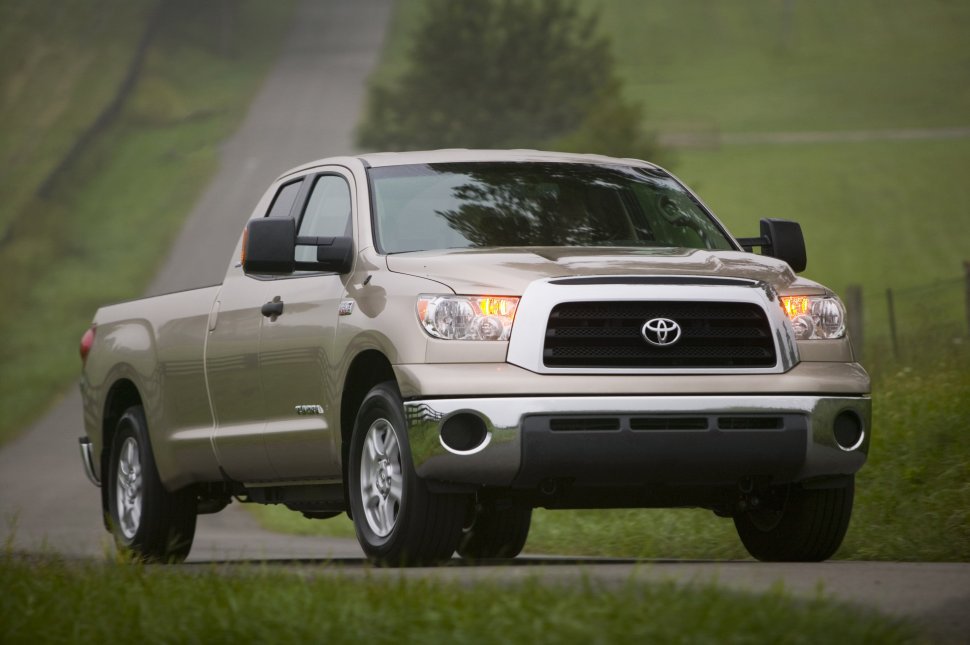
The Toyota Tundra II Double Cab Long Bed, produced between 2006 and 2009, represents Toyota’s second-generation full-size pickup truck. Designed specifically for the North American market, the Tundra II aimed to challenge established domestic manufacturers like Ford, Chevrolet, and Dodge. This generation marked a significant increase in size and capability compared to its predecessor, offering a more robust platform and a wider range of configurations. The Double Cab Long Bed configuration, equipped with the 5.7-liter V8 engine and four-wheel drive, was positioned as a premium offering, balancing passenger comfort with substantial towing and hauling capacity.
Toyota Tundra II Double Cab Long Bed: An Overview
The Tundra II was a pivotal model for Toyota, demonstrating a commitment to the full-size truck segment. It was a departure from the smaller, more compact pickups Toyota had previously offered in the US. The Double Cab configuration provided increased rear-seat space, making it suitable for families, while the Long Bed offered ample cargo capacity. The 5.7-liter V8 engine, paired with a six-speed automatic transmission and a four-wheel-drive system, delivered strong performance and capability. This model year specifically targeted buyers needing a powerful and versatile truck for both work and personal use.
Engine & Performance
The heart of the Tundra II Double Cab Long Bed 5.7 is the 3UR-FE 5.7-liter V8 engine. This naturally aspirated engine produces 381 horsepower at 5600 rpm and 544 Nm (401.23 lb-ft) of torque at 3600 rpm. The engine features a double overhead camshaft (DOHC) valvetrain with Variable Valve Timing-intelligent (VVT-i) technology, optimizing performance and fuel efficiency. The 5.7-liter displacement translates to 67.3 horsepower per liter. Power is delivered through a robust six-speed automatic transmission, providing smooth and efficient gear changes. The four-wheel-drive system enhances traction and capability in various driving conditions. The weight-to-power ratio of 6.7 kg/Hp (148.8 Hp/tonne) and a weight-to-torque ratio of 4.7 kg/Nm (212.4 Nm/tonne) demonstrate the truck’s substantial power relative to its weight. Fuel economy is rated at 16.8 l/100 km (14 US mpg) in urban driving and 13 l/100 km (18.1 US mpg) in extra-urban conditions.
Design & Features
The Tundra II Double Cab Long Bed is a traditional body-on-frame pickup truck, offering a rugged and durable construction. The Double Cab configuration features four doors and seating for up to six passengers, providing a comfortable and spacious interior. The Long Bed measures a substantial length, maximizing cargo-carrying capacity. The exterior design is characterized by a bold front grille, prominent headlights, and a muscular stance. Safety features for the 2006-2009 model year included Anti-lock Braking System (ABS) as standard equipment. Interior features focused on functionality and durability, with comfortable seating and a user-friendly layout. The truck’s ride height provides 274 mm (10.79 in) of ground clearance, enhancing off-road capability. Approach and departure angles of 29° and 20° respectively, further contribute to its off-road prowess. The suspension utilizes a double wishbone setup in the front and a leaf spring configuration in the rear, balancing ride comfort with load-carrying capacity.
Technical Specifications
| Brand | Toyota |
| Model | Tundra |
| Generation | Tundra II Double Cab Long Bed |
| Type (Engine) | 5.7 V8 32V (381 Hp) 4×4 Automatic |
| Start of production | 2006 |
| End of production | 2009 |
| Powertrain Architecture | Internal Combustion engine |
| Body type | Pick-up |
| Seats | 6 |
| Doors | 4 |
| Fuel consumption (urban) | 16.8 l/100 km (14 US mpg) |
| Fuel consumption (extra urban) | 13 l/100 km (18.1 US mpg) |
| Fuel Type | Petrol (Gasoline) |
| Weight-to-power ratio | 6.7 kg/Hp |
| Weight-to-torque ratio | 4.7 kg/Nm |
| Power | 381 Hp @ 5600 rpm |
| Torque | 544 Nm @ 3600 rpm (401.23 lb.-ft. @ 3600 rpm) |
| Engine layout | Front, Longitudinal |
| Engine Model/Code | 3UR-FE |
| Engine displacement | 5663 cm3 (345.58 cu. in.) |
| Number of cylinders | 8 |
| Engine configuration | V-engine |
| Cylinder Bore | 94 mm (3.7 in.) |
| Piston Stroke | 102 mm (4.02 in.) |
| Number of valves per cylinder | 4 |
| Fuel injection system | Multi-port manifold injection |
| Engine aspiration | Naturally aspirated engine |
| Valvetrain | DOHC, VVT-i |
| Engine oil capacity | 7 l (7.4 US qt | 6.16 UK qt) |
| Coolant capacity | 13 l (13.74 US qt | 11.44 UK qt) |
| Kerb Weight | 2561 kg (5646.04 lbs.) |
| Max. weight | 3175 kg (6999.68 lbs.) |
| Max load | 614 kg (1353.64 lbs.) |
| Fuel tank capacity | 100 l (26.42 US gal | 22 UK gal) |
| Permitted trailer load with brakes (12%) | 3266 kg (7200.3 lbs.) |
| Length | 6289 mm (247.6 in.) |
| Width | 2030 mm (79.92 in.) |
| Height | 1925 mm (75.79 in.) |
| Wheelbase | 4180 mm (164.57 in.) |
| Front track | 1725 mm (67.91 in.) |
| Rear track | 1725 mm (67.91 in.) |
| Ride height (ground clearance) | 274 mm (10.79 in.) |
| Drive wheel | All wheel drive (4×4) |
| Number of gears | 6 |
| Gearbox type | Automatic transmission |
| Front suspension | Double wishbone |
| Rear suspension | Leaf spring |
| Front brakes | Ventilated discs |
| Rear brakes | Drum |
| Assisting systems | ABS (Anti-lock braking system) |
| Steering type | Steering rack and pinion |
| Power steering | Hydraulic Steering |
| Tires size | 255/70 R18; 275/65 R18; 275/55 R20 |
| Wheel rims size | 8.0J x 18; 8.0J x 20 |
The Toyota Tundra II Double Cab Long Bed 5.7 V8 4×4 Automatic represented a significant step forward for Toyota in the full-size truck market. Its combination of power, capability, and comfort made it a competitive offering against established domestic rivals, and it laid the groundwork for Toyota’s continued presence in this important segment.