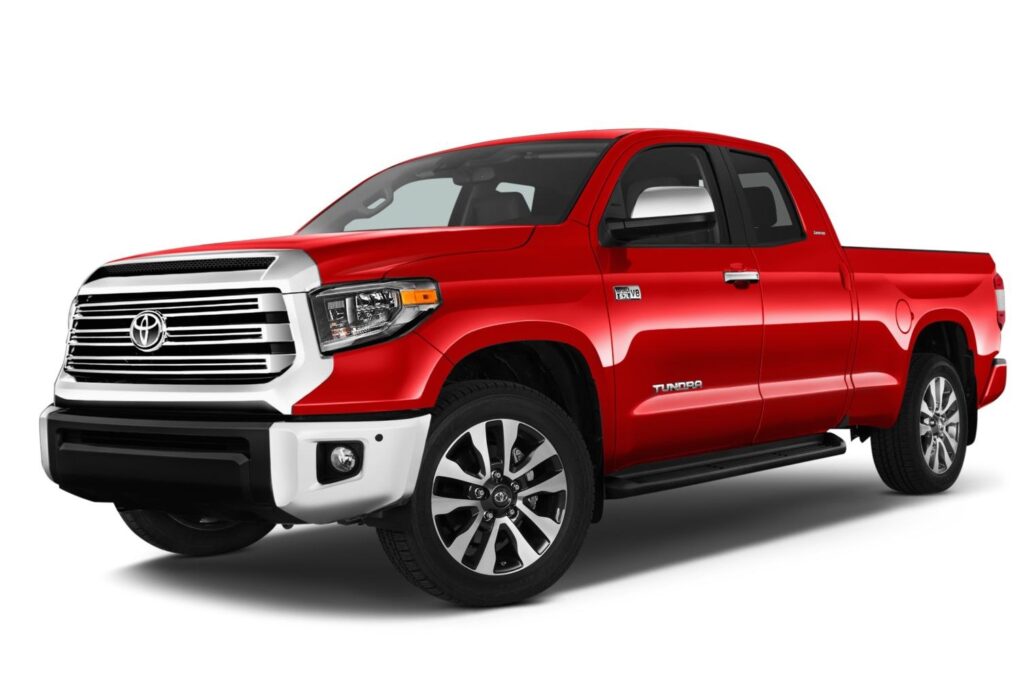
The Toyota Tundra II Double Cab Standard Bed, specifically the facelifted version produced from 2017 to 2019, represents Toyota’s second-generation full-size pickup truck. Designed primarily for the North American market, the Tundra aimed to compete directly with established American manufacturers like Ford, Chevrolet, and Ram. This generation, introduced in 2007, underwent a significant refresh in 2017, focusing on exterior styling, interior enhancements, and updated technology. The 4.6-liter V8 model, producing 310 horsepower, offered a balance of power and efficiency within the Tundra lineup, catering to buyers seeking a capable truck for both work and personal use.
Toyota Tundra II: A Focus on the 4.6L V8
The Tundra II Double Cab Standard Bed with the 4.6-liter V8 engine was positioned as a versatile option within the Tundra range. While the 5.7-liter V8 offered more substantial power, the 4.6-liter provided a more economical choice without sacrificing significant towing and hauling capabilities. The facelifted 2017 model year brought subtle but noticeable changes to the Tundra’s appearance, including a revised grille, headlights, and front bumper. These updates aimed to modernize the truck’s look and enhance its appeal to a broader customer base. The interior also received attention, with improved materials and updated infotainment systems.
Engine & Performance
At the heart of this Tundra variant lies the 1UR-FE 4.6-liter V8 engine. This naturally aspirated powerplant delivers 310 horsepower at 5600 rpm and 443 Nm (326.74 lb.-ft.) of torque at 3400 rpm. The engine features a double overhead camshaft (DOHC) valvetrain with Variable Valve Timing-intelligent (VVT-i) technology, optimizing performance and fuel efficiency across a wide range of driving conditions. Power is delivered to the rear wheels via a six-speed automatic transmission with ECT-i (Electronic Controlled Transmission – intelligent) functionality, which adapts shift patterns based on driving style and road conditions. The weight-to-power ratio stands at 7.5 kg/Hp, translating to 134 Hp/tonne, while the weight-to-torque ratio is 5.2 kg/Nm, or 191.5 Nm/tonne. Fuel economy figures are rated at 14.7 l/100 km (16 US mpg, 19.2 UK mpg) combined, with 15.7 l/100 km (15 US mpg, 18 UK mpg) in urban settings and 12.4 l/100 km (19 US mpg, 22.8 UK mpg) on the highway.
Design & Features
The Toyota Tundra II Double Cab Standard Bed is a four-door, five-seat pickup truck with a standard bed length. The body-on-frame construction provides a robust platform for hauling and towing. The 2017 facelift brought a more aggressive front fascia, with a prominent grille and redesigned headlights. The interior features a functional layout with comfortable seating and a focus on durability. Standard features typically included air conditioning, power windows and locks, and a basic audio system. Higher trim levels offered amenities such as leather upholstery, a premium sound system, and advanced safety features. Safety features included Anti-lock Braking System (ABS) as standard. The truck’s dimensions are substantial, measuring 5814 mm (228.9 in.) in length, 2029 mm (79.88 in.) in width, and 1930 mm (75.98 in.) in height. Ground clearance is a generous 259 mm (10.2 in.), enhancing its off-road capability. The Tundra’s suspension consists of a double wishbone setup with a transverse stabilizer at the front and a rigid axle with leaf springs at the rear.
Technical Specifications
| Brand | Toyota |
| Model | Tundra |
| Generation | Tundra II Double Cab Standard Bed (facelift 2017) |
| Type (Engine) | 4.6 V8 (310 Hp) ECT-i |
| Start of production | 2017 |
| End of production | 2019 |
| Powertrain Architecture | Internal Combustion engine |
| Body type | Pick-up |
| Seats | 5 |
| Doors | 4 |
| Fuel consumption (urban) | 15.7 l/100 km (15 US mpg, 18 UK mpg) |
| Fuel consumption (extra urban) | 12.4 l/100 km (19 US mpg, 22.8 UK mpg) |
| Fuel consumption (combined) | 14.7 l/100 km (16 US mpg, 19.2 UK mpg) |
| Fuel Type | Petrol (Gasoline) |
| Emission standard | LEV-II; ULEV-II |
| Weight-to-power ratio | 7.5 kg/Hp |
| Weight-to-torque ratio | 5.2 kg/Nm |
| Power | 310 Hp @ 5600 rpm |
| Torque | 443 Nm @ 3400 rpm (326.74 lb.-ft. @ 3400 rpm) |
| Engine layout | Front, Longitudinal |
| Engine Model/Code | 1UR-FE |
| Engine displacement | 4608 cm3 (281.2 cu. in.) |
| Number of cylinders | 8 |
| Engine configuration | V-engine |
| Number of valves per cylinder | 4 |
| Fuel injection system | Direct injection |
| Engine aspiration | Naturally aspirated engine |
| Valvetrain | DOHC, VVT-i |
| Engine oil capacity | 8 l (8.45 US qt | 7.04 UK qt) |
| Coolant capacity | 11.9 l (12.57 US qt | 10.47 UK qt) |
| Kerb Weight | 2313 kg (5099.29 lbs.) |
| Max. weight | 3039 kg (6699.85 lbs.) |
| Max load | 726 kg (1600.56 lbs.) |
| Fuel tank capacity | 100 l (26.42 US gal | 22 UK gal) |
| Permitted trailer load with brakes (12%) | 3084 kg (6799.06 lbs.) |
| Length | 5814 mm (228.9 in.) |
| Width | 2029 mm (79.88 in.) |
| Height | 1930 mm (75.98 in.) |
| Wheelbase | 3701 mm (145.71 in.) |
| Front track | 1725 mm (67.91 in.) |
| Rear track | 1725 mm (67.91 in.) |
| Ride height (ground clearance) | 259 mm (10.2 in.) |
| Minimum turning circle | 13.4 m (43.96 ft.) |
| Drivetrain Architecture | Rear wheel drive |
| Number of gears | 6 |
| Gearbox type | Automatic transmission ECT-i |
| Front suspension | Double wishbone, Transverse stabilizer |
| Rear suspension | Rigid axle suspension, Leaf spring |
| Front brakes | Ventilated discs, 353.06 mm |
| Rear brakes | Ventilated discs, 345.44 mm |
| Assisting systems | ABS (Anti-lock braking system) |
| Steering type | Steering rack and pinion |
| Power steering | Hydraulic Steering |
| Tires size | 255/70 R18 112T; 275/65 R18 114T |
| Wheel rims size | 8J x 18 ET60 |
The 2017-2019 Toyota Tundra II Double Cab Standard Bed with the 4.6-liter V8 engine offered a compelling package for buyers seeking a reliable, capable, and comfortable full-size pickup truck. While not the most fuel-efficient option in its class, it provided a solid balance of performance, features, and value, solidifying Toyota’s position in the competitive North American truck market.