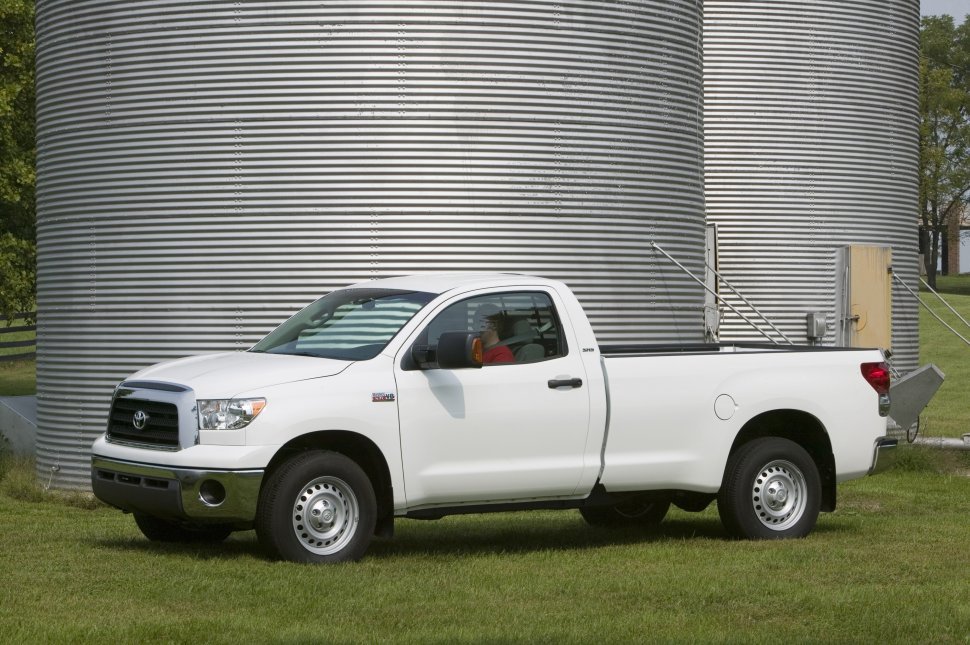
The Toyota Tundra II Regular Cab, produced between 2006 and 2009, represented Toyota’s second foray into the full-size pickup truck market in North America. Designed to compete directly with established American manufacturers like Ford, Chevrolet, and Dodge, the Tundra II aimed to offer a blend of reliability, capability, and refinement. This generation marked a significant increase in size and power compared to its predecessor, with the 4.7-liter V8 model being a key offering. The Regular Cab configuration catered to buyers prioritizing functionality and affordability over passenger space, making it a popular choice for work trucks and those needing a robust hauling platform.
Toyota Tundra II Regular Cab: An Overview
The Tundra II was a pivotal model for Toyota, demonstrating a commitment to the American truck market. While the Tundra has since evolved, the second generation laid the groundwork for its current reputation. The Regular Cab version, specifically with the 4.7-liter V8 engine and automatic transmission, offered a compelling package for buyers seeking a dependable and powerful truck without the added cost and complexity of crew cab models. It was positioned as a workhorse, capable of handling demanding tasks while providing a comfortable driving experience.
Engine & Performance
At the heart of the Tundra II Regular Cab 4.7 V8 was the 2UZ-FE 4.7-liter V8 engine. This naturally aspirated powerplant produced 271 horsepower at 5400 rpm and 424 Nm (312.73 lb.-ft.) of torque at 3400 rpm. The engine featured a robust cast-iron block, aluminum cylinder heads, and dual overhead camshafts (DOHC) with Variable Valve Timing-intelligent (VVT-i) technology. This combination delivered a balance of power and efficiency for its time. The engine’s displacement of 4664 cm3 (284.61 cu. in.) and 32 valves contributed to its smooth operation and responsive performance. Power was delivered to the rear wheels via a five-speed automatic transmission, providing seamless gear changes and optimized power delivery. The weight-to-power ratio of 8.1 kg/Hp and a weight-to-torque ratio of 5.2 kg/Nm indicated a capable and responsive vehicle. Fuel economy was rated at 15.6 l/100 km (15.1 US mpg) in urban conditions and 13 l/100 km (18.1 US mpg) on the highway.
Design & Features
The Toyota Tundra II Regular Cab sported a traditional pickup truck design, characterized by a bold front grille, a strong body-on-frame construction, and a practical interior layout. The Regular Cab configuration featured two doors and seating for three passengers. The interior, while functional, prioritized durability and ease of use over luxury. Standard features included air conditioning, a basic audio system, and power windows and locks. Safety features, while not as comprehensive as modern standards, included Anti-lock Braking System (ABS). The truck’s high ride height (259 mm / 10.2 in) and generous approach and departure angles (27° and 26° respectively) enhanced its off-road capability. The Tundra II’s dimensions – a length of 5330 mm (209.84 in), a width of 2030 mm (79.92 in), and a wheelbase of 3220 mm (126.77 in) – provided ample cargo space and a stable platform for hauling and towing. The truck’s kerb weight of 2200 kg (4850.17 lbs) and maximum load capacity of 794 kg (1750.47 lbs) highlighted its robust construction and hauling capabilities. It also boasted a permitted trailer load with brakes of 3175 kg (6999.68 lbs).
Technical Specifications
| Specification | Value |
| Brand | Toyota |
| Model | Tundra |
| Generation | Tundra II Regular Cab |
| Engine Type | 4.7 V8 32V (271 Hp) Automatic |
| Production Years | 2006 – 2009 |
| Powertrain Architecture | Internal Combustion Engine |
| Body Type | Pick-up |
| Seats | 3 |
| Doors | 2 |
| Fuel Consumption (Urban) | 15.6 l/100 km (15.1 US mpg) |
| Fuel Consumption (Extra Urban) | 13 l/100 km (18.1 US mpg) |
| Fuel Type | Petrol (Gasoline) |
| Weight-to-Power Ratio | 8.1 kg/Hp |
| Weight-to-Torque Ratio | 5.2 kg/Nm |
| Power | 271 Hp @ 5400 rpm |
| Torque | 424 Nm @ 3400 rpm (312.73 lb.-ft. @ 3400 rpm) |
| Engine Layout | Front, Longitudinal |
| Engine Model/Code | 2UZ-FE |
| Engine Displacement | 4664 cm3 (284.61 cu. in.) |
| Number of Cylinders | 8 |
| Engine Configuration | V-engine |
| Cylinder Bore | 94 mm (3.7 in.) |
| Piston Stroke | 84 mm (3.31 in.) |
| Valves per Cylinder | 4 |
| Fuel Injection | Multi-port manifold injection |
| Engine Aspiration | Naturally Aspirated |
| Engine Oil Capacity | 6.2 l (6.55 US qt | 5.46 UK qt) |
| Coolant Capacity | 9.7 l (10.25 US qt | 8.53 UK qt) |
| Kerb Weight | 2200 kg (4850.17 lbs.) |
| Max. Weight | 2994 kg (6600.64 lbs.) |
| Max Load | 794 kg (1750.47 lbs.) |
| Fuel Tank Capacity | 100 l (26.42 US gal | 22 UK gal) |
| Trailer Load (Brakes) | 3175 kg (6999.68 lbs.) |
| Length | 5330 mm (209.84 in.) |
| Width | 2030 mm (79.92 in.) |
| Height | 1925-1930 mm (75.79 – 75.98 in.) |
| Wheelbase | 3220 mm (126.77 in.) |
| Front Track | 1725 mm (67.91 in.) |
| Rear Track | 1725 mm (67.91 in.) |
| Ride Height | 259 mm (10.2 in.) |
| Turning Circle | 13.6 m (44.62 ft.) |
| Drivetrain | Rear Wheel Drive |
| Gears | 5, Automatic |
| Front Suspension | Double Wishbone |
| Rear Suspension | Leaf Spring |
| Front Brakes | Ventilated Discs |
| Rear Brakes | Drum |
The Toyota Tundra II Regular Cab 4.7 V8, while superseded by newer models, remains a testament to Toyota’s engineering prowess and its successful entry into the competitive North American full-size truck market. Its blend of power, reliability, and practicality made it a popular choice for a wide range of buyers, and it continues to be a respected vehicle among truck enthusiasts.