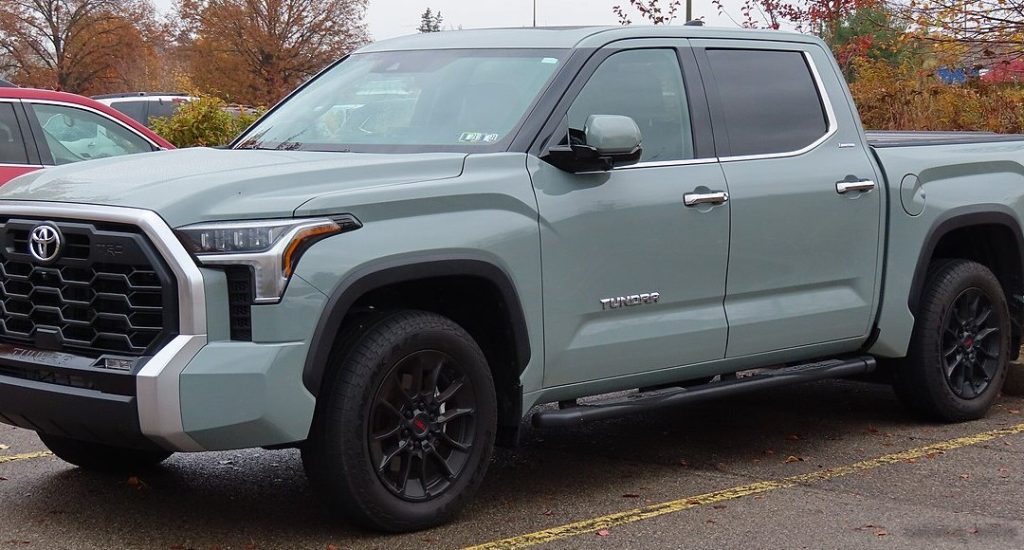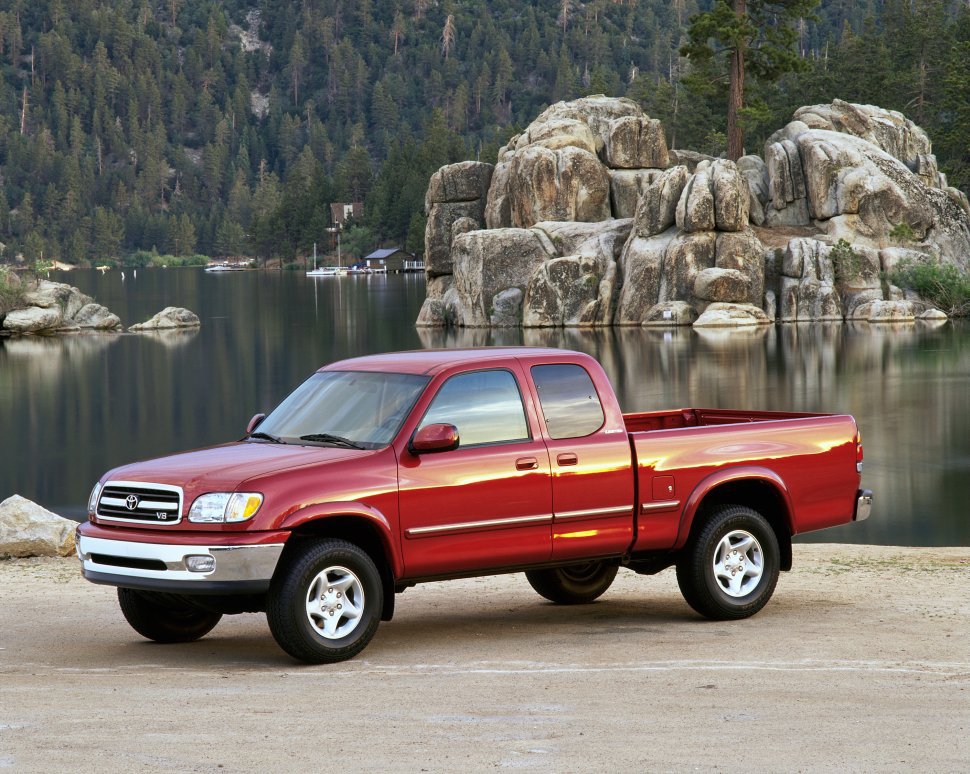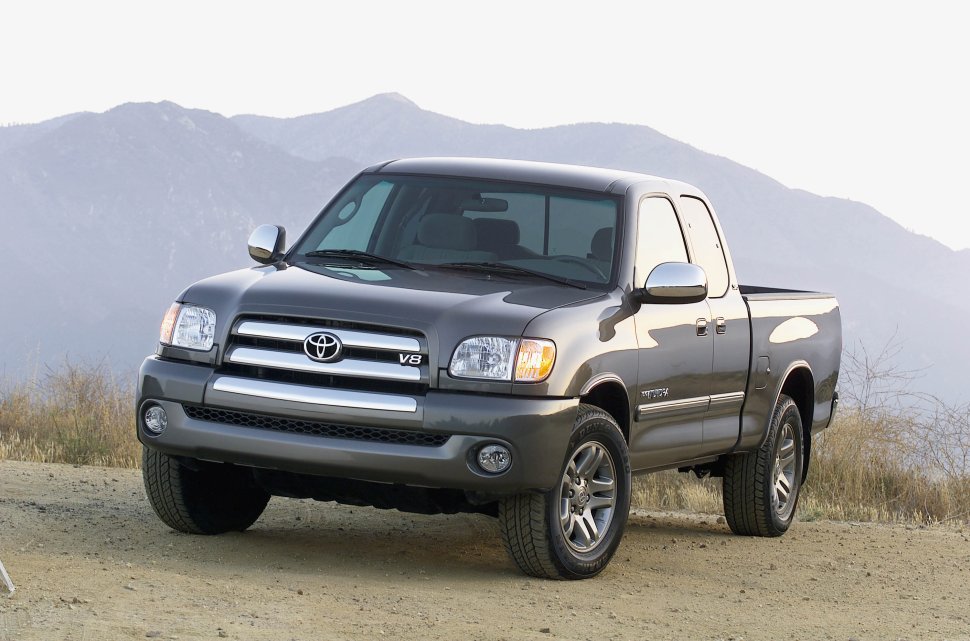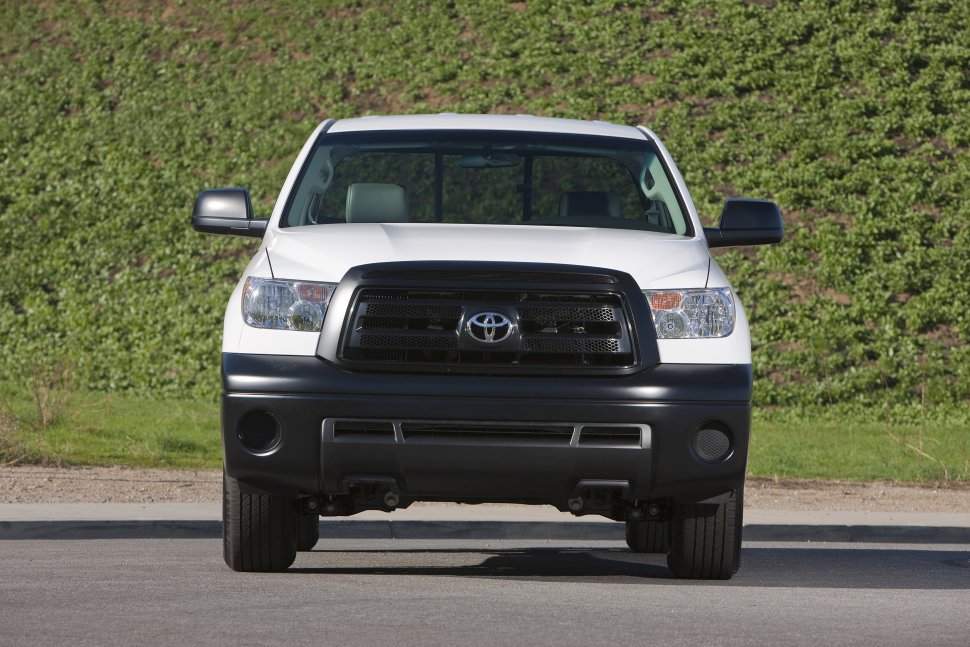
The Toyota Tundra II Regular Cab (facelift 2010) represents Toyota’s second-generation full-size pickup truck, sold primarily in North America. Introduced in 2007, the Tundra was designed to compete directly with established American manufacturers like Ford, Chevrolet, and Dodge. The 2010 facelift brought minor cosmetic and equipment updates, refining an already capable platform. This particular configuration, featuring a 4.0-liter V6 engine and automatic transmission, was positioned as a more economical option within the Tundra lineup, appealing to buyers who didn’t require the higher towing capacity of the V8 models but still desired the robustness and utility of a full-size truck. The Regular Cab configuration offered a no-frills, work-oriented approach, prioritizing interior space for passengers and cargo over extended cab comfort.
Toyota Tundra II Regular Cab: A Detailed Overview
The Tundra II, including the 2010 facelifted models, marked a significant investment by Toyota in the American truck market. Unlike previous attempts to penetrate this segment, the Tundra II was designed *in* the United States, with engineering and styling tailored to American preferences. The Regular Cab model specifically catered to customers needing a straightforward, durable truck for work or basic transportation. It offered a more affordable entry point into the Tundra range, while still providing Toyota’s reputation for reliability and build quality.
Engine & Performance
The heart of the 2011-2013 Toyota Tundra II Regular Cab (facelift 2010) with the 4.0-liter V6 is the 1GR-FE engine. This naturally aspirated 3,956 cc (241.41 cubic inches) V6 produces 270 horsepower at 5,600 rpm and 377 Nm (278.06 lb-ft) of torque at 4,400 rpm. The engine utilizes a double overhead camshaft (DOHC) valvetrain with Variable Valve Timing-intelligent (VVT-i) technology, optimizing performance and fuel efficiency across the engine’s operating range. Power is delivered to the rear wheels via a five-speed automatic transmission. The weight-to-power ratio of 7.7 kg/Hp (130 Hp/tonne) and weight-to-torque ratio of 5.5 kg/Nm (181.5 Nm/tonne) indicate a reasonably responsive driving experience, though not focused on outright acceleration. Fuel economy is rated at 14.7 l/100 km (16 US mpg, 19.2 UK mpg) in urban conditions and 11.7 l/100 km (20.1 US mpg, 24.1 UK mpg) on the extra-urban cycle. The engine’s longitudinal front-mounted layout contributes to a balanced chassis.
Design & Features
The Tundra II Regular Cab is a traditional American pickup truck in its design. It features a two-door body style with seating for three occupants. The truck’s exterior is characterized by a bold front grille, prominent headlights, and a robust overall stance. The 2010 facelift brought subtle changes to the front fascia, including revised grille and headlight designs. The truck’s bed provides ample cargo space for hauling materials. Inside, the cabin is functional and durable, prioritizing practicality over luxury. Standard features typically included air conditioning, a basic audio system, and power windows and locks. Safety features, while not as extensive as in modern vehicles, included Anti-lock Braking System (ABS). The truck’s ride height of 259 mm (10.2 inches) provides good ground clearance for off-road use, and approach and departure angles of 27° and 26° respectively, enhance its capability on uneven terrain. The Tundra’s dimensions – a length of 5,329 mm (209.8 inches) and a width of 2,029 mm (79.88 inches) – reflect its full-size status.
Technical Specifications
| Brand | Toyota |
| Model | Tundra |
| Generation | Tundra II Regular Cab (facelift 2010) |
| Type (Engine) | 4.0 V6 24V (270 Hp) Automatic |
| Start of production | 2011 |
| End of production | 2013 |
| Powertrain Architecture | Internal Combustion engine |
| Body type | Pick-up |
| Seats | 3 |
| Doors | 2 |
| Fuel consumption (urban) | 14.7 l/100 km (16 US mpg, 19.2 UK mpg) |
| Fuel consumption (extra urban) | 11.7 l/100 km (20.1 US mpg, 24.1 UK mpg) |
| Fuel Type | Petrol (Gasoline) |
| Weight-to-power ratio | 7.7 kg/Hp (130 Hp/tonne) |
| Weight-to-torque ratio | 5.5 kg/Nm (181.5 Nm/tonne) |
| Power | 270 Hp @ 5600 rpm |
| Power per litre | 68.3 Hp/l |
| Torque | 377 Nm @ 4400 rpm (278.06 lb.-ft. @ 4400 rpm) |
| Engine layout | Front, Longitudinal |
| Engine Model/Code | 1GR-FE |
| Engine displacement | 3956 cm3 (241.41 cu. in.) |
| Number of cylinders | 6 |
| Engine configuration | V-engine |
| Cylinder Bore | 94 mm (3.7 in.) |
| Piston Stroke | 95 mm (3.74 in.) |
| Compression ratio | 10.4:1 |
| Number of valves per cylinder | 4 |
| Fuel injection system | Multi-port manifold injection |
| Engine aspiration | Naturally aspirated engine |
| Valvetrain | DOHC, VVT-i |
| Engine oil capacity | 5.2 l (5.49 US qt | 4.58 UK qt) |
| Coolant capacity | 9.6 l (10.14 US qt | 8.45 UK qt) |
| Kerb Weight | 2077 kg (4579 lbs.) |
| Max. weight | 2812 kg (6199.4 lbs.) |
| Max load | 735 kg (1620.4 lbs.) |
| Fuel tank capacity | 100 l (26.42 US gal | 22 UK gal) |
| Permitted trailer load with brakes (12%) | 2223 kg (4900.88 lbs.) |
| Length | 5329 mm (209.8 in.) |
| Width | 2029 mm (79.88 in.) |
| Height | 1925 mm (75.79 in.) |
| Wheelbase | 3221 mm (126.81 in.) |
| Front track | 1725 mm (67.91 in.) |
| Rear track | 1725 mm (67.91 in.) |
| Ride height (ground clearance) | 259 mm (10.2 in.) |
| Minimum turning circle | 13.4 m (43.96 ft.) |
| Approach angle | 27° |
| Departure angle | 26° |
| Drivetrain Architecture | Rear wheel drive |
| Number of gears | 5 |
| Gearbox type | Automatic transmission |
| Front suspension | Double wishbone |
| Rear suspension | Leaf spring |
| Front brakes | Ventilated discs |
| Rear brakes | Ventilated discs |
| Assisting systems | ABS (Anti-lock braking system) |
| Steering type | Steering rack and pinion |
| Power steering | Hydraulic Steering |
| Tires size | 255/70 R18 |
| Wheel rims size | 8.0J x 18 |