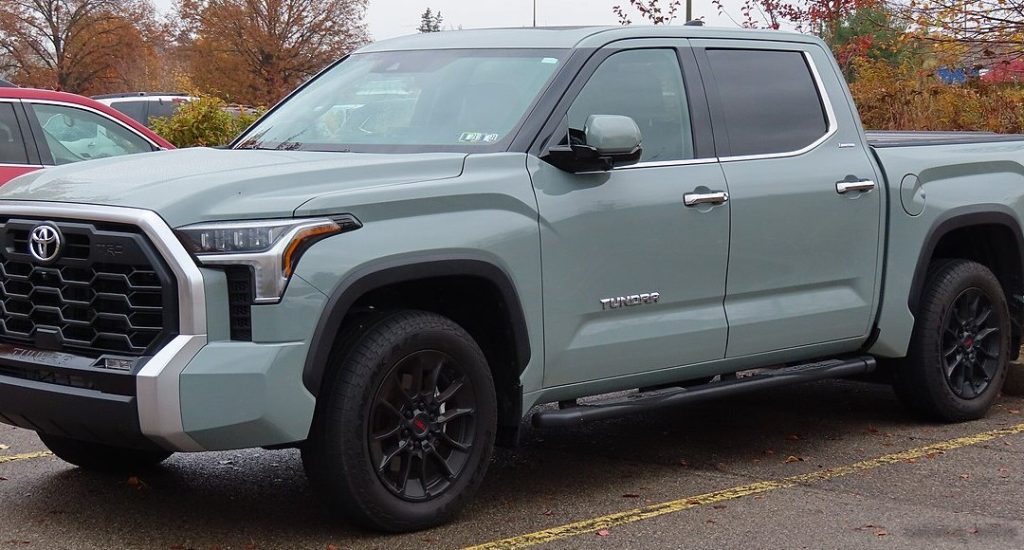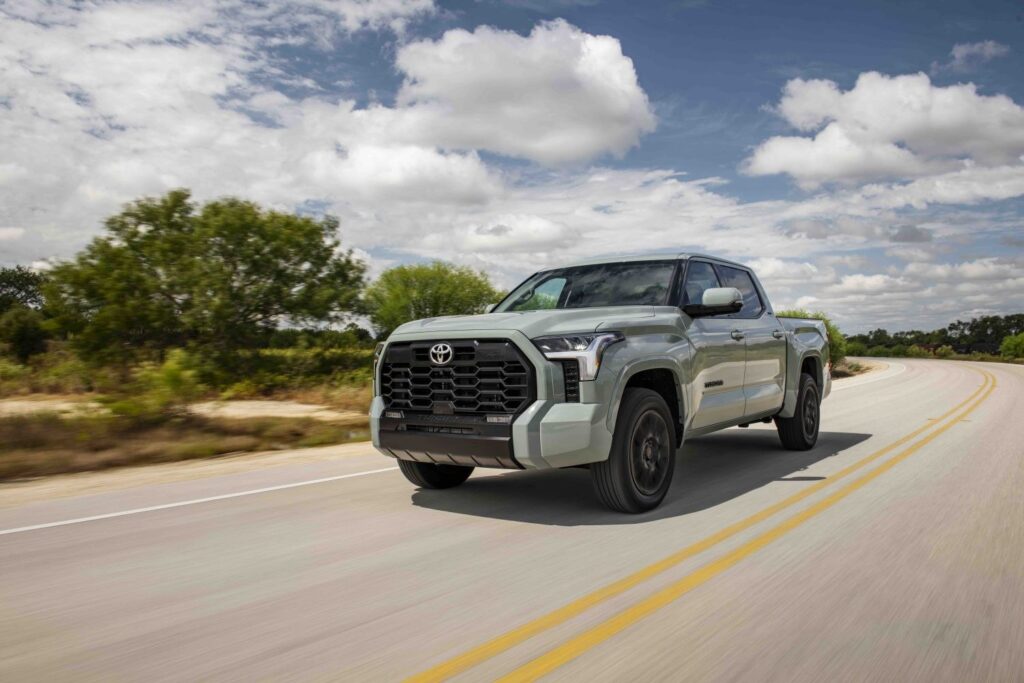
The third generation of Toyota’s formidable full-size pickup truck, the Toyota Tundra III CrewMax Short Bed 3.5 V6 i-FORCE MAX (437 Hp) Hybrid ECT-i, introduced in September 2021, represents a significant leap forward in the segment, particularly with its innovative hybrid powertrain. Engineered specifically for the demanding North American market, this iteration of the Tundra sheds its predecessor’s naturally aspirated V8 in favor of a sophisticated twin-turbo V6 combined with an electric motor, establishing a new benchmark for power, efficiency, and capability within Toyota’s truck lineup. The CrewMax Short Bed configuration, known for its spacious four-door cabin and practical cargo area, caters to a wide range of buyers, from those seeking a robust workhorse to families needing a versatile daily driver with substantial towing and hauling prowess.
Engine & Performance: The i-FORCE MAX Hybrid Powertrain
At the heart of the Toyota Tundra III CrewMax Short Bed‘s formidable capabilities lies its advanced i-FORCE MAX hybrid powertrain, a Full Hybrid Electric Vehicle (FHEV) architecture meticulously engineered for both raw power and improved fuel economy. This sophisticated system combines a 3.5-liter V6 i-FORCE MAX twin-turbocharged internal combustion engine (ICE) with a potent electric motor, delivering a combined output of 437 horsepower at 5200 rpm and a staggering 582.67 lb.-ft. of torque at a low 2400 rpm. This impressive torque figure is crucial for a pickup, enabling robust acceleration and exceptional towing performance, with the ability to pull a permitted trailer load with brakes of up to 11,450.81 lbs.
The V6 engine, designated V35A-FTS, features a 3445 cm3 (210.23 cu. in.) displacement, benefiting from a twin-turbo, intercooled aspiration system. Its design incorporates a V-engine configuration with six cylinders, each featuring four valves, and a valvetrain with DOHC (Dual Overhead Camshaft) and Dual VVT-i (Variable Valve Timing with intelligence) for optimal combustion efficiency across the rev range. Fuel delivery is handled by a sophisticated system combining both direct injection and multi-port manifold injection, ensuring precise fuel atomization and combustion control. With a compression ratio of 10.4:1, the engine is designed for both performance and durability. The power per liter stands at 126.9 Hp/l, showcasing the efficiency of its forced induction system.
The hybrid aspect is central to the i-FORCE MAX. An electric motor, producing 49 horsepower and 184.39 lb.-ft. of torque, is strategically placed between the combustion engine and the 10-speed automatic ECT-i transmission. This synchronous electric motor draws power from a 1.87 kWh Nickel-metal hydride (NiMH) battery pack, operating at 288 V and cleverly located under the front seats to optimize weight distribution and preserve cabin space. This FHEV architecture allows the Tundra to operate in full electric mode at speeds up to 18.02 mph, contributing to improved city fuel economy and a quieter driving experience in certain conditions. The system seamlessly blends electric and gasoline power, optimizing performance and efficiency based on driving demands. The drivetrain architecture ensures that both the ICE and electric motor drive the rear wheels, with the ability to work in full electric or mixed mode, offering a dynamic and responsive driving experience. The vehicle adheres to the LEV-III emission standard, reflecting its commitment to environmental responsibility.
Design & Features: Modern Utility and Comfort
The Toyota Tundra III CrewMax Short Bed is designed to be a commanding presence on the road, embodying a rugged yet refined aesthetic that aligns with its capabilities. Its body type is a four-door pickup with seating for five occupants, emphasizing passenger comfort and utility. With a substantial length of 233.58 inches (5933 mm), a width of 80.2 inches (2037 mm), and a height of 77.99 inches (1981 mm), the Tundra projects an imposing stance. The wheelbase measures 145.71 inches (3701 mm), contributing to both ride stability and interior spaciousness. A ground clearance of 8.5 inches (216 mm), combined with an approach angle of 21° and a departure angle of 24°, ensures robust off-road capability for those venturing beyond paved roads.
The CrewMax cabin is a highlight, offering exceptional rear-seat legroom, making it one of the most comfortable options in its class for passengers. The thoughtful design extends to practical features such as a large fuel tank capacity of 32.23 US gallons (122 liters), providing an extensive range for long hauls. The truck’s kerb weight ranges from 5709.97 to 5800.36 lbs. (2590-2631 kg), with a maximum permissible weight of 6990.86 to 7209.12 lbs. (3171-3270 kg), allowing for a maximum payload of 1280.89 to 1408.75 lbs. (581-639 kg). These figures underscore its utility as a heavy-duty work and recreational vehicle.
Underneath, the Tundra features a robust chassis designed to handle demanding tasks. The front suspension employs a double wishbone setup with a transverse stabilizer, while the rear utilizes a rigid axle suspension with coil springs, a significant departure from previous leaf-spring designs, enhancing ride comfort and handling dynamics. Braking performance is assured by large ventilated discs, 353 mm at the front and 345 mm at the rear, supported by an Anti-lock Braking System (ABS) for enhanced safety. Steering is managed by an electric power steering rack and pinion system, offering precise control and reducing driver fatigue. The truck rolls on 265/60 R20 tires mounted on 8J x 20 wheel rims, providing a balance of traction and ride comfort. The relatively low drag coefficient (Cd) of 0.36 indicates attention to aerodynamic efficiency, which is commendable for a vehicle of this size and contributes to overall performance and efficiency.
Technical Specifications
| Brand | Toyota |
| Model | Tundra |
| Generation | Tundra III CrewMax Short Bed |
| Type (Engine) | 3.5 V6 i-FORCE MAX (437 Hp) Hybrid ECT-i |
| Start of production | September, 2021 year |
| Powertrain Architecture | FHEV (Full Hybrid Electric Vehicle) |
| Body type | Pick-up |
| Seats | 5 |
| Doors | 4 |
| Fuel Type | Petrol (Gasoline) |
| Emission standard | LEV-III |
| Weight-to-power ratio | 5.9 kg/Hp, 168.7 Hp/tonne |
| Weight-to-torque ratio | 3.3 kg/Nm, 305 Nm/tonne |
| Gross battery capacity | 1.87 kWh |
| Battery voltage | 288 V |
| Battery technology | Nickel-metal hydride (NiMH) |
| Battery location | Under the front seats |
| Max speed (electric) | 29 km/h (18.02 mph) |
| Electric motor power | 49 Hp |
| Electric motor Torque | 250 Nm (184.39 lb.-ft.) |
| Electric motor location | Between the combustion engine and the transmission |
| Electric motor type | Synchronous |
| Power | 437 Hp @ 5200 rpm. |
| Power per litre | 126.9 Hp/l |
| Torque | 790 Nm @ 2400 rpm (582.67 lb.-ft. @ 2400 rpm) |
| Engine layout | Front, Longitudinal |
| Engine Model/Code | V35A-FTS |
| Engine displacement | 3445 cm3 (210.23 cu. in.) |
| Number of cylinders | 6 |
| Engine configuration | V-engine |
| Cylinder Bore | 85.5 mm (3.37 in.) |
| Piston Stroke | 100 mm (3.94 in.) |
| Compression ratio | 10.4:1 |
| Number of valves per cylinder | 4 |
| Fuel injection system | Direct injection and Multi-port manifold injection |
| Engine aspiration | Twin-Turbo, Intercooler |
| Valvetrain | DOHC, Dual VVT-i |
| Engine oil capacity | 7.3 l (7.71 US qt | 6.42 UK qt) |
| Coolant | 12.4 l (13.1 US qt | 10.91 UK qt) |
| Engine systems | Particulate filter |
| Kerb Weight | 2590-2631 kg (5709.97 – 5800.36 lbs.) |
| Max. weight | 3171-3270 kg (6990.86 – 7209.12 lbs.) |
| Max load | 581-639 kg (1280.89 – 1408.75 lbs.) |
| Fuel tank capacity | 122 l (32.23 US gal | 26.84 UK gal) |
| Permitted trailer load with brakes (12%) | 5194 kg (11450.81 lbs.) |
| Permitted towbar download | 519 kg (1144.2 lbs.) |
| Length | 5933 mm (233.58 in.) |
| Width | 2037 mm (80.2 in.) |
| Height | 1981 mm (77.99 in.) |
| Wheelbase | 3701 mm (145.71 in.) |
| Front track | 1737 mm (68.39 in.) |
| Rear (Back) track | 1737 mm (68.39 in.) |
| Ride height (ground clearance) | 216 mm (8.5 in.) |
| Drag coefficient (Cd) | 0.36 |
| Minimum turning circle (turning diameter) | 14.8 m (48.56 ft.) |
| Approach angle | 21° |
| Departure angle | 24° |
| Drivetrain Architecture | The Internal combustion engine (ICE) and electric motor drive the rear wheels of the car with the ability to work in full electric or mixed mode. |
| Drive wheel | Rear wheel drive |
| Number of gears and type of gearbox | 10 gears, automatic transmission ECT-i |
| Front suspension | Double wishbone, Transverse stabilizer |
| Rear suspension | Rigid axle suspension, Coil spring |
| Front brakes | Ventilated discs, 353 mm |
| Rear brakes | Ventilated discs, 345 mm |
| Assisting systems | ABS (Anti-lock braking system) |
| Steering type | Steering rack and pinion |
| Power steering | Electric Steering |
| Tires size | 265/60 R20 |
| Wheel rims size | 8J x 20 |