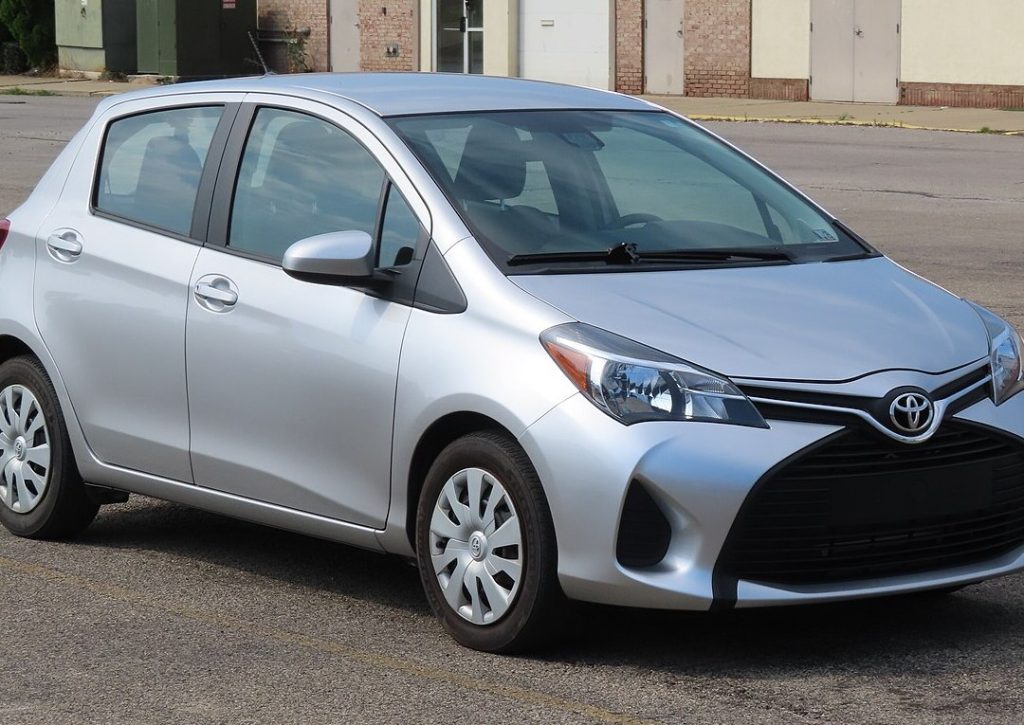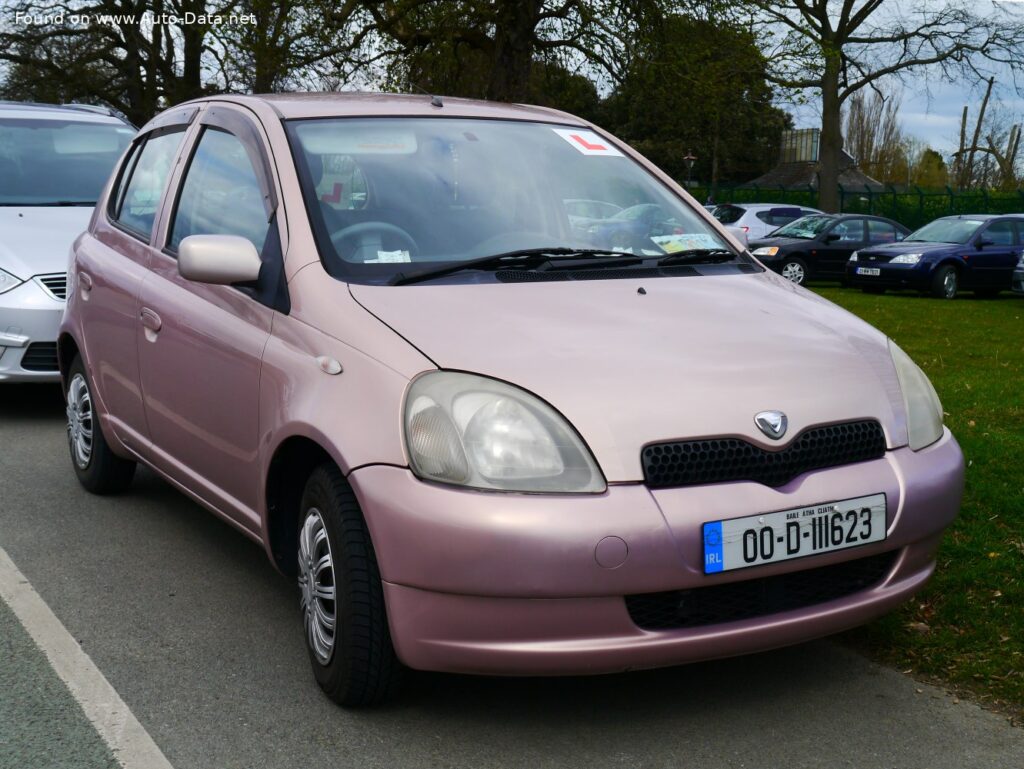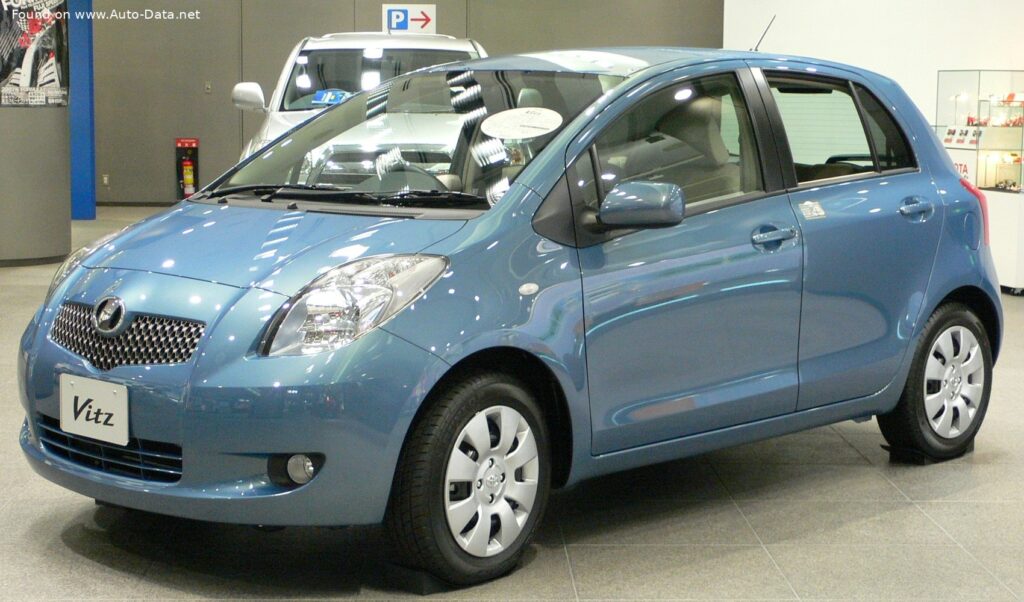
The Toyota Vitz (known as the Toyota Yaris in most global markets, including the United States) is a subcompact hatchback produced by Toyota Motor Corporation. The second generation, known as the Vitz II (produced from 2005 to 2011), represented a significant evolution of the original, focusing on increased interior space, improved fuel efficiency, and a more refined driving experience. While not directly sold as the Vitz in the US during this period, the Yaris offered in North America shared many of the Vitz II’s core engineering principles. The 1.3 16V RS variant, producing 98 horsepower, was a performance-oriented trim level primarily aimed at the Japanese and European markets, offering a sportier driving experience within the subcompact segment.
Toyota Vitz II 1.3 16V RS: An Overview
The Vitz II was designed to appeal to a broad demographic, particularly young urban drivers. Its compact dimensions made it ideal for navigating crowded city streets, while its relatively spacious interior provided ample room for passengers and cargo. The 1.3 16V RS model distinguished itself with a higher-output engine, tuned suspension, and often, unique styling cues. This trim level catered to drivers seeking a more engaging and dynamic driving experience than the standard Vitz models offered. The Vitz II, and the Yaris it became in many regions, quickly gained a reputation for reliability, fuel economy, and practicality, becoming a popular choice in its class.
Engine & Performance
The heart of the Vitz II 1.3 16V RS is a 1.3-liter (1298 cm3 or 79.21 cubic inches) inline four-cylinder gasoline engine. This engine, equipped with a multi-port fuel injection system and a double overhead camshaft (DOHC) valvetrain, produces 98 horsepower at 6200 rpm and 143 Nm (105.47 lb.-ft.) of torque at 4200 rpm. The engine’s power output translates to a power-to-weight ratio of 100 horsepower per tonne and a power-per-liter figure of 75.5 hp/l. The engine is naturally aspirated, meaning it doesn’t rely on a turbocharger or supercharger for forced induction. This contributes to a linear power delivery and predictable performance. The 5-speed manual transmission allows for precise gear selection and enhances driver control. The front-wheel-drive configuration, typical for vehicles in this class, provides good traction and efficiency. The weight-to-torque ratio of 6.9 kg/Nm further highlights the engine’s responsiveness.
Design & Features
The Vitz II is a hatchback available in both 3-door and 5-door configurations, offering flexibility to suit different lifestyles. The 1.3 16V RS trim often featured subtle styling enhancements, such as sportier bumpers, alloy wheels, and a rear spoiler, to visually differentiate it from the standard models. Inside, the Vitz II prioritized practicality and functionality. The interior layout was designed to maximize space, offering comfortable seating for five passengers. Safety features, while evolving with each model year, typically included an Anti-lock Braking System (ABS) as standard equipment. The steering system utilizes a hydraulic power steering rack and pinion for responsive and precise handling. The vehicle’s compact size and a minimum turning circle of 8.6 meters (28.22 feet) make it exceptionally maneuverable in urban environments. The fuel tank capacity of 45 liters (11.89 US gallons) provides a reasonable driving range.
Technical Specifications
| Brand | Toyota |
| Model | Vitz |
| Generation | Vitz II |
| Type (Engine) | 1.3 16V RS (98 Hp) |
| Start of production | 2005 year |
| End of production | 2011 year |
| Powertrain Architecture | Internal Combustion engine |
| Body type | Hatchback |
| Seats | 5 |
| Doors | 3/5 |
| Fuel Type | Petrol (Gasoline) |
| Weight-to-power ratio | 10 kg/Hp, 100 Hp/tonne |
| Weight-to-torque ratio | 6.9 kg/Nm, 145.9 Nm/tonne |
| Power | 98 Hp @ 6200 rpm |
| Power per litre | 75.5 Hp/l |
| Torque | 143 Nm @ 4200 rpm / 105.47 lb.-ft. @ 4200 rpm |
| Engine layout | Front, Transverse |
| Engine displacement | 1298 cm3 / 79.21 cu. in. |
| Number of cylinders | 4 |
| Engine configuration | Inline |
| Cylinder Bore | 75 mm / 2.95 in. |
| Piston Stroke | 73.5 mm / 2.89 in. |
| Compression ratio | 10.5:1 |
| Number of valves per cylinder | 4 |
| Fuel injection system | Multi-port manifold injection |
| Engine aspiration | Naturally aspirated engine |
| Valvetrain | DOHC |
| Kerb Weight | 980 kg / 2160.53 lbs |
| Fuel tank capacity | 45 l / 11.89 US gal | 9.9 UK gal |
| Wheelbase | 2370 mm / 93.31 in |
| Front track | 1445 mm / 56.89 in |
| Rear (Back) track | 1420 mm / 55.91 in |
| Minimum turning circle (turning diameter) | 8.6 m / 28.22 ft |
| Drivetrain Architecture | The Internal combustion engine (ICE) drives the front wheels of the vehicle. |
| Drive wheel | Front wheel drive |
| Number of gears and type of gearbox | 5 gears, manual transmission |
| Front suspension | Independent type McPherson |
| Front brakes | Disc |
| Rear brakes | Disc |
| Assisting systems | ABS (Anti-lock braking system) |
| Steering type | Steering rack and pinion |
| Power steering | Hydraulic Steering |
The Toyota Vitz II 1.3 16V RS, while not a high-performance vehicle in the traditional sense, offered a compelling combination of efficiency, practicality, and driving enjoyment. Its success in markets like Japan and Europe demonstrated the demand for well-engineered, fuel-efficient subcompacts that could deliver a surprisingly engaging driving experience. The Vitz II laid the groundwork for the continued success of the Yaris/Vitz nameplate globally, solidifying its position as a leader in the subcompact hatchback segment.