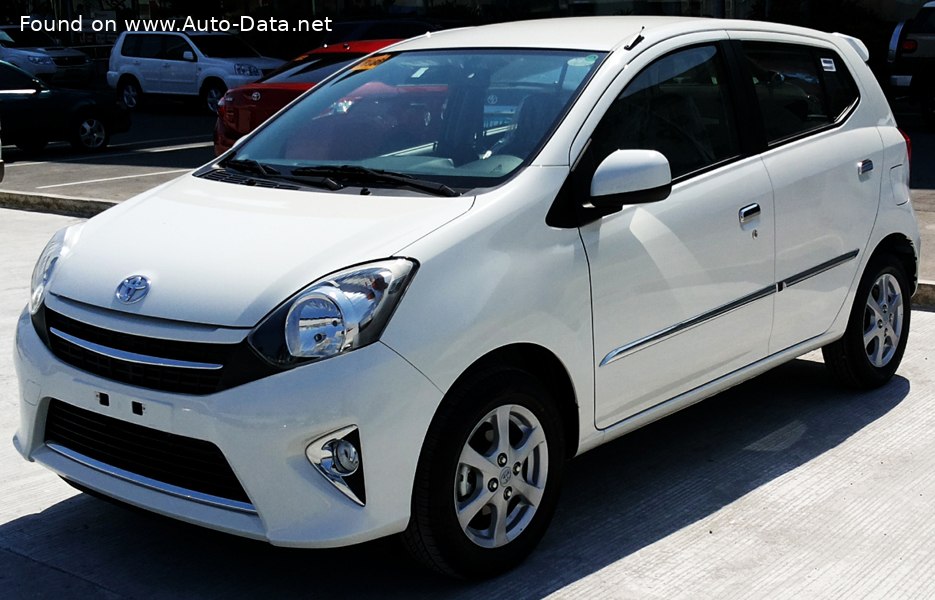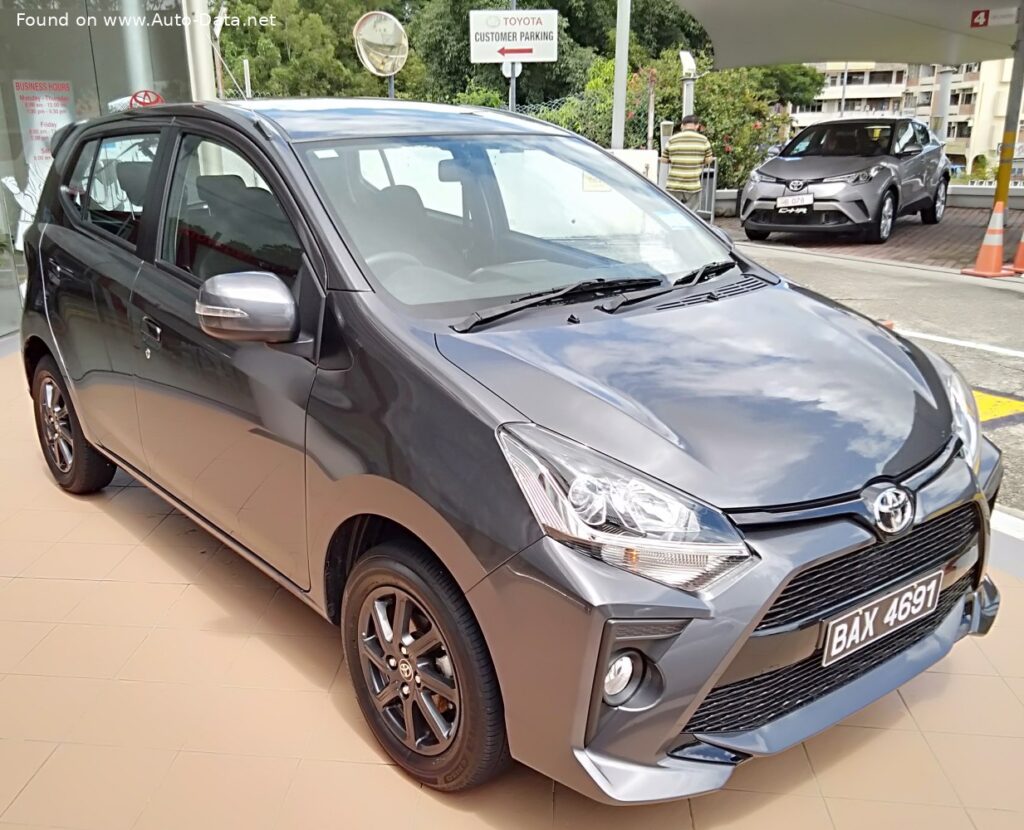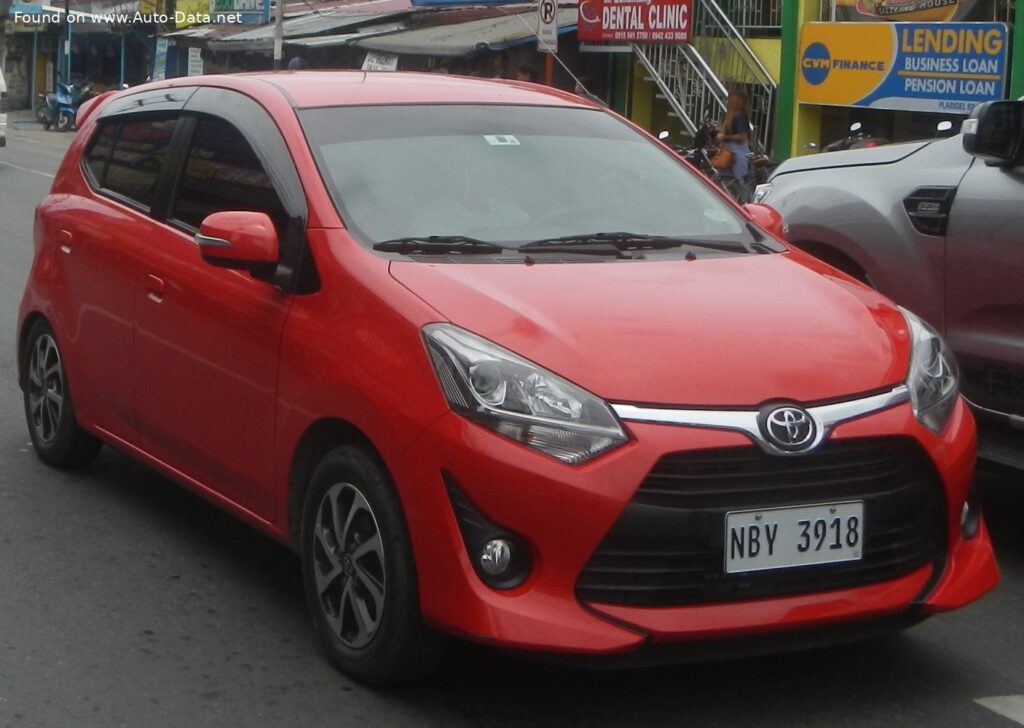
The Toyota Wigo, specifically the facelifted model produced from 2017 to 2020, is a city car primarily designed for the Southeast Asian market. While not officially sold in the United States, the Wigo represents Toyota’s entry-level offering in countries like the Philippines, Indonesia, and Malaysia, where affordable and fuel-efficient transportation is highly valued. This generation of the Wigo, powered by the 1.0-liter VVT-i engine, aimed to provide a practical and economical solution for urban commuters. The 2017 facelift brought cosmetic updates and minor improvements to the original Wigo, enhancing its appeal in a competitive segment.
Toyota Wigo (Facelift 2017) 1.0 VVT-i: An Overview
The Wigo falls into the subcompact or city car segment, characterized by its small footprint, ease of maneuverability, and low running costs. It’s a five-door hatchback designed to accommodate five passengers, making it suitable for small families or individuals navigating congested city streets. The Wigo’s appeal lies in its affordability, fuel efficiency, and relatively spacious interior for its size. It’s a product of Toyota’s strategy to cater to emerging markets with vehicles tailored to specific regional needs and economic conditions.
Engine & Performance
The heart of the 2017 Toyota Wigo 1.0 VVT-i is the 1KR-VE engine, a 998cc (60.9 cubic inches) inline-3 cylinder gasoline engine. This naturally aspirated engine produces 66 horsepower at 6000 rpm and 89 Nm (65.64 lb-ft) of torque at 4400 rpm. While not a powerhouse, the engine is designed for efficiency rather than outright speed. The power-to-weight ratio of 12.7 kg/Hp (79 Hp/tonne) and torque-to-weight ratio of 9.4 kg/Nm (106.6 Nm/tonne) reflect this focus. The engine utilizes multi-port fuel injection and Toyota’s Variable Valve Timing-intelligence (VVT-i) technology to optimize performance and fuel economy. Power is delivered to the front wheels via a 5-speed manual transmission. The Wigo’s drivetrain is a conventional front-wheel-drive setup, prioritizing simplicity and reliability. The engine oil capacity is 2.7 liters (2.85 US qt | 2.38 UK qt) and requires a specific oil specification (details not provided in the source data). The cooling system requires 3.6 liters (3.8 US qt | 3.17 UK qt) of coolant.
Design & Features
The 2017 Wigo facelift maintains the original’s hatchback body style, offering a practical and versatile cargo area. The five-door configuration provides easy access for passengers and luggage. The exterior design received minor updates with the facelift, including a revised front grille, updated headlights, and a refreshed bumper. Inside, the Wigo offers a basic but functional interior with seating for five. Features are kept to a minimum to maintain affordability, but the Wigo typically includes essential amenities like air conditioning, power steering (electric), and basic audio system. Safety features, while not extensive, include an Anti-lock Braking System (ABS). The Wigo’s suspension consists of an independent McPherson strut setup at the front and a torsion beam at the rear, providing a comfortable ride for city driving. The vehicle rides on 175/65 R14 tires mounted on 5J x 14 inch wheel rims. The steering system utilizes a rack and pinion setup for precise handling.
Technical Specifications
| Brand | Toyota |
| Model | Wigo |
| Generation | Wigo (facelift 2017) |
| Type (Engine) | 1.0 VVT-i (66 Hp) |
| Start of production | 2017 |
| End of production | 2020 |
| Powertrain Architecture | Internal Combustion engine |
| Body type | Hatchback |
| Seats | 5 |
| Doors | 5 |
| Fuel Type | Petrol (Gasoline) |
| Weight-to-power ratio | 12.7 kg/Hp, 79 Hp/tonne |
| Weight-to-torque ratio | 9.4 kg/Nm, 106.6 Nm/tonne |
| Power | 66 Hp @ 6000 rpm |
| Power per litre | 66.1 Hp/l |
| Torque | 89 Nm @ 4400 rpm / 65.64 lb.-ft. @ 4400 rpm |
| Engine layout | Front, Transverse |
| Engine Model/Code | 1KR-VE |
| Engine displacement | 998 cm3 / 60.9 cu. in. |
| Number of cylinders | 3 |
| Engine configuration | Inline |
| Number of valves per cylinder | 4 |
| Fuel injection system | Multi-port manifold injection |
| Engine aspiration | Naturally aspirated engine |
| Valvetrain | DOHC, VVT-i |
| Engine oil capacity | 2.7 l / 2.85 US qt | 2.38 UK qt |
| Coolant | 3.6 l / 3.8 US qt | 3.17 UK qt |
| Kerb Weight | 835-840 kg / 1840.86 – 1851.88 lbs. |
| Fuel tank capacity | 33 l / 8.72 US gal | 7.26 UK gal |
| Length | 3660 mm / 144.09 in. |
| Width | 1600 mm / 62.99 in. |
| Height | 1520 mm / 59.84 in. |
| Drivetrain Architecture | ICE drives front wheels |
| Drive wheel | Front wheel drive |
| Number of gears and type of gearbox | 5 gears, manual transmission |
| Front suspension | Independent, McPherson with coil spring and anti-roll bar |
| Rear suspension | Torsion |
| Front brakes | Ventilated discs |
| Rear brakes | Drum |
| Assisting systems | ABS (Anti-lock braking system) |
| Steering type | Steering rack and pinion |
| Power steering | Electric Steering |
| Tires size | 175/65 R14 |
| Wheel rims size | 5J x 14 |
In conclusion, the 2017 Toyota Wigo 1.0 VVT-i represents a practical and affordable solution for urban transportation in Southeast Asian markets. Its compact size, fuel efficiency, and low running costs make it a popular choice for commuters and small families. While not designed for high performance, the Wigo provides reliable and economical transportation, embodying Toyota’s commitment to providing vehicles tailored to the needs of diverse markets.