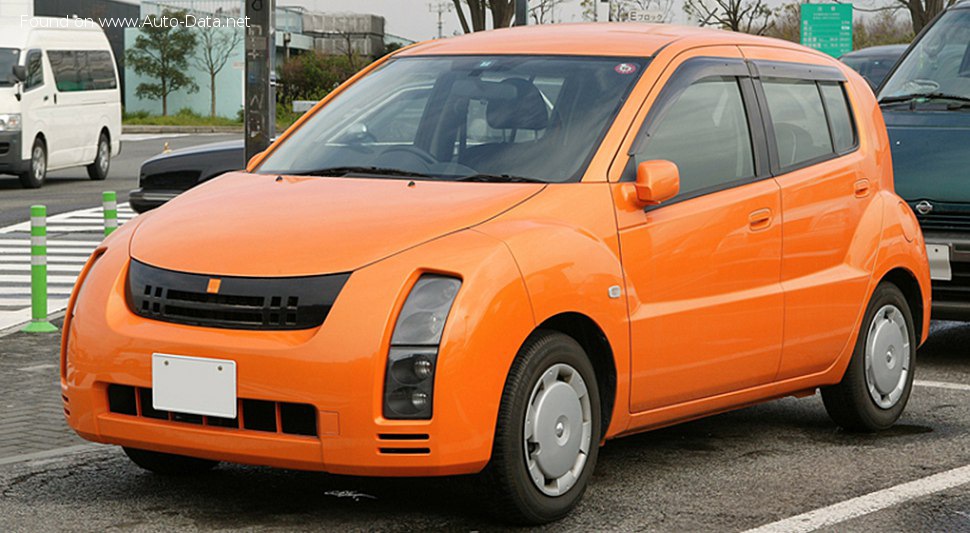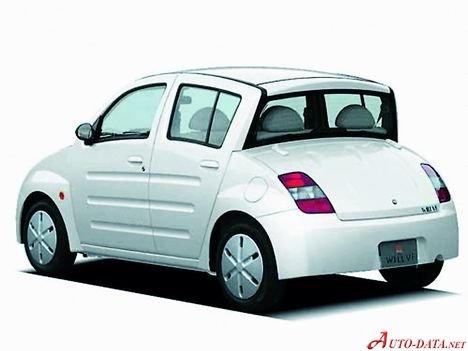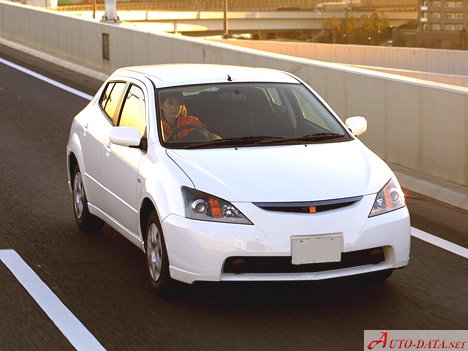
The Toyota Will VS 1.8 16V, produced between 2001 and 2004, was a compact hatchback primarily aimed at the Japanese domestic market (JDM). Positioned as a stylish and sporty offering, the Will VS sought to appeal to younger buyers with its distinctive design and relatively potent engine. It was part of the larger Toyota Will series, a line of vehicles created through a collaboration with Panasonic, focusing on incorporating advanced technology and appealing aesthetics. While not officially sold in the United States, the Will VS represents a significant example of Toyota’s design and engineering capabilities during the early 2000s, showcasing a focus on performance within a practical, everyday vehicle.
Toyota Will VS: Overview and Market Positioning
The Toyota Will VS occupied a niche segment in the Japanese market, competing with vehicles like the Honda Civic and Mazda Familia (known as the Mazda3 outside of Japan). Unlike many other compact cars of the era, the Will VS prioritized a more engaging driving experience, thanks to its high-revving engine and relatively lightweight construction. The “VS” designation stood for “Vibrant Sports,” reflecting Toyota’s intention to create a vehicle that was both fun to drive and visually appealing. The collaboration with Panasonic resulted in features like an optional high-end audio system and advanced navigation technology, further enhancing the car’s appeal to tech-savvy consumers. The Will series, as a whole, was an experiment in collaborative design and marketing, and the VS model was arguably the most performance-oriented variant.
Engine & Performance
The heart of the Toyota Will VS 1.8 16V is the 2ZZ-GE 1.8-liter inline-four engine. This naturally aspirated powerplant produces 190 horsepower at 7600 rpm and 180 Nm (132.76 lb.-ft.) of torque at 6800 rpm. The engine features a double overhead camshaft (DOHC) valvetrain with four valves per cylinder, contributing to its high-revving nature and impressive power output for its displacement. The 2ZZ-GE engine is known for its responsiveness and willingness to rev, making it a popular choice among enthusiasts. Power is delivered to the front wheels via a four-speed automatic transmission. The Will VS achieves a maximum speed of 220 km/h (136.7 mph). Its weight-to-power ratio of 6.3 kg/Hp and weight-to-torque ratio of 6.6 kg/Nm contribute to its lively performance. Fuel consumption is rated at 12 l/100 km (19.6 US mpg) in urban conditions and 7 l/100 km (33.6 US mpg) on the open road.
Design & Features
The Toyota Will VS boasts a distinctive hatchback body style, characterized by its sleek lines and sporty proportions. The design aimed for a youthful and modern aesthetic, setting it apart from more conservative offerings in the compact car segment. The interior of the Will VS is designed with practicality and comfort in mind, offering seating for five passengers. Standard features included air conditioning, power windows, and power steering. Higher trim levels offered options such as alloy wheels, a sunroof, and a premium audio system developed in collaboration with Panasonic. Safety features, while typical for the early 2000s, included an Anti-lock Braking System (ABS). The vehicle’s dimensions are 4385 mm (172.64 in) in length, 1720 mm (67.72 in) in width, and 1430 mm (56.3 in) in height, with a wheelbase of 2600 mm (102.36 in). The curb weight is 1190 kg (2623.5 lbs).
Technical Specifications
| Brand | Toyota |
| Model | Will VS |
| Generation | Will VS |
| Type (Engine) | 1.8 16V (190 Hp) |
| Start of production | April, 2001 |
| End of production | April, 2004 |
| Powertrain Architecture | Internal Combustion engine |
| Body type | Hatchback |
| Seats | 5 |
| Doors | 5 |
| Fuel consumption (urban) | 12 l/100 km (19.6 US mpg) |
| Fuel consumption (extra urban) | 7 l/100 km (33.6 US mpg) |
| Fuel Type | Petrol (Gasoline) |
| Maximum speed | 220 km/h (136.7 mph) |
| Weight-to-power ratio | 6.3 kg/Hp |
| Weight-to-torque ratio | 6.6 kg/Nm |
| Power | 190 Hp @ 7600 rpm |
| Power per litre | 105.8 Hp/l |
| Torque | 180 Nm @ 6800 rpm (132.76 lb.-ft. @ 6800 rpm) |
| Engine layout | Front, Transverse |
| Engine Model/Code | 2ZZ-GE |
| Engine displacement | 1796 cm3 (109.6 cu. in.) |
| Number of cylinders | 4 |
| Engine configuration | Inline |
| Cylinder Bore | 82 mm (3.23 in.) |
| Piston Stroke | 85 mm (3.35 in.) |
| Compression ratio | 11.5:1 |
| Number of valves per cylinder | 4 |
| Fuel injection system | Multi-port manifold injection |
| Engine aspiration | Naturally aspirated engine |
| Valvetrain | DOHC |
| Engine oil capacity | 4.4 l (4.65 US qt | 3.87 UK qt) |
| Coolant | 6.7 l (7.08 US qt | 5.9 UK qt) |
| Kerb Weight | 1190 kg (2623.5 lbs.) |
| Fuel tank capacity | 50 l (13.21 US gal | 11 UK gal) |
| Length | 4385 mm (172.64 in.) |
| Width | 1720 mm (67.72 in.) |
| Height | 1430 mm (56.3 in.) |
| Wheelbase | 2600 mm (102.36 in.) |
| Front track | 1490 mm (58.66 in.) |
| Rear track | 1470 mm (57.87 in.) |
| Drivetrain Architecture | ICE, Front wheel drive |
| Drive wheel | Front wheel drive |
| Number of gears | 4 |
| Type of gearbox | automatic transmission |
| Front suspension | Spring Strut |
| Rear suspension | Trailing arm |
| Front brakes | Ventilated discs |
| Rear brakes | Disc |
| Assisting systems | ABS (Anti-lock braking system) |
| Steering type | Steering rack and pinion |
| Power steering | Hydraulic Steering |
| Tires size | 205/55 R16 |
In conclusion, the Toyota Will VS 1.8 16V was a unique and appealing vehicle within the Japanese market. Its combination of sporty performance, distinctive styling, and advanced technology made it a popular choice among younger buyers. While never officially available in the US, it remains a noteworthy example of Toyota’s engineering prowess and its ability to cater to specific market demands.