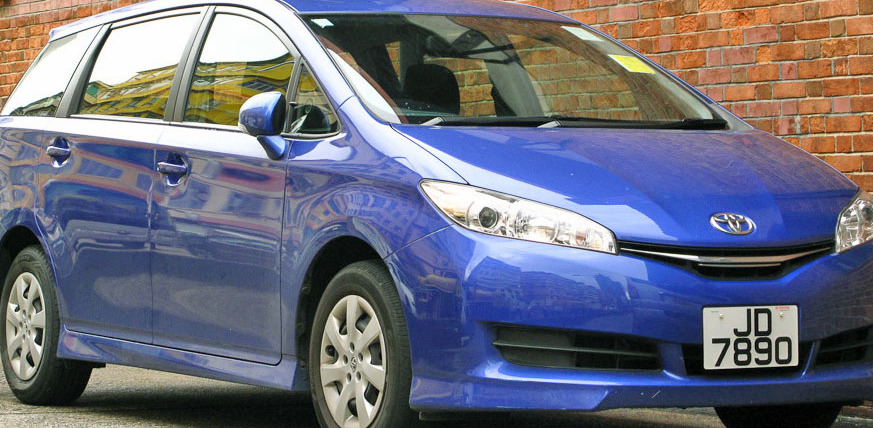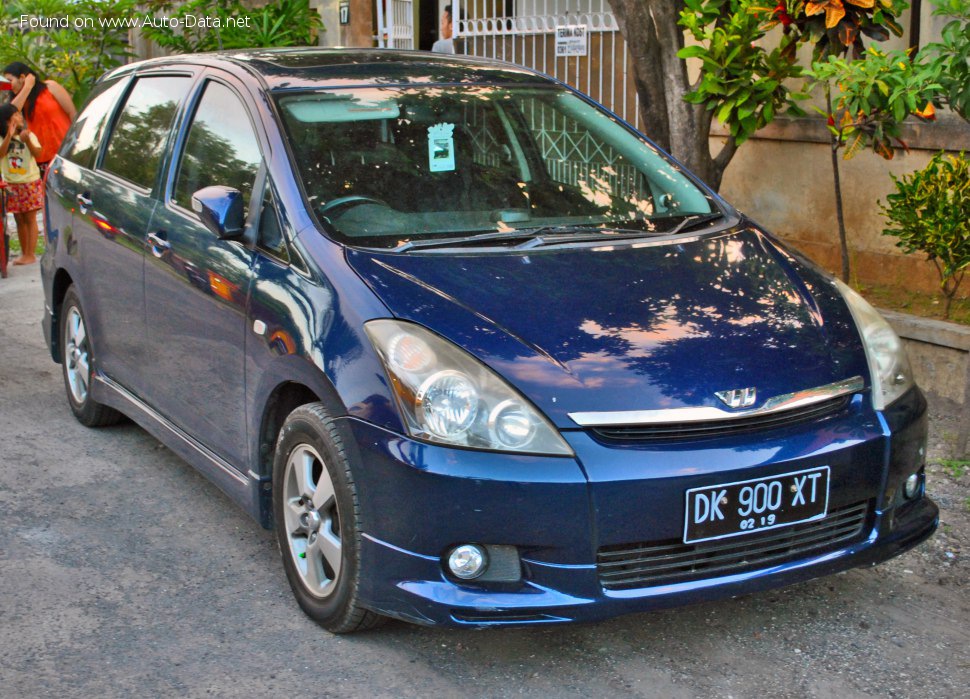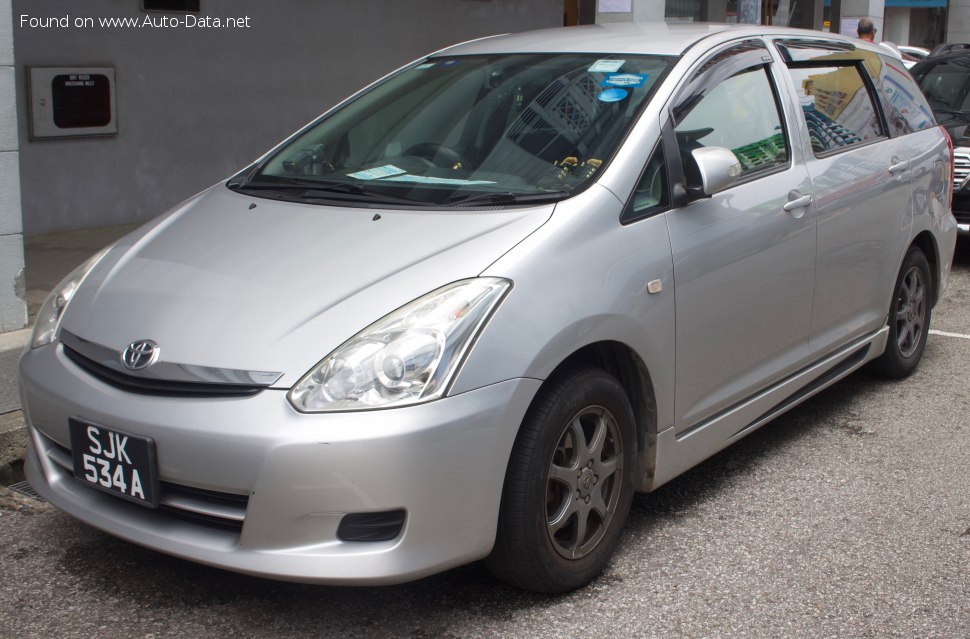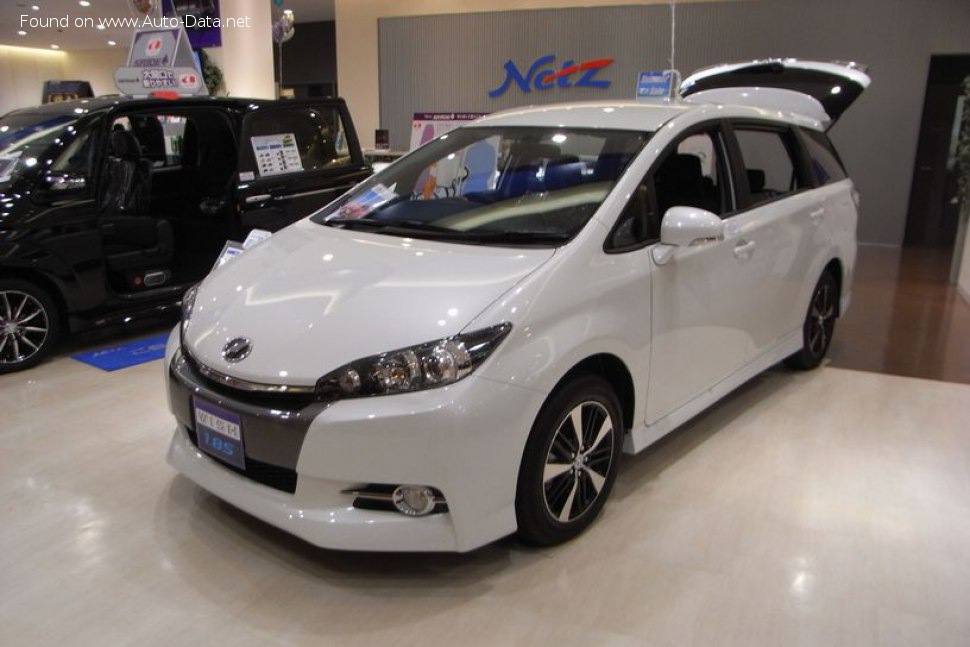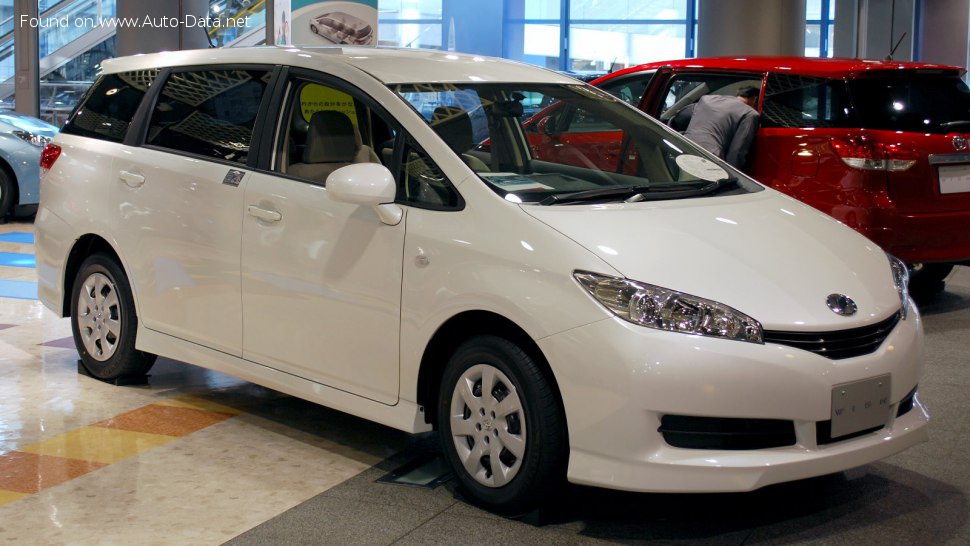
The Toyota Wish II 1.8i, produced between 2009 and 2012, is a compact minivan primarily aimed at the Asian market, particularly Japan and Southeast Asia. It wasn’t officially sold in the United States. The Wish filled a niche for families desiring a more spacious and versatile vehicle than a traditional hatchback, but smaller and more affordable than larger MPVs. The second generation, known as the Wish II, offered refinements in styling, interior features, and powertrain efficiency compared to its predecessor. This model is notable for its seven-seat configuration within a relatively compact footprint, making it a practical choice for urban families.
Toyota Wish II: An Overview
The Toyota Wish II represented Toyota’s response to the growing demand for multi-purpose vehicles in Asia. It distinguished itself from competitors by offering a unique combination of space, practicality, and a relatively sporty driving experience. The 1.8i variant, equipped with a 1.8-liter engine and a continuously variable transmission (CVT-i), was a popular choice due to its balance of performance and fuel economy. While not a high-performance vehicle, the Wish II 1.8i provided adequate power for everyday driving and family transportation.
Engine & Performance
The Toyota Wish II 1.8i is powered by the 2ZR-FAE 1.8-liter inline-four cylinder gasoline engine. This naturally aspirated engine produces 144 horsepower at 6,400 rpm and 176 Nm (129.81 lb.-ft.) of torque at 4,400 rpm. The engine features a double overhead camshaft (DOHC) valvetrain with four valves per cylinder, and multi-port fuel injection. Power is delivered to the front wheels via a CVT-i (Continuously Variable Transmission with intelligence) automatic transmission. This transmission is designed to provide smooth and efficient power delivery, optimizing fuel economy. The Wish II 1.8i achieves a combined fuel consumption of 6.1-6.2 liters per 100 kilometers (38.6-37.9 US mpg), making it relatively efficient for its class and size. The weight-to-power ratio is 9.3 kg/Hp, and the weight-to-torque ratio is 7.6 kg/Nm, indicating a reasonable balance between weight and performance.
Design & Features
The Toyota Wish II is a five-door minivan with a seating capacity of seven passengers. Its design is characterized by a relatively sleek and modern aesthetic for its time, avoiding the boxy appearance often associated with minivans. The interior is designed with practicality in mind, offering flexible seating arrangements and ample storage space. The second-row seats typically slide and recline, allowing for easy access to the third row. Safety features included Anti-lock Braking System (ABS) as standard equipment. The vehicle’s dimensions are 4590 mm (180.71 in) in length, 1695-1720 mm (66.73 – 67.72 in) in width, and 1590 mm (62.6 in) in height, with a wheelbase of 2750 mm (108.27 in). The curb weight ranges from 1340 to 1360 kg (2954.19 – 2998.29 lbs), and the maximum weight is 1745 kg (3847.07 lbs). The Wish II offered a comfortable ride and adequate handling for everyday use, prioritizing practicality and passenger comfort over sporty performance.
Technical Specifications
| Brand | Toyota |
| Model | Wish |
| Generation | Wish II |
| Type (Engine) | 1.8i (144 Hp) CVT-i |
| Start of production | 2009 |
| End of production | 2012 |
| Powertrain Architecture | Internal Combustion engine |
| Body type | Minivan |
| Seats | 7 |
| Doors | 5 |
| Fuel consumption (combined) | 6.1-6.2 l/100 km (38.6 – 37.9 US mpg) |
| Fuel Type | Petrol (Gasoline) |
| Weight-to-power ratio | 9.3 kg/Hp |
| Weight-to-torque ratio | 7.6 kg/Nm |
| Power | 144 Hp @ 6400 rpm |
| Power per litre | 80.1 Hp/l |
| Torque | 176 Nm @ 4400 rpm (129.81 lb.-ft. @ 4400 rpm) |
| Engine layout | Front, Transverse |
| Engine Model/Code | 2ZR-FAE |
| Engine displacement | 1797 cm3 (109.66 cu. in.) |
| Number of cylinders | 4 |
| Engine configuration | Inline |
| Cylinder Bore | 80.5 mm (3.17 in.) |
| Piston Stroke | 88.3 mm (3.48 in.) |
| Compression ratio | 10:1 |
| Number of valves per cylinder | 4 |
| Fuel injection system | Multi-port manifold injection |
| Engine aspiration | Naturally aspirated engine |
| Valvetrain | DOHC |
| Engine oil capacity | 4.2 l (4.44 US qt | 3.7 UK qt) |
| Coolant | 5.5 l (5.81 US qt | 4.84 UK qt) |
| Kerb Weight | 1340-1360 kg (2954.19 – 2998.29 lbs.) |
| Max. weight | 1745 kg (3847.07 lbs.) |
| Max load | 385-405 kg (848.78 – 892.87 lbs.) |
| Fuel tank capacity | 60 l (15.85 US gal | 13.2 UK gal) |
| Length | 4590 mm (180.71 in.) |
| Width | 1695-1720 mm (66.73 – 67.72 in.) |
| Height | 1590 mm (62.6 in.) |
| Wheelbase | 2750 mm (108.27 in.) |
| Front track | 1480-1505 mm (58.27 – 59.25 in.) |
| Rear track | 1470 mm (57.87 in.) |
| Ride height (ground clearance) | 150 mm (5.91 in.) |
| Minimum turning circle | 10.4-10.6 m (34.12 – 34.78 ft.) |
| Drivetrain Architecture | Front wheel drive |
| Number of gears and type of gearbox | automatic transmission CVT-i |
| Front brakes | Ventilated discs |
| Rear brakes | Drum |
| Assisting systems | ABS (Anti-lock braking system) |
| Tires size | 195/65 R15 |
| Wheel rims size | 15 |
The Toyota Wish II 1.8i, while not a vehicle commonly found in the United States, served as a practical and versatile option for families in Asian markets. Its combination of seven-seat capacity, fuel efficiency, and relatively affordable price point made it a popular choice in its segment. The vehicle’s design and features reflected Toyota’s commitment to providing reliable and functional transportation for everyday needs.