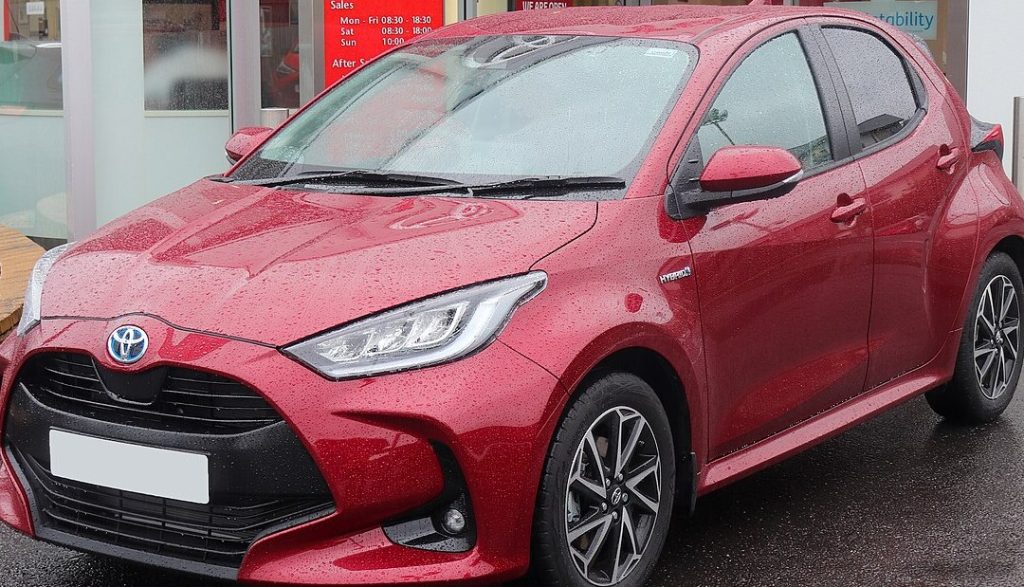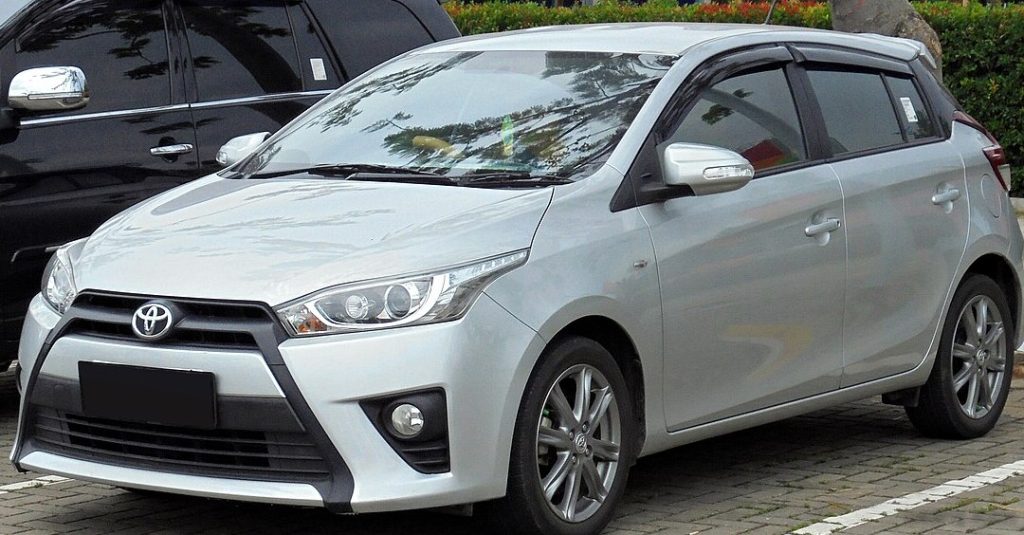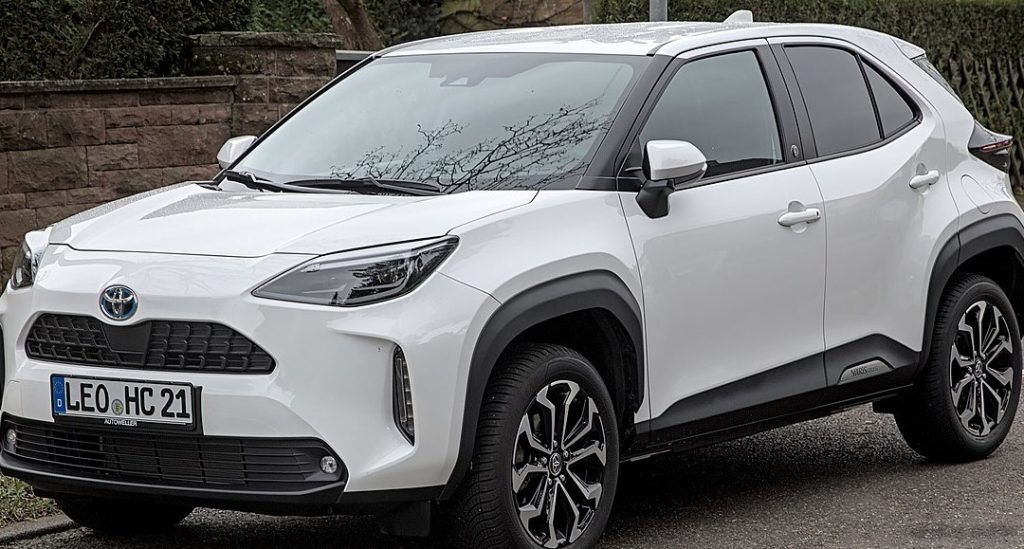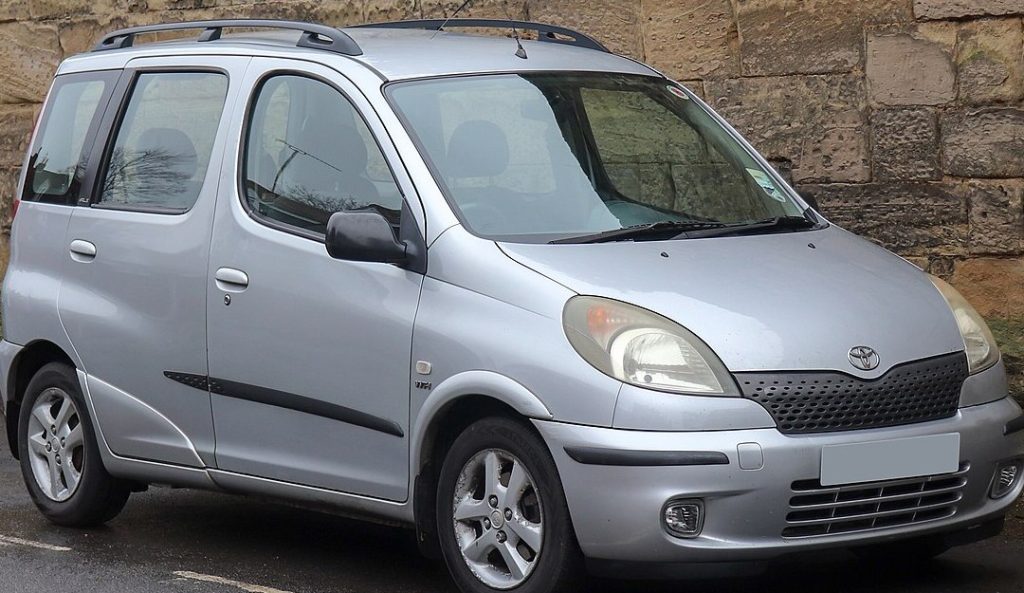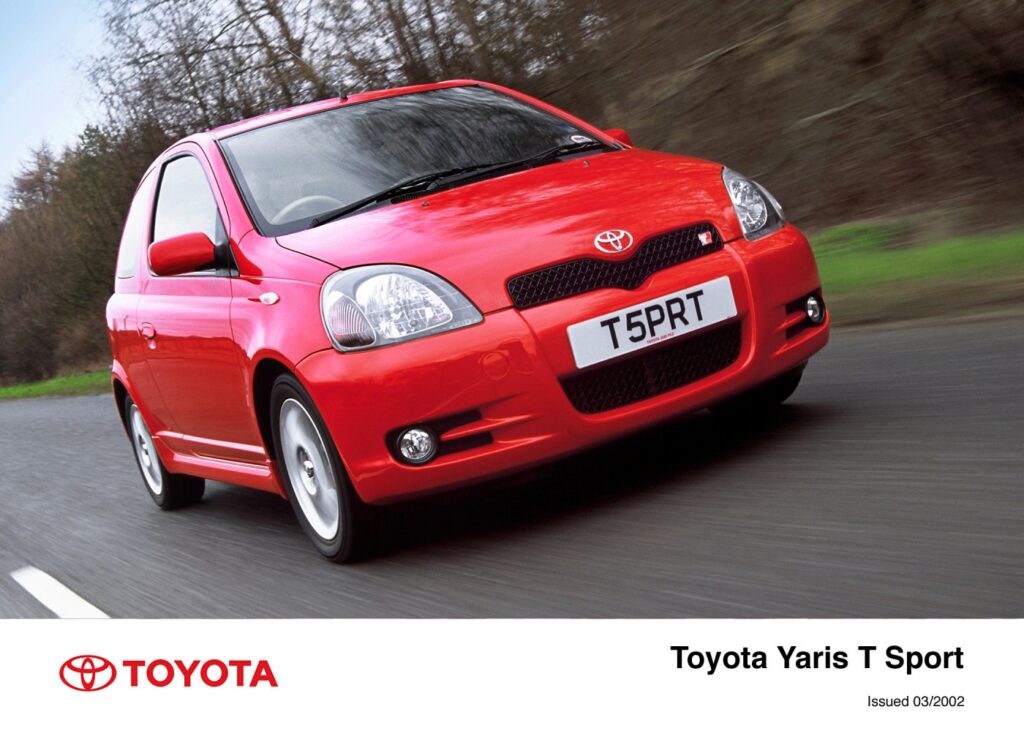
The Toyota Yaris, known in Japan as the Vitz, is a subcompact hatchback produced by Toyota since 1999. Representing Toyota’s entry into the supermini segment, the Yaris was designed to be a modern, spacious, and fuel-efficient vehicle. The first generation, known as the Yaris I (codenamed XP10), was particularly significant as it marked Toyota’s first dedicated subcompact platform. This article focuses on the 3-door version of the Yaris I, specifically the 1.3i 16V model with an automatic transmission, produced between 1999 and 2003. While not initially a major seller in the United States, the Yaris gained popularity later as a fuel-efficient and reliable option, particularly among urban drivers.
Toyota Yaris I: A European and Asian Success Story
The Yaris I was primarily aimed at the European and Asian markets, where demand for small, economical cars was high. In Europe, it replaced the Starlet and quickly became a popular choice due to its practicality, reliability, and relatively affordable price point. The 3-door configuration offered a sportier aesthetic and appealed to younger buyers. The Yaris distinguished itself from competitors with its clever packaging, maximizing interior space within a small footprint. The automatic transmission option, while not as common as the manual, provided added convenience for city driving.
Engine & Performance
The Yaris I 1.3i 16V is powered by the 2NZ-FE 1.3-liter inline-4 gasoline engine. This naturally aspirated engine produces 86 horsepower at 6000 rpm and 124 Nm (91.46 lb-ft) of torque at 4400 rpm. While not a performance-oriented vehicle, the engine provides adequate power for everyday driving. The 4-speed automatic transmission delivers smooth shifts, prioritizing fuel efficiency over rapid acceleration. Acceleration from 0 to 100 km/h (0-62 mph) takes 13.1 seconds, and 0 to 60 mph is achieved in approximately 12.4 seconds. The Yaris I 1.3i 16V has a top speed of 165 km/h (102.53 mph). The engine’s fuel economy is a key selling point, achieving approximately 35.1 US mpg (42.2 UK mpg or 6.7 l/100 km) on a combined cycle. The power-to-weight ratio is 11.3 kg/Hp, and the torque-to-weight ratio is 7.9 kg/Nm.
Design & Features
The Yaris I features a distinctive hatchback body style, characterized by its rounded edges and relatively tall roofline. The 3-door configuration emphasizes a more youthful and dynamic appearance. Inside, the Yaris I prioritizes practicality and space efficiency. Despite its small exterior dimensions, the interior offers comfortable seating for five passengers. The rear seats can be folded down to increase cargo capacity, ranging from a minimum of 305 liters (10.77 cu. ft.) to a maximum of 950 liters (33.55 cu. ft.) with the seats folded. Safety features for the era included an Anti-lock Braking System (ABS) as standard equipment. The steering utilizes a hydraulic power steering rack and pinion system for responsive handling. The vehicle rides on 14-inch wheels with 175/65 R14 T tires. The Yaris I’s design focused on maximizing interior space and providing a comfortable and practical driving experience.
Technical Specifications
| Brand | Toyota |
| Model | Yaris |
| Generation | Yaris I (3-door) |
| Type (Engine) | 1.3i 16V (86 Hp) Automatic |
| Start of production | 1999 year |
| End of production | 2003 year |
| Powertrain Architecture | Internal Combustion engine |
| Body type | Hatchback |
| Seats | 5 |
| Doors | 3 |
| Fuel consumption (urban) | 8.8 l/100 km (26.7 US mpg, 32.1 UK mpg, 11.4 km/l) |
| Fuel consumption (extra urban) | 5.5 l/100 km (42.8 US mpg, 51.4 UK mpg, 18.2 km/l) |
| Fuel consumption (combined) | 6.7 l/100 km (35.1 US mpg, 42.2 UK mpg, 14.9 km/l) |
| Fuel Type | Petrol (Gasoline) |
| Acceleration 0 – 100 km/h | 13.1 sec |
| Acceleration 0 – 62 mph | 13.1 sec |
| Acceleration 0 – 60 mph | 12.4 sec |
| Maximum speed | 165 km/h (102.53 mph) |
| Weight-to-power ratio | 11.3 kg/Hp |
| Weight-to-torque ratio | 7.9 kg/Nm |
| Power | 86 Hp @ 6000 rpm |
| Power per litre | 66.2 Hp/l |
| Torque | 124 Nm @ 4400 rpm (91.46 lb.-ft. @ 4400 rpm) |
| Engine layout | Front, Transverse |
| Engine Model/Code | 2NZ-FE |
| Engine displacement | 1299 cm3 (79.27 cu. in.) |
| Number of cylinders | 4 |
| Engine configuration | Inline |
| Cylinder Bore | 75 mm (2.95 in.) |
| Piston Stroke | 73.5 mm (2.89 in.) |
| Compression ratio | 10.5:1 |
| Number of valves per cylinder | 4 |
| Fuel injection system | Multi-port manifold injection |
| Engine aspiration | Naturally aspirated engine |
| Valvetrain | DOHC |
| Engine oil capacity | 3.7 l (3.91 US qt | 3.26 UK qt) |
| Coolant | 4.4 l (4.65 US qt | 3.87 UK qt) |
| Kerb Weight | 975 kg (2149.51 lbs.) |
| Max. weight | 1365 kg (3009.31 lbs.) |
| Max load | 390 kg (859.8 lbs.) |
| Trunk (boot) space – minimum | 305 l (10.77 cu. ft.) |
| Trunk (boot) space – maximum | 950 l (33.55 cu. ft.) |
| Fuel tank capacity | 45 l (11.89 US gal | 9.9 UK gal) |
| Length | 3615 mm (142.32 in.) |
| Width | 1660 mm (65.35 in.) |
| Height | 1500 mm (59.06 in.) |
| Wheelbase | 2370 mm (93.31 in.) |
| Front track | 1450 mm (57.09 in.) |
| Rear (Back) track | 1430 mm (56.3 in.) |
| Drivetrain Architecture | ICE, Front wheel drive |
| Drive wheel | Front wheel drive |
| Number of gears and type of gearbox | 4 gears, automatic transmission |
| Front suspension | Spring Strut |
| Rear suspension | Coil spring |
| Front brakes | Ventilated discs |
| Rear brakes | Drum |
| Assisting systems | ABS (Anti-lock braking system) |
| Steering type | Steering rack and pinion |
| Power steering | Hydraulic Steering |
| Tires size | 175/65 R14 T |
| Wheel rims size | 14 |
The Toyota Yaris I 1.3i 16V Automatic represents a significant step forward in small car design, offering a blend of practicality, fuel efficiency, and reliability. Its success in Europe and Asia paved the way for the Yaris’s eventual introduction and growing popularity in other markets, including the United States.