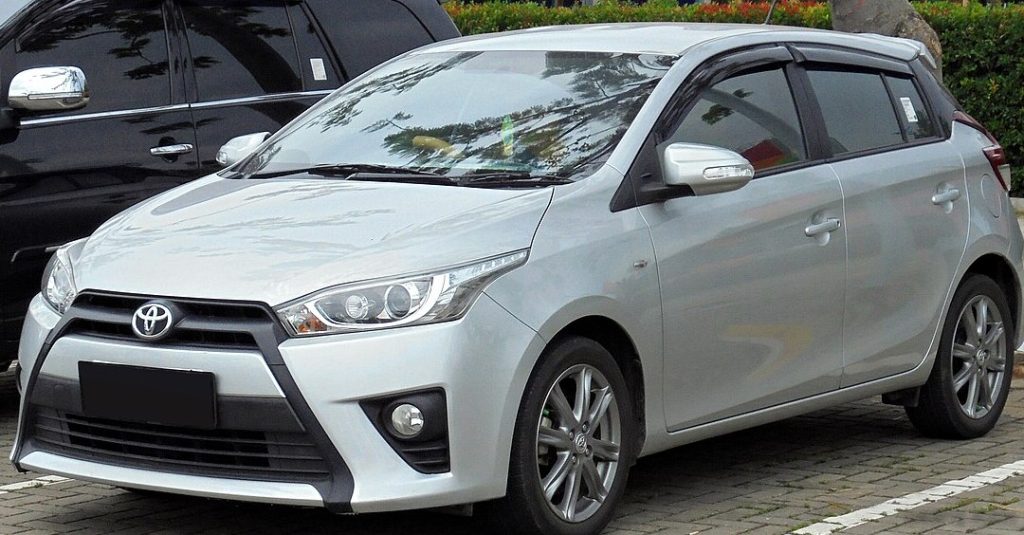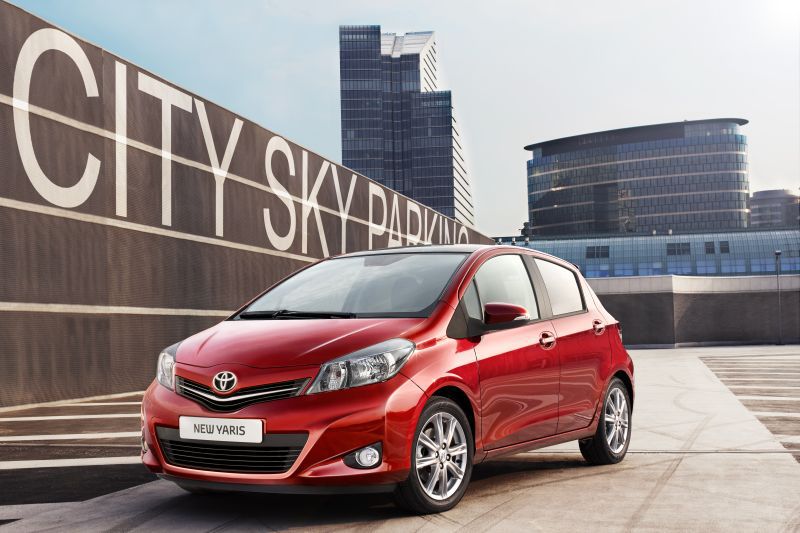
The Toyota Yaris III 1.0 VVT-i, produced between 2011 and 2014, represents the third generation of Toyota’s globally successful supermini. While the Yaris has been a mainstay in many markets, including North America (where it was initially sold as the Echo and later as the Yaris), the third generation was primarily aimed at the European and Asian markets. This iteration of the Yaris focused on fuel efficiency, practicality, and affordability, making it a popular choice for urban commuters and first-time car buyers. The 1.0 VVT-i model, with its modest 69 horsepower, was positioned as the entry-level offering, prioritizing economy over outright performance.
Toyota Yaris III 1.0 VVT-i: An Overview
The Yaris III marked a significant step forward in terms of design and interior quality compared to its predecessors. It offered a more refined driving experience and a noticeably more spacious cabin. The 1.0 VVT-i engine, while not powerful, was known for its reliability and exceptional fuel economy. This model played a crucial role in establishing the Yaris as a leading competitor in the highly competitive supermini segment, particularly in Europe where small, efficient cars are highly valued.
Engine & Performance
The heart of the Yaris III 1.0 VVT-i is the 1KR-FE, a 998cc inline-3 cylinder gasoline engine. This naturally aspirated engine produces 69 horsepower at 6000 rpm and 93 Nm (68.59 lb.-ft.) of torque at 3600 rpm. The engine utilizes Toyota’s Variable Valve Timing-intelligent (VVT-i) technology, which optimizes valve timing for improved fuel efficiency and responsiveness. Paired with a 5-speed manual transmission, the Yaris 1.0 VVT-i achieves a 0-100 km/h (0-62 mph) time of 15.3 seconds and a top speed of 155 km/h (96.31 mph). While these figures aren’t particularly impressive, they are adequate for city driving and short commutes. The engine’s primary strength lies in its fuel economy, achieving approximately 4.8 liters per 100 kilometers (49 US mpg) in combined driving conditions. The weight-to-power ratio of 13.8 kg/Hp reflects the engine’s modest output relative to the vehicle’s weight.
Design & Features
The Yaris III adopted a more contemporary and rounded design language compared to the previous generation. The hatchback body style provides a practical and versatile layout, offering five seats and a usable cargo space of 286 liters (10.1 cu. ft.). The interior was designed with practicality in mind, featuring durable materials and a functional dashboard layout. Safety features, while not as extensive as in modern vehicles, included ABS (Anti-lock Braking System) as standard. The Yaris III prioritized ease of use and maneuverability, making it well-suited for navigating congested urban environments. Its compact dimensions – a length of 3885 mm (152.95 in.) and a width of 1695 mm (66.73 in.) – contributed to its agility. The suspension setup, featuring independent McPherson struts at the front and a torsion beam at the rear, provided a comfortable, if not particularly sporty, ride.
Technical Specifications
| Brand | Toyota |
| Model | Yaris |
| Generation | Yaris III |
| Type (Engine) | 1.0 VVT-i (69 Hp) |
| Start of production | 2011 |
| End of production | 2014 |
| Powertrain Architecture | Internal Combustion engine |
| Body type | Hatchback |
| Seats | 5 |
| Doors | 5 |
| Fuel consumption (urban) | 5.7 l/100 km (41.3 US mpg) |
| Fuel consumption (extra urban) | 4.2 l/100 km (56 US mpg) |
| Fuel consumption (combined) | 4.8 l/100 km (49 US mpg) |
| Fuel Type | Petrol (Gasoline) |
| Acceleration 0 – 100 km/h | 15.3 sec |
| Acceleration 0 – 62 mph | 15.3 sec |
| Acceleration 0 – 60 mph | 14.5 sec |
| Maximum speed | 155 km/h (96.31 mph) |
| Emission standard | Euro 5 |
| Weight-to-power ratio | 13.8 kg/Hp |
| Weight-to-torque ratio | 10.2 kg/Nm |
| Power | 69 Hp @ 6000 rpm |
| Torque | 93 Nm @ 3600 rpm (68.59 lb.-ft. @ 3600 rpm) |
| Engine layout | Front, Transverse |
| Engine Model/Code | 1KR-FE |
| Engine displacement | 998 cm3 (60.9 cu. in.) |
| Number of cylinders | 3 |
| Engine configuration | Inline |
| Cylinder Bore | 71 mm (2.8 in.) |
| Piston Stroke | 84 mm (3.31 in.) |
| Compression ratio | 11:1 |
| Number of valves per cylinder | 4 |
| Fuel injection system | Multi-port manifold injection |
| Engine aspiration | Naturally aspirated |
| Engine oil capacity | 3.1 l (3.28 US qt | 2.73 UK qt) |
| Coolant capacity | 4.7 l (4.97 US qt | 4.14 UK qt) |
| Kerb Weight | 950 kg (2094.39 lbs.) |
| Max. weight | 1430 kg (3152.61 lbs.) |
| Max load | 480 kg (1058.22 lbs.) |
| Trunk (boot) space – minimum | 286 l (10.1 cu. ft.) |
| Fuel tank capacity | 42 l (11.1 US gal | 9.24 UK gal) |
| Length | 3885 mm (152.95 in.) |
| Width | 1695 mm (66.73 in.) |
| Height | 1510 mm (59.45 in.) |
| Wheelbase | 2510 mm (98.82 in.) |
| Front track | 1460 mm (57.48 in.) |
| Rear track | 1445 mm (56.89 in.) |
| Minimum turning circle | 9.4 m (30.84 ft.) |
| Drivetrain | Front wheel drive |
| Number of gears | 5 gears, manual transmission |
| Front suspension | Independent type McPherson |
| Rear suspension | Torsion |
| Front brakes | Ventilated discs |
| Rear brakes | Drum |
| Tires size | 175/70 R14 |
| Wheel rims size | 14 |
The Toyota Yaris III 1.0 VVT-i, while not a performance car, offered a compelling package of affordability, fuel efficiency, and practicality. Its success in the European and Asian markets demonstrates the demand for small, economical vehicles that are well-suited for urban environments. The 1KR-FE engine, though modest in its output, proved to be a reliable and durable powerplant, contributing to the Yaris’s reputation for dependability.