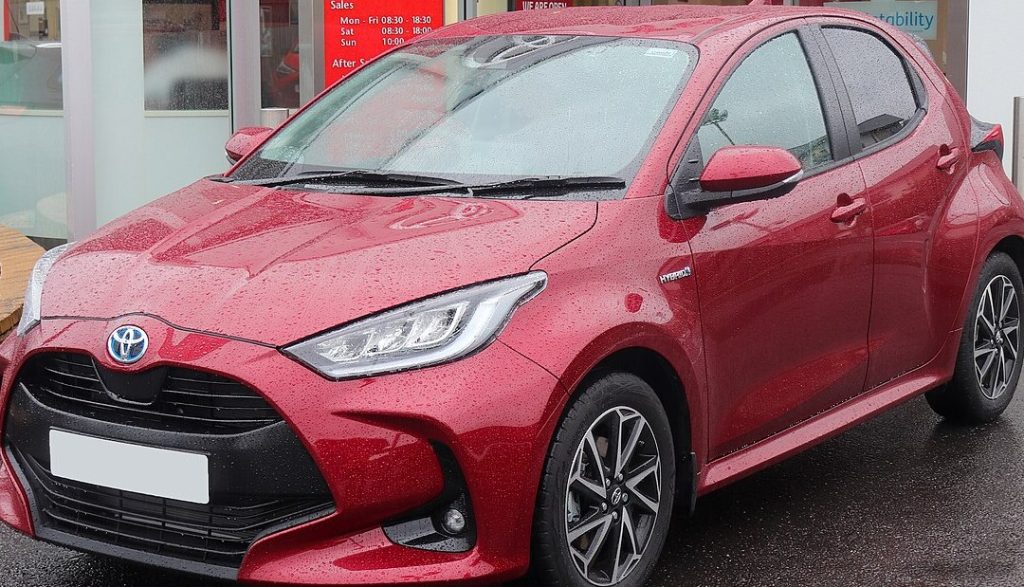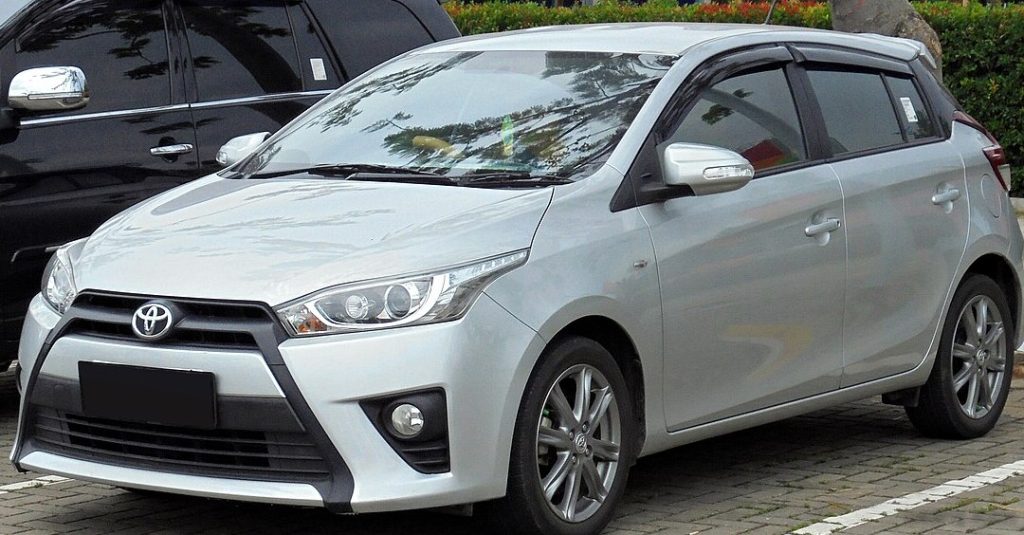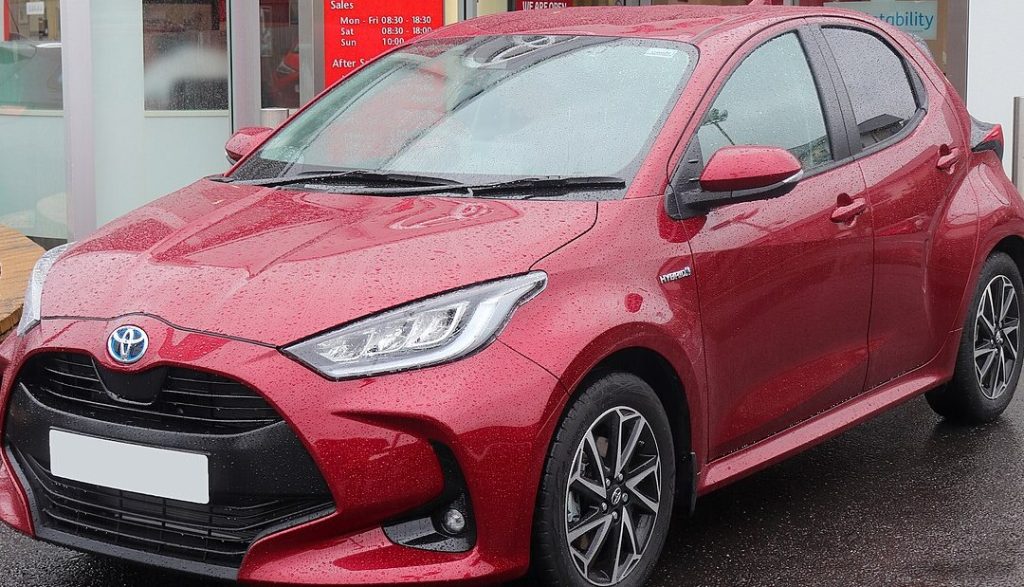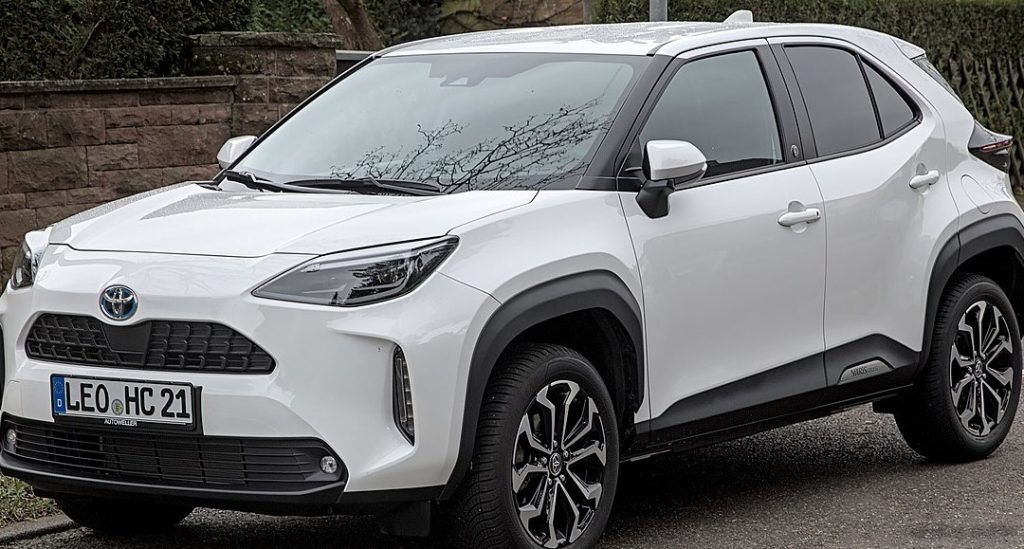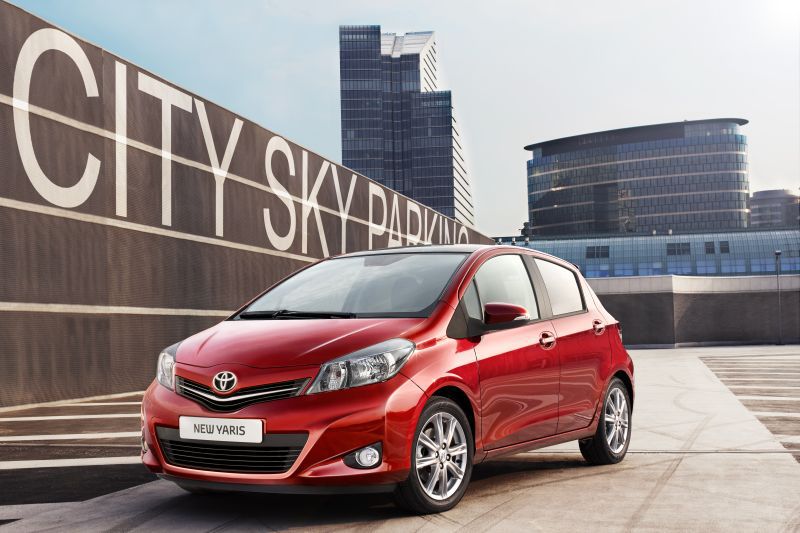
The Toyota Yaris III 1.5 HSD (Hybrid Synergy Drive) is a subcompact hatchback produced by Toyota from 2012 to 2014. Representing the third generation of the Yaris, this model was primarily aimed at the European market, where fuel efficiency and compact size are highly valued. While not directly sold in the United States during this generation, the Yaris lineage has a strong presence in North America as a rebadged version of the Japanese Vitz. The Yaris III 1.5 HSD distinguished itself with its full hybrid powertrain, offering a blend of gasoline engine power and electric motor assistance for improved fuel economy and reduced emissions. It competed with other subcompacts like the Volkswagen Polo, Renault Clio, and Ford Fiesta, offering a unique hybrid option within the segment.
Toyota Yaris III 1.5 HSD: A Detailed Overview
The Yaris III represented a significant step forward for the Yaris model line, particularly with the introduction of the hybrid variant. Toyota’s Hybrid Synergy Drive system became a key selling point, appealing to environmentally conscious buyers. The vehicle’s compact dimensions made it ideal for navigating congested city streets, while its fuel-efficient powertrain minimized running costs. The Yaris III was designed to be a practical and affordable vehicle, offering a comfortable interior and a range of standard features.
Engine & Performance
The heart of the Yaris III 1.5 HSD is a 1.5-liter, inline-four cylinder gasoline engine (model code 1NZ-FXE) producing 75 horsepower. This engine is coupled with a 61 horsepower electric motor, resulting in a combined system output of 100 horsepower. The powertrain utilizes Toyota’s e-CVT (electronically controlled continuously variable transmission), which seamlessly blends the power from the gasoline engine and electric motor. This system doesn’t have fixed gears like a traditional automatic transmission, providing smooth and efficient acceleration. The engine produces 81.87 lb.-ft. of torque at 3600-4400 rpm, while the electric motor contributes 124.65 lb.-ft. of torque. Acceleration from 0 to 60 mph is achieved in approximately 11.2 seconds, and the vehicle has a top speed of 102.53 mph. A key feature of the Hybrid Synergy Drive is its ability to operate in electric-only mode at low speeds, further enhancing fuel efficiency.
Design & Features
The Yaris III 1.5 HSD is a five-door hatchback with a practical and functional design. Its compact dimensions – measuring 3905 mm (153.74 in) in length, 1695 mm (66.73 in) in width, and 1510 mm (59.45 in) in height – make it easy to maneuver and park in urban environments. The interior offers seating for five passengers and provides a reasonable amount of cargo space, ranging from 10.1 cubic feet with the rear seats up to 27.12 cubic feet with them folded down. Safety features included ABS (Anti-lock Braking System) as standard. The battery pack, utilizing Nickel-metal hydride (NiMH) technology with a gross capacity of 0.94 kWh, is cleverly located under the rear seats, preserving valuable cabin space. The Yaris III’s design prioritized practicality and efficiency, resulting in a vehicle that is well-suited for everyday use.
Technical Specifications
| Brand | Toyota |
| Model | Yaris |
| Generation | Yaris III |
| Type (Engine) | 1.5 HSD (100 Hp) Hybrid e-CVT |
| Start of production | 2012 |
| End of production | 2014 |
| Powertrain Architecture | FHEV (Full Hybrid Electric Vehicle) |
| Body type | Hatchback |
| Seats | 5 |
| Doors | 5 |
| Fuel consumption (urban) | 3.5-3.7 l/100 km (67.2 – 63.6 US mpg) |
| Fuel consumption (extra urban) | 3.1-3.4 l/100 km (75.9 – 69.2 US mpg) |
| Fuel consumption (combined) | 3.5-3.7 l/100 km (67.2 – 63.6 US mpg) |
| CO2 emissions | 79-85 g/km |
| Fuel Type | Petrol (Gasoline) |
| Acceleration 0 – 100 km/h | 11.8 sec |
| Acceleration 0 – 62 mph | 11.8 sec |
| Acceleration 0 – 60 mph | 11.2 sec |
| Maximum speed | 165 km/h (102.53 mph) |
| Emission standard | Euro 5 |
| Weight-to-power ratio | 10.9 kg/Hp |
| Weight-to-torque ratio | 9.8 kg/Nm |
| Gross battery capacity | 0.94 kWh |
| Battery voltage | 144 V |
| Battery technology | Nickel-metal hydride (NiMH) |
| Battery location | Under the rear seats |
| Electric motor power | 61 Hp |
| Electric motor Torque | 169 Nm (124.65 lb.-ft.) |
| Electric motor location | Integrated into the transmission |
| System power | 100 Hp |
| System torque | 111 Nm (81.87 lb.-ft.) @ 3600-4400 rpm |
| Engine Power | 75 Hp |
| Engine Torque | 111 Nm (81.87 lb.-ft.) @ 3600-4400 rpm |
| Engine layout | Front, Transverse |
| Engine Model/Code | 1NZ-FXE |
| Engine displacement | 1497 cm3 (91.35 cu. in.) |
| Number of cylinders | 4 |
| Engine configuration | Inline |
| Cylinder Bore | 75 mm (2.95 in.) |
| Piston Stroke | 84.7 mm (3.33 in.) |
| Compression ratio | 13.4:1 |
| Number of valves per cylinder | 4 |
| Fuel injection system | Multi-port manifold injection |
| Engine aspiration | Naturally aspirated engine |
| Valvetrain | DOHC, VVT-i |
| Engine oil capacity | 3.7 l (3.91 US qt | 3.26 UK qt) |
| Coolant | 4.5 l (4.76 US qt | 3.96 UK qt) |
| Kerb Weight | 1085-1160 kg (2392.02 – 2557.36 lbs.) |
| Max. weight | 1565 kg (3450.23 lbs.) |
| Max load | 405-480 kg (892.87 – 1058.22 lbs.) |
| Trunk (boot) space – minimum | 286 l (10.1 cu. ft.) |
| Trunk (boot) space – maximum | 768 l (27.12 cu. ft.) |
| Fuel tank capacity | 36 l (9.51 US gal | 7.92 UK gal) |
| Max. roof load | 50 kg (110.23 lbs.) |
| Length | 3905 mm (153.74 in.) |
| Width | 1695 mm (66.73 in.) |
| Height | 1510 mm (59.45 in.) |
| Wheelbase | 2510 mm (98.82 in.) |
| Front track | 1460-1485 mm (57.48 – 58.46 in.) |
| Rear (Back) track | 1450-1470 mm (57.09 – 57.87 in.) |
| Minimum turning circle | 10.2 m (33.46 ft.) |
| Drivetrain Architecture | Front wheel drive. FHEV (Full Hybrid Electric Vehicle). |
| Drive wheel | Front wheel drive |
| Number of gears and type of gearbox | automatic transmission e-CVT |
| Front suspension | Independent type McPherson |
| Rear suspension | Torsion |
| Front brakes | Ventilated discs |
| Rear brakes | Disc |
| Assisting systems | ABS (Anti-lock braking system) |
| Steering type | Steering rack and pinion |
| Tires size | 175/65 R15 |
| Wheel rims size | 5J x 15 |