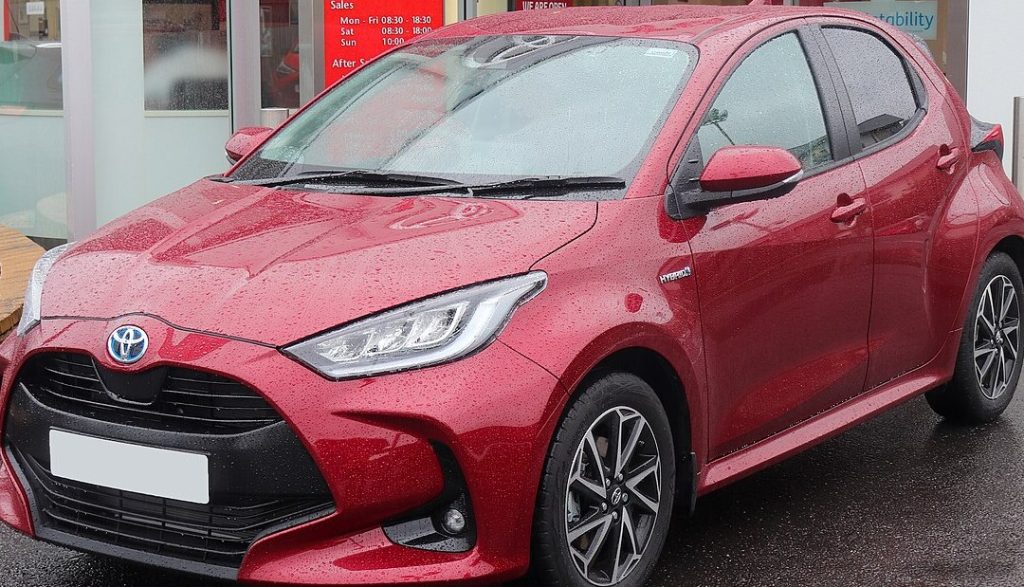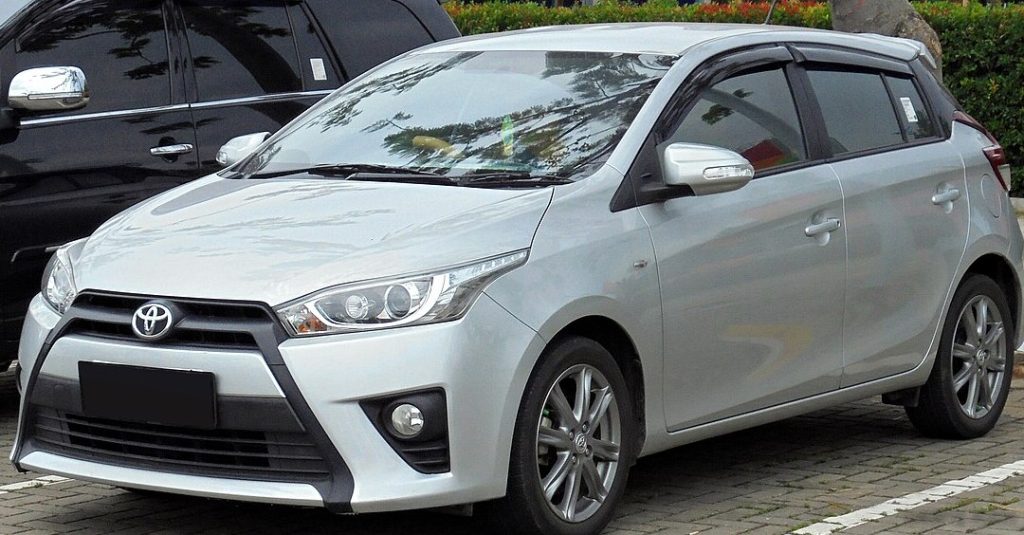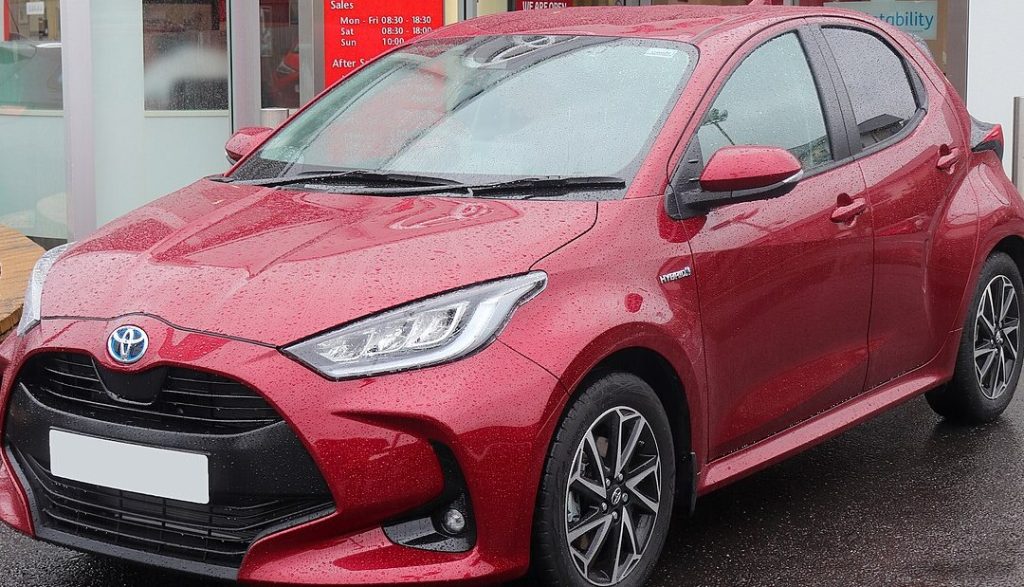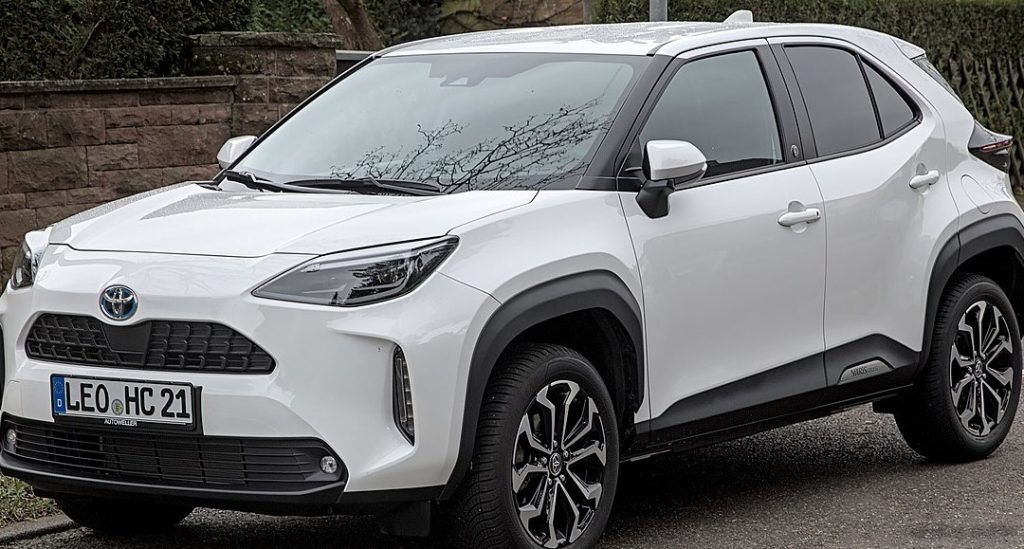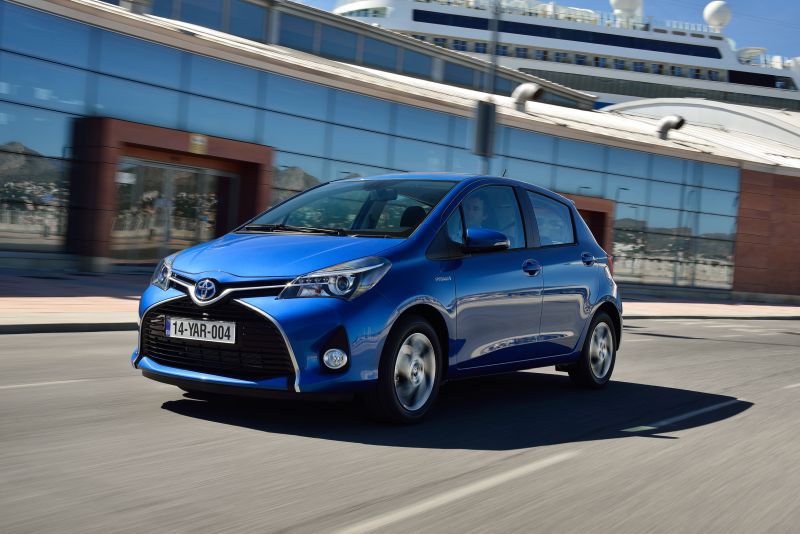
The Toyota Yaris III, particularly the facelifted version introduced in 2014, represents Toyota’s continued commitment to the subcompact hatchback segment. While the Yaris nameplate has a longer history, the third generation, produced from 2011 to 2020, saw significant revisions with the 2014 facelift, enhancing its styling, efficiency, and overall appeal. This model was primarily aimed at the European market, where the demand for small, fuel-efficient vehicles is high. In the United States, Toyota offered a slightly different version of the Yaris, but the European model distinguished itself with its refined engine options and compact dimensions. The 1.33 Dual VVT-i variant, producing 99 horsepower, was a popular choice for urban drivers seeking a practical and economical vehicle.
Toyota Yaris III (Facelift 2014) 1.33 Dual VVT-i: An Overview
The Yaris III facelift, launched in 2014, brought a refreshed front fascia, interior enhancements, and updated technology to Toyota’s subcompact offering. The 1.33 Dual VVT-i engine was a key component of this model, designed to balance performance with exceptional fuel economy. This iteration of the Yaris targeted buyers looking for a reliable, easy-to-drive car suitable for city commuting and shorter journeys. Available as both a 3-door and 5-door hatchback, the Yaris III offered flexibility to suit different lifestyles. The facelift aimed to address some criticisms of the pre-2014 model, improving perceived quality and driving dynamics.
Engine & Performance
The heart of the 2014 Toyota Yaris III 1.33 Dual VVT-i is the 1NR-FE 1.329-liter (81.1 cubic inch) inline-four cylinder gasoline engine. This naturally aspirated engine utilizes Toyota’s Dual Variable Valve Timing with intelligence (Dual VVT-i) system, optimizing valve timing for improved performance and fuel efficiency across a wider range of engine speeds. It produces 99 horsepower at 6000 rpm and 125 Nm (92.2 lb.-ft.) of torque between 4000 and 4000 rpm. Power is delivered to the front wheels via a 6-speed manual transmission. While not a performance-oriented vehicle, the Yaris 1.33 offers adequate acceleration for everyday driving, achieving 0-100 km/h (0-62 mph) in 11.7 seconds. Its top speed is rated at 175 km/h (108.74 mph). A key strength of this powertrain is its fuel efficiency, with combined fuel consumption rated at 4.9 l/100 km (48 US mpg or 57.6 UK mpg), and CO2 emissions of 119 g/km, meeting Euro 6 emission standards.
Design & Features
The Toyota Yaris III facelift maintains the hatchback body style, offering practicality and ease of parking in urban environments. The 2014 refresh included a more prominent front grille, redesigned headlights, and a revised bumper, giving the car a more modern appearance. Inside, the cabin features a functional layout with seating for five passengers. The interior materials were updated to improve the perceived quality. Standard features typically included air conditioning, power steering, and an audio system. Safety features, crucial in this segment, include ABS (Anti-lock Braking System) and multiple airbags. The Yaris III offers a trunk (boot) space of 286 liters (10.1 cubic feet) with the rear seats up, expandable by folding them down. The car’s compact dimensions – a length of 3950 mm (155.51 in) and a width of 1695 mm (66.73 in) – contribute to its maneuverability.
Technical Specifications
| General Information | |
| Brand | Toyota |
| Model | Yaris |
| Generation | Yaris III (facelift 2014) |
| Type (Engine) | 1.33 Dual VVT-i (99 Hp) |
| Start of production | 2014 |
| End of production | 2017 |
| Powertrain Architecture | Internal Combustion engine |
| Body type | Hatchback |
| Seats | 5 |
| Doors | 3/5 |
| Performance Specs | |
| Fuel consumption (urban) | 6.4 l/100 km (36.8 US mpg, 44.1 UK mpg, 15.6 km/l) |
| Fuel consumption (extra urban) | 4.1 l/100 km (57.4 US mpg, 68.9 UK mpg, 24.4 km/l) |
| Fuel consumption (combined) | 4.9 l/100 km (48 US mpg, 57.6 UK mpg, 20.4 km/l) |
| CO2 emissions | 119 g/km |
| Fuel Type | Petrol (Gasoline) |
| Acceleration 0 – 100 km/h | 11.7 sec |
| Acceleration 0 – 62 mph | 11.7 sec |
| Acceleration 0 – 60 mph | 11.1 sec |
| Maximum speed | 175 km/h (108.74 mph) |
| Emission standard | Euro 6 w |
| Weight-to-power ratio | 11 kg/Hp, 90.8 Hp/tonne |
| Weight-to-torque ratio | 8.7 kg/Nm, 114.7 Nm/tonne |
| Engine Specs | |
| Power | 99 Hp @ 6000 rpm |
| Power per litre | 74.5 Hp/l |
| Torque | 125 Nm @ 4000-4000 rpm (92.2 lb.-ft. @ 4000-4000 rpm) |
| Engine layout | Front, Transverse |
| Engine Model/Code | 1NR-FE |
| Engine displacement | 1329 cm3 (81.1 cu. in.) |
| Number of cylinders | 4 |
| Engine configuration | Inline |
| Compression ratio | 11.5:1 |
| Number of valves per cylinder | 4 |
| Fuel injection system | Multi-port manifold injection |
| Engine aspiration | Naturally aspirated engine |
| Valvetrain | DOHC |
| Engine oil capacity | 3.4 l (3.59 US qt | 2.99 UK qt) |
| Coolant | 4.6 l (4.86 US qt | 4.05 UK qt) |
| Space, Volume and Weights | |
| Kerb Weight | 1090-1150/1040-1160 kg (2403.04 – 2535.32 lbs.) |
| Max. weight | 1490 kg (3284.89 lbs.) |
| Max load | 340-400 kg (749.57 – 881.85 lbs.) |
| Trunk (boot) space – minimum | 286 l (10.1 cu. ft.) |
| Fuel tank capacity | 42 l (11.1 US gal | 9.24 UK gal) |
| Max. roof load | 50 kg (110.23 lbs.) |
| Permitted trailer load with brakes (12%) | 900 kg (1984.16 lbs.) |
| Permitted trailer load without brakes | 550 kg (1212.54 lbs.) |
| Permitted towbar download | 50 kg (110.23 lbs.) |
| Dimensions | |
| Length | 3950 mm (155.51 in.) |
| Width | 1695 mm (66.73 in.) |
| Height | 1510 mm (59.45 in.) |
| Wheelbase | 2510 mm (98.82 in.) |
| Front track | 1485 mm (58.46 in.) |
| Rear (Back) track | 1470 mm (57.87 in.) |
| Drag coefficient (Cd) | 0.287 |
| Minimum turning circle (turning diameter) | 9.6 m (31.5 ft.) |
| Drivetrain, Brakes and Suspension | |
| Drivetrain Architecture | The Internal combustion engine (ICE) drives the front wheels of the vehicle. |
| Drive wheel | Front wheel drive |
| Number of gears and type of gearbox | 6 gears, manual transmission |
| Front suspension | Independent, type McPherson with coil spring and anti-roll bar |
| Rear suspension | Independent coil spring |
| Front brakes | Ventilated discs |
| Rear brakes | Drum |
| Assisting systems | ABS (Anti-lock braking system) |
| Steering type | Steering rack and pinion |
| Power steering | Electric Steering |