
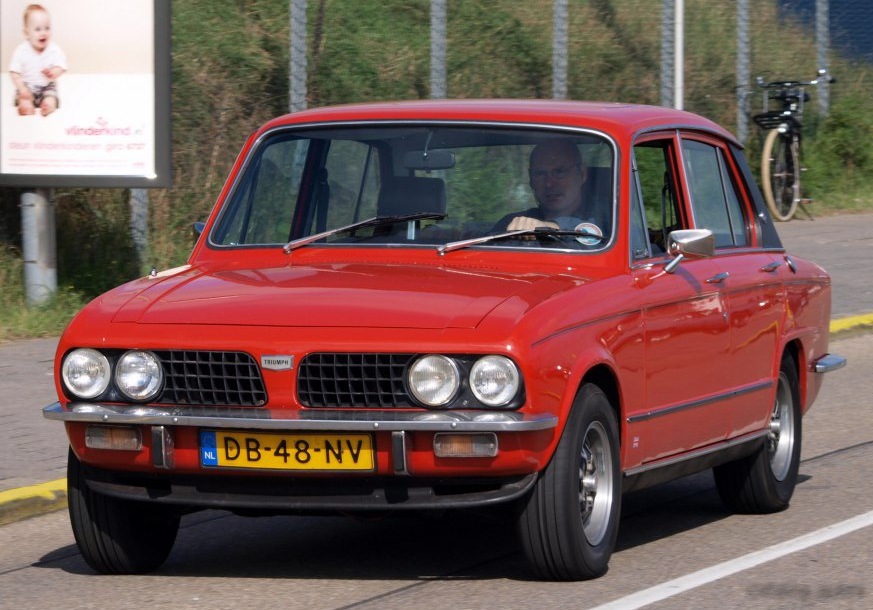
The Triumph Dolomite 1300, produced between 1977 and 1981, was a compact sedan positioned as the entry-level model within the Dolomite range. It represented Triumph’s attempt to offer a more affordable and fuel-efficient option in a market increasingly concerned with rising petrol prices. The Dolomite line, built upon the ‘Huron’ platform, aimed to blend sporting characteristics with everyday practicality, and the 1300 variant was intended to broaden its appeal. While not a high-performance model, the 1300 offered a comfortable and relatively economical driving experience, making it a popular choice for family transport in the United Kingdom and export markets.
Technical Specifications
| Brand | Triumph |
| Model | Dolomite |
| Generation | Dolomite |
| Type (Engine) | 1300 (59 Hp) |
| Start of production | 1977 |
| End of production | 1981 |
| Powertrain Architecture | Internal Combustion engine |
| Body type | Sedan |
| Seats | 5 |
| Doors | 4 |
| Fuel consumption (urban) | 10.4 l/100 km (22.6 US mpg, 27.2 UK mpg, 9.6 km/l) |
| Fuel consumption (extra urban) | 6.4 l/100 km (36.8 US mpg, 44.1 UK mpg, 15.6 km/l) |
| Fuel Type | Petrol (Gasoline) |
| Weight-to-power ratio | 16 kg/Hp, 62.6 Hp/tonne |
| Weight-to-torque ratio | 10.3 kg/Nm, 97.6 Nm/tonne |
| Power | 59 Hp @ 5500 rpm |
| Power per litre | 45.5 Hp/l |
| Torque | 92 Nm @ 5500 rpm (67.86 lb.-ft. @ 5500 rpm) |
| Engine layout | Front, Longitudinal |
| Engine displacement | 1296 cm3 (79.09 cu. in.) |
| Number of cylinders | 4 |
| Cylinder Bore | 73.7 mm (2.9 in.) |
| Piston Stroke | 76 mm (2.99 in.) |
| Compression ratio | 8.5:1 |
| Number of valves per cylinder | 2 |
| Fuel injection system | Carburettor |
| Engine aspiration | Naturally aspirated engine |
| Valvetrain | OHV |
| Engine oil capacity | 4.2 l (4.44 US qt | 3.7 UK qt) |
| Coolant | 4.8 l (5.07 US qt | 4.22 UK qt) |
| Kerb Weight | 943 kg (2078.96 lbs.) |
| Fuel tank capacity | 57 l (15.06 US gal | 12.54 UK gal) |
| Max. roof load | 50 kg (110.23 lbs.) |
| Permitted trailer load without brakes | 762 kg (1679.92 lbs.) |
| Length | 4122 mm (162.28 in.) |
| Width | 1588 mm (62.52 in.) |
| Height | 1372 mm (54.02 in.) |
| Wheelbase | 2454 mm (96.61 in.) |
| Front track | 1352 mm (53.23 in.) |
| Rear track | 1267 mm (49.88 in.) |
| Minimum turning circle | 9.3 m (30.51 ft.) |
| Drivetrain Architecture | Rear wheel drive |
| Drive wheel | Rear wheel drive |
| Number of gears and type of gearbox | 4 gears, manual transmission |
| Front suspension | Independent coil spring, Transverse stabilizer |
| Rear suspension | Independent multi-link suspension |
| Front brakes | Disc, 22 mm |
| Rear brakes | Drum, 204 mm |
| Steering type | Steering rack and pinion |
Powertrain & Engine Architecture
The Triumph Dolomite 1300 was powered by a 1296 cc (79.09 cubic inches) inline-four cylinder engine. This engine, designated as the 1300, featured a relatively simple overhead valve (OHV) valvetrain with two valves per cylinder. Fuel delivery was handled by a single Zenith 36mm carburetor, a common setup for the era. The engine produced 59 horsepower at 5500 rpm and 92 Nm (67.86 lb-ft) of torque, also at 5500 rpm. The engine was mounted longitudinally in the front of the car, driving the rear wheels. The transmission was a four-speed manual gearbox, providing a straightforward driving experience. The engine’s design prioritized reliability and ease of maintenance over outright performance.
Driving Characteristics
The Dolomite 1300’s driving experience was characterized by its modest power output. Acceleration was adequate for everyday driving, but it wasn’t a particularly quick car. The four-speed manual transmission offered a reasonable spread of gears, but the engine lacked the torque to make frequent downshifts unnecessary. Compared to the higher-spec Dolomite 1850 models, the 1300 felt noticeably slower, especially when fully loaded. However, the 1300’s lighter weight and simpler engine contributed to better fuel economy. The rear-wheel-drive layout provided a balanced feel, and the suspension offered a comfortable ride, although it wasn’t particularly sporty. The steering was light and precise, making the car easy to maneuver.
Equipment & Trim Levels
The Dolomite 1300 was typically equipped with basic, but functional, features. Standard equipment included cloth upholstery, a basic instrument panel with speedometer, fuel gauge, and temperature gauge, and manually operated windows and door locks. The interior was relatively spartan, reflecting the car’s position as the entry-level model. Optional extras included a radio, heated rear window, and upgraded interior trim. The exterior trim was also relatively simple, with minimal brightwork. The Dolomite 1300 was available in a range of solid and metallic paint colors.
Chassis & Braking
The Dolomite 1300 featured an independent coil spring suspension at the front, with a transverse stabilizer bar to reduce body roll. The rear suspension was an independent multi-link design, providing a comfortable ride and good handling characteristics. Brakes were disc brakes at the front and drum brakes at the rear. The braking system was adequate for the car’s weight and performance, but it lacked the stopping power of more modern cars. The steering was a rack and pinion system, providing precise and responsive steering feel.
Market Reception & Comparison
The Triumph Dolomite 1300 was generally well-received by critics as a practical and affordable family car. It was praised for its comfortable ride, good handling, and reasonable fuel economy. However, it was also criticized for its modest performance and somewhat dated interior. Compared to other cars in its class, such as the Ford Cortina and Vauxhall Cavalier, the Dolomite 1300 offered a more refined driving experience, but it was generally more expensive. The 1850 models offered significantly more performance, but at a higher price point. The 1300 appealed to buyers who prioritized economy and comfort over outright speed.
Legacy
The Triumph Dolomite 1300, while not a groundbreaking car, remains a fondly remembered classic. The 1300 engine proved to be relatively reliable, and many examples are still on the road today. However, like all classic British cars, they require regular maintenance to prevent corrosion and ensure continued operation. Parts availability can be a challenge, but a dedicated network of Triumph enthusiasts and specialist suppliers exists to support owners. The Dolomite 1300 represents a significant chapter in British automotive history, embodying the spirit of a bygone era.
