
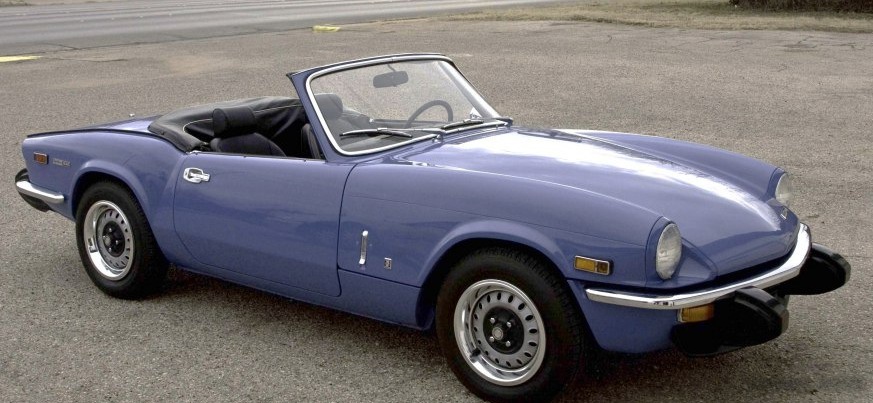
The Triumph Spitfire 1.3 MK III, produced between 1967 and 1970, represents a pivotal iteration in the Spitfire lineage. Falling within the second generation (MK II – MK IV) of the popular British sports car, the 1.3 MK III aimed to broaden the Spitfire’s appeal with a slightly larger engine and refined styling. It occupied a middle ground in the lineup, offering a balance between the more basic earlier models and the later, more powerful MK IV variants. The MK III was a key part of Triumph’s strategy to compete in the increasingly popular affordable sports car market, particularly against rivals like the MG Midget and Austin-Healey Sprite. It was primarily sold in the UK and exported to North America and other Commonwealth markets.
Technical Specifications
| Brand | Triumph |
| Model | Spitfire |
| Type | 1.3 MK III (75 Hp) |
| Start of production | 1967 |
| End of production | 1970 |
| Powertrain Architecture | Internal Combustion engine |
| Body type | Cabriolet |
| Seats | 2 |
| Doors | 2 |
| Fuel Type | Petrol (Gasoline) |
| Acceleration 0 – 60 mph | 12.5 sec |
| Maximum speed | 160 km/h (99.42 mph) |
| Weight-to-power ratio | 10 kg/Hp, 100.3 Hp/tonne |
| Weight-to-torque ratio | 7.3 kg/Nm, 136.4 Nm/tonne |
| Power | 75 Hp @ 6000 rpm |
| Power per litre | 57.9 Hp/l |
| Torque | 102 Nm @ 4000 rpm (75.23 lb.-ft. @ 4000 rpm) |
| Engine layout | Front, Longitudinal |
| Engine displacement | 1296 cm3 (79.09 cu. in.) |
| Number of cylinders | 4 |
| Engine configuration | Inline |
| Cylinder Bore | 73.7 mm (2.9 in.) |
| Piston Stroke | 76 mm (2.99 in.) |
| Compression ratio | 9:1 |
| Number of valves per cylinder | 2 |
| Fuel injection system | Carburettor |
| Engine aspiration | Naturally aspirated engine |
| Valvetrain | OHV |
| Engine oil capacity | 4.5 l (4.76 US qt | 3.96 UK qt) |
| Coolant | 4.5 l (4.76 US qt | 3.96 UK qt) |
| Kerb Weight | 748 kg (1649.06 lbs.) |
| Max. weight | 925 kg (2039.28 lbs.) |
| Max load | 177 kg (390.22 lbs.) |
| Trunk (boot) space – minimum | 190 l (6.71 cu. ft.) |
| Fuel tank capacity | 37.6 l (9.93 US gal | 8.27 UK gal) |
| Length | 3734 mm (147.01 in.) |
| Width | 1448 mm (57.01 in.) |
| Height | 1207 mm (47.52 in.) |
| Wheelbase | 2108 mm (82.99 in.) |
| Front track | 1245 mm (49.02 in.) |
| Rear (Back) track | 1220 mm (48.03 in.) |
| Minimum turning circle | 7.3 m (23.95 ft.) |
| Drivetrain Architecture | Rear wheel drive |
| Number of gears | 4 gears, manual transmission |
| Front suspension | Wishbone, Transverse stabilizer |
| Rear suspension | Leaf spring |
| Front brakes | Disc, 228 mm |
| Rear brakes | Drum, 178×32 mm |
| Steering type | Steering rack and pinion |
Powertrain & Engine Architecture
The heart of the Spitfire 1.3 MK III is its 1296cc inline-four cylinder engine. Designated as the Triumph 1300 engine, it represented an increase in displacement over the earlier 1147cc unit. The engine utilized a cast iron block and cylinder head, with a single Zenith 36WE carburetor handling fuel delivery. The overhead valve (OHV) configuration, while traditional, proved reliable and relatively easy to maintain. The engine produced 75 horsepower at 6000 rpm and 85 lb-ft of torque at 4000 rpm. The four-speed manual transmission was standard, featuring a floor-mounted shifter. The drivetrain layout was conventional for the era: a longitudinally mounted engine driving the rear wheels.
Driving Characteristics
The 1.3 MK III offered a noticeable improvement in performance over its predecessors. While not a particularly fast car by modern standards, the increased torque made it more tractable in everyday driving situations. Acceleration from 0 to 60 mph took around 12.5 seconds, and the top speed was approximately 99 mph. The four-speed gearbox provided adequate ratios for spirited driving, although the shift quality could be somewhat notchy. Compared to the later MK IV models with their larger engines, the 1.3 MK III felt less powerful, particularly at higher speeds. However, its lighter weight and more balanced handling made it a fun and engaging car to drive on winding roads. The rear leaf spring suspension provided a comfortable ride, but could exhibit some axle tramp under hard acceleration.
Equipment & Trim Levels
The Spitfire 1.3 MK III was relatively sparsely equipped by today’s standards, reflecting its position as an affordable sports car. Standard features included a basic instrument panel with speedometer, fuel gauge, and temperature gauge. Upholstery was typically vinyl, with optional leather available. A wood-rimmed steering wheel and wire wheels were popular factory options. The MK III also featured a redesigned grille and revised rear bodywork compared to the earlier MK II, giving it a more modern appearance. Interior trim was generally functional and focused on durability rather than luxury.
Chassis & Braking
The Spitfire 1.3 MK III utilized a separate chassis construction, with a steel ladder frame supporting the body. Front suspension consisted of independent wishbones with a transverse stabilizer bar, while the rear suspension employed leaf springs. Brakes were disc brakes at the front and drum brakes at the rear. The braking system was adequate for the car’s performance, but lacked the stopping power of more modern vehicles. Steering was via a rack and pinion system, providing precise and responsive handling. The relatively lightweight construction of the chassis contributed to the car’s nimble handling characteristics.
Market Reception & Comparison
The Spitfire 1.3 MK III was generally well-received by automotive critics. It was praised for its stylish design, engaging handling, and affordability. However, some critics noted the engine’s lack of outright power and the somewhat crude interior finish. Compared to the MG Midget, the Spitfire offered a slightly more refined driving experience and a more modern appearance. Against the Austin-Healey Sprite, the Spitfire provided more comfort and practicality. Fuel economy was reasonable for the era, averaging around 30-35 mpg. Reliability was generally good, although the engine could be prone to overheating if not properly maintained.
Legacy
The Triumph Spitfire 1.3 MK III remains a popular choice among classic car enthusiasts. Its simple mechanical design and readily available parts make it relatively easy to maintain and repair. While not as highly sought after as some of the later MK IV models, the 1.3 MK III offers a charming and affordable entry point into the world of classic British sports cars. The engine, while not particularly powerful, is known for its durability and can be easily upgraded with performance modifications. Today, well-maintained examples of the 1.3 MK III can fetch prices ranging from $8,000 to $15,000, depending on condition and originality. The Spitfire 1.3 MK III stands as a testament to Triumph’s ability to create a fun, affordable, and stylish sports car that continues to delight drivers decades after its production ended.
