
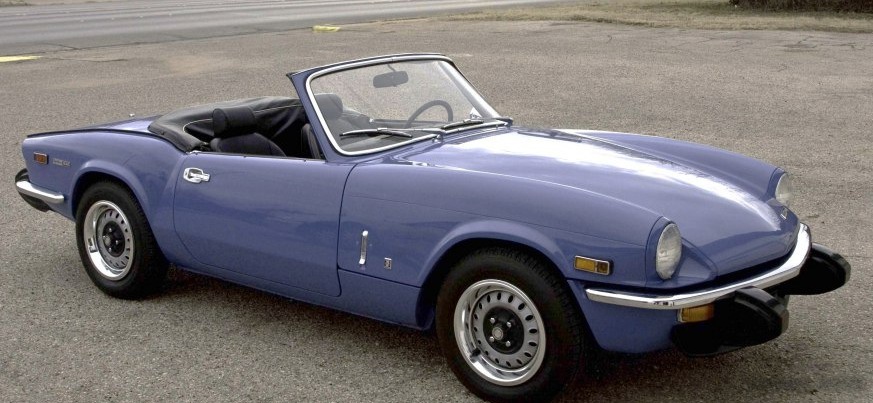
The Triumph Spitfire 1.5 MK IV, produced between 1972 and 1975, represents a significant evolution in the Spitfire lineage. It was the final iteration of the Mark IV series, and aimed to address some of the criticisms leveled at earlier models, particularly regarding engine performance and overall refinement. Positioned as the entry-level Spitfire, it offered an accessible British roadster experience, competing with vehicles like the MG Midget and Austin-Healey Sprite. While not the most powerful Spitfire variant, the 1.5 MK IV provided a balance of affordability, reliability, and classic open-top motoring. It was a key part of Triumph’s strategy to maintain a presence in the increasingly competitive sports car market.
Technical Specifications
| Brand | Triumph |
| Model | Spitfire |
| Generation | Spitfire |
| Type (Engine) | 1.5 MK IV (69 Hp) |
| Start of Production | 1972 |
| End of Production | 1975 |
| Powertrain Architecture | Internal Combustion Engine |
| Body Type | Cabriolet |
| Fuel Type | Petrol (Gasoline) |
| Power | 69 Hp |
| Engine Aspiration | Naturally Aspirated |
Powertrain & Engine Architecture
The heart of the Spitfire 1.5 MK IV is its 1,493 cc (91.0 cu in) inline-four cylinder engine. This engine, designated as the Triumph 15TR, was an evolution of the earlier 1300cc unit. It featured a cast iron block and cylinder head, with a single overhead camshaft operating the valves. The camshaft was driven by a duplex chain, improving reliability over earlier timing chain setups. Fuel delivery was handled by a Zenith-Stromberg 125CD carburetor, a common setup for British sports cars of the era. The engine produced 69 horsepower at 5,500 rpm and 82 lb-ft of torque at 3,500 rpm. While this output wasn’t substantial, it was an improvement over the earlier 1300cc engines. The engine was mated to a four-speed manual transmission as standard, although an optional overdrive unit was available. The transmission was a fully synchronized unit, offering a relatively smooth gear change for its time. The rear axle was a live axle with a final drive ratio of 3.89:1, providing a balance between acceleration and cruising ability.
Driving Characteristics
The Spitfire 1.5 MK IV, with its 69 horsepower and relatively lightweight construction (around 1,850 lbs), offered a spirited, if not outright fast, driving experience. Acceleration from 0 to 60 mph took approximately 12-13 seconds, and the top speed was around 95 mph. The engine felt most comfortable in the mid-range, providing adequate power for overtaking and hill climbing. The four-speed manual transmission required precise shifting, but offered a direct connection to the engine. The car’s handling was generally considered good for its time, with responsive steering and a relatively stable chassis. However, the live rear axle could exhibit some axle tramp on uneven surfaces. Compared to the later Spitfire 1500 models, the MK IV felt slightly less refined, with more engine noise and vibration. The optional overdrive unit significantly improved cruising comfort, reducing engine speed and fuel consumption on long journeys.
Equipment & Trim Levels
The Spitfire 1.5 MK IV was relatively sparsely equipped by modern standards, reflecting its position as an affordable sports car. Standard features included a folding soft top, steel wheels, and basic instrumentation consisting of a speedometer, tachometer, fuel gauge, and temperature gauge. Interior trim was typically vinyl, with optional leather upholstery available at extra cost. The dashboard was simple and functional, with minimal ornamentation. Optional extras included wire wheels, a wood-rimmed steering wheel, a heater, and a radio. The MK IV also featured improved ventilation compared to earlier Spitfire models, addressing a common complaint. The car’s interior was compact, offering limited space for both driver and passenger. However, the driving position was generally comfortable, with good visibility.
Chassis & Braking
The Spitfire 1.5 MK IV utilized a separate chassis construction, with a box-section backbone frame providing the structural rigidity. The suspension consisted of independent front suspension with double wishbones and coil springs, and a live axle with leaf springs at the rear. The front suspension geometry was designed to provide good handling and ride comfort. The braking system consisted of disc brakes at the front and drum brakes at the rear. The brakes were adequate for normal driving conditions, but lacked the stopping power of more modern systems. Steering was by rack and pinion, providing precise and responsive control. The car’s relatively short wheelbase (90 inches) contributed to its nimble handling characteristics. Stabilizer bars were fitted to both the front and rear suspension, helping to reduce body roll during cornering.
Market Reception & Comparison
The Triumph Spitfire 1.5 MK IV was generally well-received by automotive critics, who praised its affordability, handling, and classic British roadster styling. However, some critics noted the engine’s lack of outright power and the car’s somewhat cramped interior. Compared to the earlier Spitfire MK III, the MK IV offered improved engine performance and refinement. Compared to the later Spitfire 1500 models, the MK IV felt less modern but retained a more classic character. The Spitfire 1.5 MK IV competed directly with the MG Midget and Austin-Healey Sprite, offering a similar driving experience at a comparable price point. Fuel economy was reasonable for the era, averaging around 28-32 mpg. Reliability was generally good, although the Zenith-Stromberg carburetor could require occasional adjustment.
Legacy
The Triumph Spitfire 1.5 MK IV remains a popular choice among classic car enthusiasts today. Its relatively simple mechanicals and readily available parts make it a relatively easy car to maintain and restore. The 1.5 MK IV engine, while not the most powerful, is known for its durability and reliability. The car’s classic styling and open-top motoring experience continue to appeal to drivers who appreciate a more visceral and engaging driving experience. Values for well-maintained examples have been steadily increasing in recent years, reflecting the growing demand for classic British sports cars. While not a high-performance machine by modern standards, the Spitfire 1.5 MK IV represents a significant piece of automotive history and a testament to Triumph’s engineering prowess. It’s a car that offers a genuine connection to the golden age of British motoring.
