
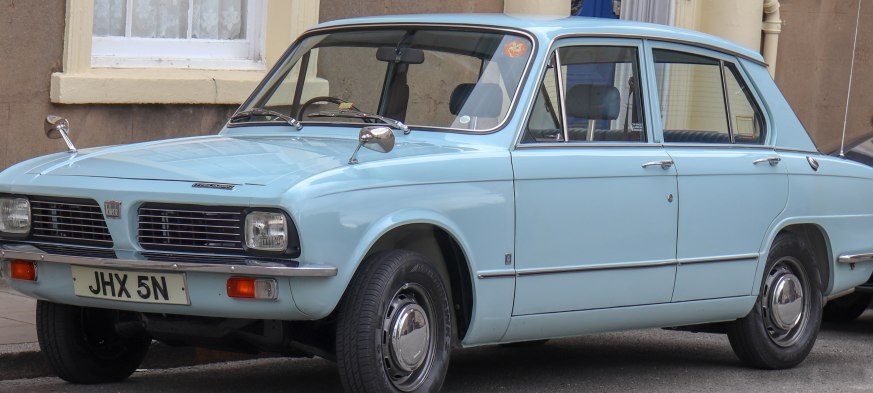
The Triumph Toledo 1500, produced between 1970 and 1977, represents a significant, though often overlooked, chapter in the British Leyland era. Positioned as a compact and affordable saloon, the Toledo aimed to fill a gap in the Triumph lineup, offering a practical and relatively sporty alternative to larger, more expensive models. This 62 horsepower variant, powered by a 1.5-liter engine, served as the entry point to the Toledo range, appealing to buyers seeking economical transportation with a touch of British motoring heritage. It was part of the initial Toledo series, designed as a more modern and streamlined offering compared to the earlier Triumph Herald models it partially replaced.
Technical Specifications
| Brand | Triumph |
| Model | Toledo |
| Generation | Toledo |
| Type (Engine) | 1500 (62 Hp) |
| Start of Production | 1970 |
| End of Production | 1977 |
| Powertrain Architecture | Internal Combustion Engine |
| Body Type | Sedan |
| Fuel Type | Petrol (Gasoline) |
| Engine Power | 62 Hp |
| Engine Aspiration | Naturally Aspirated |
Powertrain & Engine Architecture
The heart of the Triumph Toledo 1500 was the 1492cc four-cylinder engine, derived from the Triumph Spitfire’s powerplant but detuned for economy and reliability. This engine, internally designated as the ‘Triumph 1500’ unit, featured a cast iron block and cylinder head, with a single overhead camshaft operating pushrod-actuated valves. The engine utilized a Zenith-Stromberg 125CD carburetor for fuel delivery, a common setup for British cars of the era. While not particularly powerful by modern standards, the engine was known for its smooth operation and relatively easy maintenance. The 62 horsepower output was achieved at 5,000 rpm, with a torque figure of approximately 87 lb-ft at 3,000 rpm. The Toledo 1500 was initially offered with a four-speed manual transmission, but a Borg-Warner three-speed automatic transmission became available as an option, catering to drivers prioritizing convenience over outright performance. The automatic transmission, while offering ease of use, did noticeably impact acceleration and fuel economy.
Driving Characteristics
The Toledo 1500, particularly in its automatic guise, was not designed for spirited driving. Acceleration was modest, taking around 16 seconds to reach 60 mph. The automatic transmission, while smooth, featured relatively widely spaced gear ratios, resulting in a noticeable delay in response when overtaking or climbing hills. The manual transmission version offered a more engaging driving experience, allowing the driver to better utilize the engine’s limited power. However, even with the manual gearbox, the Toledo 1500 was best suited for relaxed cruising and urban driving. The suspension, featuring independent front suspension with coil springs and a live axle rear suspension with leaf springs, provided a comfortable ride, absorbing bumps and imperfections in the road reasonably well. Steering was by a cam and peg system, which, while accurate, lacked the precision of more modern rack and pinion setups.
Equipment & Trim Levels
The Triumph Toledo 1500 was positioned as a relatively basic, affordable saloon. Standard equipment included cloth upholstery, a heater, and basic instrumentation consisting of a speedometer, fuel gauge, and temperature gauge. The interior was functional and simply styled, reflecting the car’s price point. Optional extras included a radio, upgraded upholstery, and a vinyl roof. Trim levels were fairly limited; the 1500 represented the base model, with later additions like the Toledo 1600 offering slightly more power and improved features. The dashboard layout was straightforward, with controls logically arranged for ease of use. The car’s interior space was adequate for a family of four, though rear legroom was somewhat limited.
Chassis & Braking
The Toledo 1500 utilized a monocoque chassis construction, providing a good balance of strength and weight. The front suspension employed independent double wishbones with coil springs, while the rear suspension featured a live axle with leaf springs. This setup provided a comfortable ride, but handling was not particularly sharp. Braking was initially accomplished with Girling disc brakes on the front wheels and drum brakes on the rear. Later models saw the introduction of disc brakes all around, improving stopping performance. The steering system was a cam and peg type, offering reasonable accuracy but lacking the feel of more modern steering systems. The car’s relatively light weight (around 2,200 lbs) helped to offset the modest engine power.
Market Reception & Comparison
The Triumph Toledo 1500 received a mixed reception from automotive critics. While praised for its comfortable ride and relatively affordable price, it was often criticized for its lack of performance, particularly in automatic transmission form. Compared to rivals such as the Ford Cortina and Vauxhall Victor, the Toledo 1500 offered a more refined driving experience but lacked the outright practicality and performance of its competitors. The 1600 model, with its larger engine and improved performance, was generally considered a more desirable option. Fuel economy was reasonable for the era, averaging around 30 mpg. Reliability was generally good, though the car’s British Leyland origins meant that build quality could be inconsistent. The automatic transmission, while convenient, was often cited as a potential source of problems.
Legacy
The Triumph Toledo 1500, while not a groundbreaking vehicle, holds a significant place in British automotive history. It represents a transitional period for Triumph, bridging the gap between the older Herald models and the more modern Dolomite range. Today, the Toledo 1500 is a relatively rare sight on the roads, but a dedicated following of enthusiasts keeps these cars running. The 1500’s simple mechanical design makes it relatively easy to maintain, and spare parts are still available, though sourcing them can sometimes be challenging. The automatic transmission versions are generally less sought after by collectors due to their lower performance. A well-maintained Toledo 1500 offers a charming and affordable entry into the world of classic British motoring, providing a nostalgic driving experience and a tangible link to a bygone era. The car’s enduring appeal lies in its understated style, comfortable ride, and the inherent character of British engineering.
