
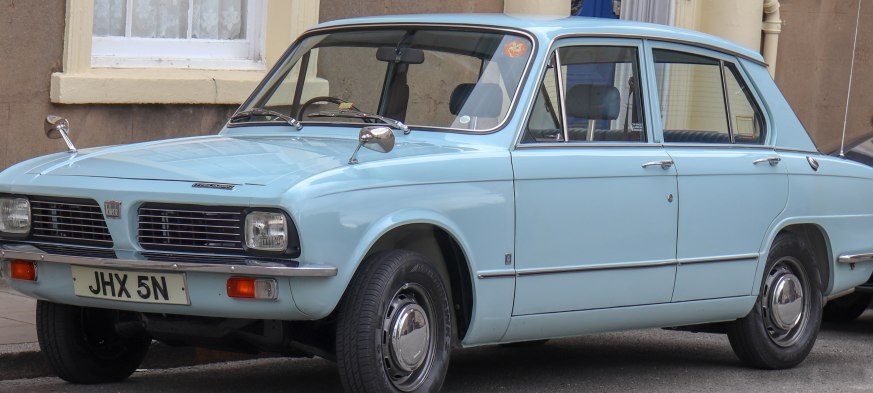
The Triumph Toledo 1500, produced between 1972 and 1977, represents a significant, though often overlooked, chapter in the British Leyland era. Positioned as a compact and affordable saloon, the Toledo aimed to fill a gap in the Triumph lineup, offering a practical and relatively sporty alternative to larger, more expensive models. This 1500 variant, powered by a 1.5-liter engine producing 66 horsepower, served as the entry point to the Toledo range, appealing to buyers seeking economical transportation with a touch of British motoring heritage. It was part of the broader effort by British Leyland to rationalize and modernize its diverse portfolio of brands, and the Toledo, despite its relatively short production run, became a recognizable fixture on British roads.
Technical Specifications
| Brand | Triumph |
| Model | Toledo |
| Generation | Toledo |
| Type (Engine) | 1500 (66 Hp) |
| Start of Production | 1972 |
| End of Production | 1977 |
| Powertrain Architecture | Internal Combustion Engine |
| Body Type | Sedan |
| Fuel Type | Petrol (Gasoline) |
| Power | 66 Hp |
| Engine Aspiration | Naturally Aspirated |
Powertrain & Engine Architecture
The heart of the Triumph Toledo 1500 is its 1498cc inline-four cylinder engine. This engine, designated as the 1500, was a relatively simple and robust design, reflecting the engineering priorities of the early 1970s. It featured a cast iron block and cylinder head, with a single overhead camshaft operating the valves. The engine utilized a Zenith-Stromberg carburetor for fuel delivery, a common setup for British cars of the period. While not particularly powerful by modern standards, the 66 horsepower output was considered adequate for the Toledo’s weight and intended purpose. The engine’s torque curve was relatively flat, providing reasonable drivability in everyday conditions. The Toledo 1500 was exclusively offered with a four-speed manual transmission. This transmission, while durable, wasn’t known for its particularly precise shift action. The engine’s design prioritized reliability and ease of maintenance over outright performance, making it a relatively straightforward unit for mechanics to work on.
Driving Characteristics
The driving experience in a Triumph Toledo 1500 is best described as comfortable and unhurried. The 66 horsepower engine provides adequate, but not exhilarating, acceleration. The four-speed manual transmission requires deliberate shifts, and the gear ratios are spaced to prioritize fuel economy and cruising ability rather than rapid acceleration. Top speed was around 85 mph, and acceleration from 0 to 60 mph took approximately 16 seconds. Compared to the later, more powerful Toledo models, the 1500 felt noticeably slower. However, it offered a more relaxed and forgiving driving experience, making it well-suited for urban driving and longer journeys at moderate speeds. The steering was light and relatively precise, although it lacked the feedback of more modern systems. The suspension, while comfortable, could feel somewhat wallowy on uneven surfaces.
Equipment & Trim Levels
The Triumph Toledo 1500 was offered with a fairly basic level of equipment, reflecting its position as the entry-level model. Standard features included cloth upholstery, a basic instrument panel with speedometer, fuel gauge, and temperature gauge, and manually operated windows and door locks. The interior was functional and reasonably well-appointed for its price point, but it lacked the luxury features found in more expensive cars. Optional extras included a vinyl roof, a radio, and upgraded interior trim. The Toledo 1500’s trim level was largely defined by its exterior color and interior upholstery choices. The car was available in a range of colors, including British Racing Green, Pageant Blue, and Tudor White. Interior upholstery options included various shades of cloth and vinyl.
Chassis & Braking
The Triumph Toledo 1500 utilized a conventional chassis design, with a separate body-on-frame construction. The front suspension featured independent wishbones and coil springs, while the rear suspension employed a live axle with leaf springs. This suspension setup provided a comfortable ride, but it wasn’t particularly sophisticated. The braking system consisted of disc brakes on the front wheels and drum brakes on the rear wheels. The brakes were adequate for the car’s weight and performance, but they lacked the stopping power of more modern systems. Steering was provided by a cam and peg steering system, which was relatively simple and reliable, but it lacked the precision of rack and pinion steering.
Market Reception & Comparison
The Triumph Toledo 1500 received a mixed reception from automotive critics. While it was praised for its affordability, practicality, and comfortable ride, it was criticized for its lack of performance and somewhat dated design. Compared to its rivals, such as the Ford Cortina and Vauxhall Victor, the Toledo 1500 offered a more stylish and refined driving experience, but it lacked the performance and practicality of those models. Fuel economy was reasonable for the period, averaging around 30 mpg. Reliability was generally good, although the car was prone to rust, a common problem with British cars of the 1970s. The Toledo 1500 appealed to buyers who prioritized comfort, style, and affordability over outright performance.
Legacy
The Triumph Toledo 1500, while not a groundbreaking vehicle, holds a significant place in British automotive history. It represents a period of transition for Triumph and British Leyland, as the company struggled to adapt to changing market conditions and increasing competition. Today, the Toledo 1500 is a relatively rare sight on the roads, but it remains a popular choice among classic car enthusiasts. Its simple mechanical design and readily available parts make it a relatively easy car to maintain and restore. The 1500’s enduring appeal lies in its charming retro styling, comfortable ride, and affordable price. While not a performance icon, the Triumph Toledo 1500 offers a nostalgic glimpse into a bygone era of British motoring. The engine, while not known for its longevity in heavily modified form, generally proved reliable when maintained to factory specifications, and surviving examples continue to provide enjoyable classic motoring experiences.
