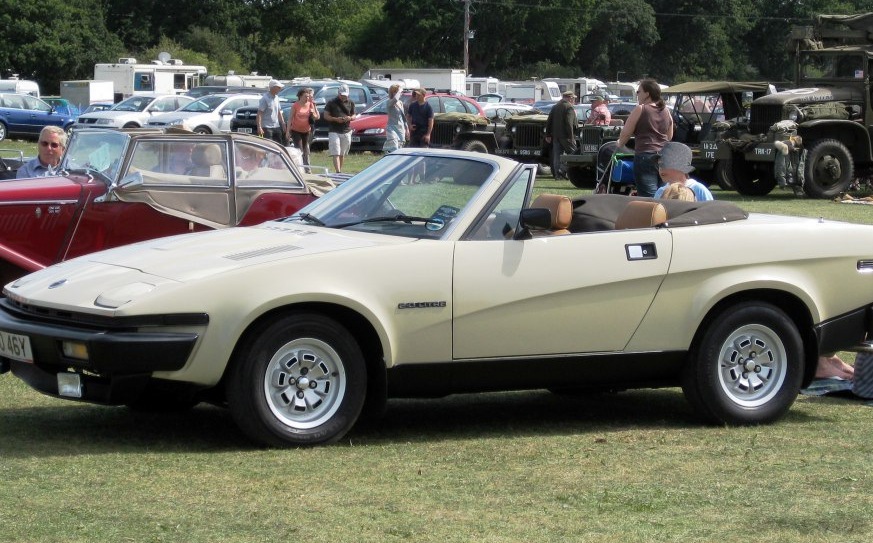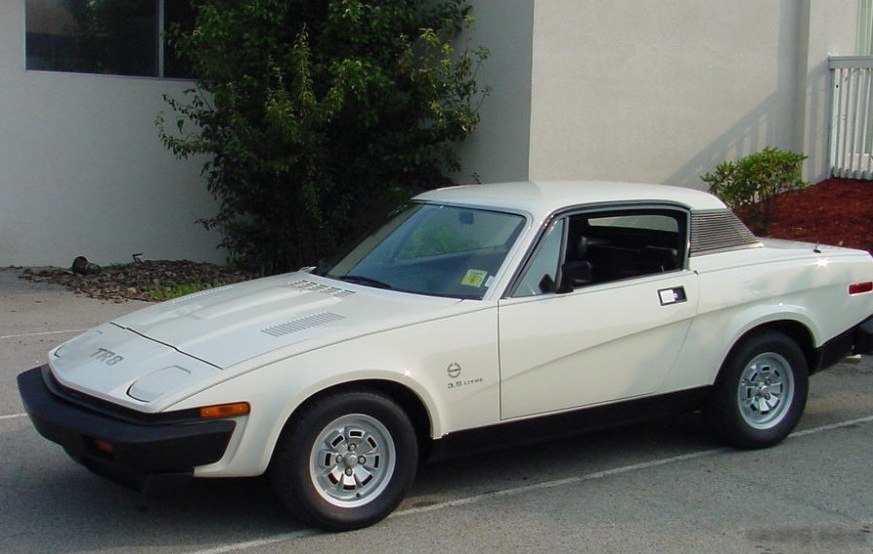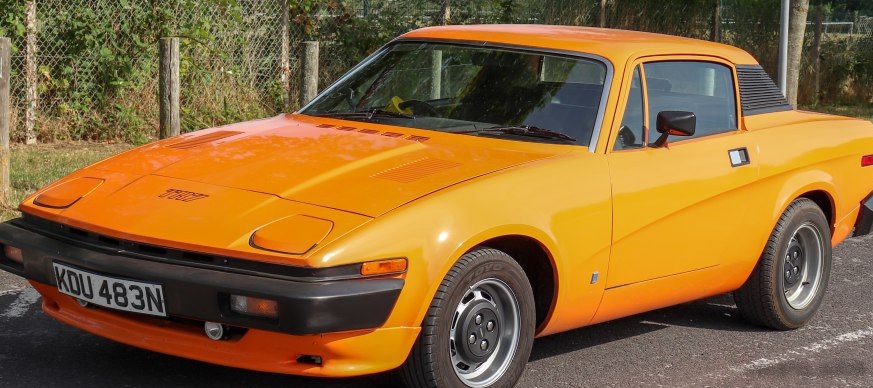
The Triumph TR7 Coupe 2.0, producing 105 horsepower, represented a significant departure for the British automaker, moving away from the traditional, classically styled roadsters that had defined the TR lineage. Introduced in 1977 and continuing through 1981, the TR7 Coupe aimed to modernize the TR brand and appeal to a broader market, particularly in the United States. While the TR7 initially faced criticism for its wedge-shaped styling – a design trend of the era – it ultimately became one of the best-selling TR models, though not without its share of mechanical and quality control issues. This variant, the 2.0-liter, 105 hp model, occupied a middle ground in the TR7 lineup, offering a balance between performance and affordability.
Technical Specifications
| Brand | Triumph |
| Model | TR 7 |
| Generation | TR 7 Coupe |
| Type (Engine) | 2.0 (105 Hp) |
| Start of production | 1977 |
| End of production | 1981 |
| Powertrain Architecture | Internal Combustion engine |
| Body type | Coupe |
| Seats | 2 |
| Doors | 2 |
| Fuel Type | Petrol (Gasoline) |
| Weight-to-power ratio | 9.5 kg/Hp, 105 Hp/tonne |
| Weight-to-torque ratio | 6.2 kg/Nm, 161 Nm/tonne |
| Power | 105 Hp @ 5500 rpm |
| Power per litre | 52.6 Hp/l |
| Torque | 161 Nm @ 3500 rpm |
| Torque (lb-ft) | 118.75 lb.-ft. @ 3500 rpm |
| Engine layout | Front, Longitudinal |
| Engine displacement | 1998 cm3 |
| Engine displacement (cu. in.) | 121.93 cu. in. |
| Number of cylinders | 4 |
| Engine configuration | Inline |
| Cylinder Bore | 90.3 mm |
| Cylinder Bore (in.) | 3.56 in. |
| Piston Stroke | 78 mm |
| Piston Stroke (in.) | 3.07 in. |
| Compression ratio | 9.25:1 |
| Fuel injection system | Carburettor |
| Engine aspiration | Naturally aspirated engine |
| Valvetrain | SOHC |
| Engine oil capacity | 4.5 l |
| Engine oil capacity (US qt) | 4.76 US qt |
| Engine oil capacity (UK qt) | 3.96 UK qt |
| Coolant | 7.9 l |
| Coolant (US qt) | 8.35 US qt |
| Coolant (UK qt) | 6.95 UK qt |
| Kerb Weight | 1000 kg |
| Kerb Weight (lbs) | 2204.62 lbs |
| Fuel tank capacity | 54.5 l |
| Fuel tank capacity (US gal) | 14.4 US gal |
| Fuel tank capacity (UK gal) | 11.99 UK gal |
| Length | 4065 mm |
| Length (in.) | 160.04 in. |
| Width | 1681 mm |
| Width (in.) | 66.18 in. |
| Height | 1254 mm |
| Height (in.) | 49.37 in. |
| Wheelbase | 2160 mm |
| Wheelbase (in.) | 85.04 in. |
| Front track | 1409 mm |
| Front track (in.) | 55.47 in. |
| Rear track | 1404 mm |
| Rear track (in.) | 55.28 in. |
| Minimum turning circle | 8.8 m |
| Minimum turning circle (ft) | 28.87 ft |
| Drivetrain Architecture | Rear wheel drive |
| Drive wheel | Rear wheel drive |
| Number of gears | 5 gears, manual transmission |
| Front suspension | Several levers and rods, Transverse stabilizer |
| Rear suspension | Independent multi-link suspension, Transverse stabilizer |
| Front brakes | Disc, 248 mm |
| Rear brakes | Drum, 204 mm |
| Steering type | Steering rack and pinion |
| Tires size | Front wheel tires: 175/70 R13Rear wheel tires: 175/70 R13 |
| Wheel rims size | Front wheel rims: 5.5J x 13Rear wheel rims: 5.5J x 13 |
Background and Market Positioning
The TR7 was born out of a need to replace the aging TR6, which, while beloved, was becoming increasingly out of step with modern automotive trends. British Leyland, Triumph’s parent company at the time, sought a more contemporary design that would appeal to a wider audience, particularly in the lucrative North American market. The TR7 Coupe, with its distinctive wedge shape penned by Harris Mann, was the result. The 2.0-liter engine, producing 105 horsepower, was the mainstay of the TR7 range for much of its production run. It was positioned as the standard engine option, offering a good balance of performance and fuel economy. A later 105 hp fuel-injected version was also available. The TR8, with its V8 engine, represented the performance flagship, while the TR7 with the smaller 1.6-liter engine served as the entry-level model in some markets.
Engine and Mechanical Details
The TR7 Coupe 2.0 was powered by a 1998cc inline-four cylinder engine. This engine, while relatively simple in design, was known for its willingness to rev and provided adequate power for spirited driving. It utilized a single Zenith-Stromberg carburetor, which, while contributing to its simplicity, also meant it wasn’t as refined or fuel-efficient as contemporary fuel-injected engines. The engine was mounted longitudinally in the front of the car, driving the rear wheels through a five-speed manual transmission. The suspension featured independent rear suspension, a relatively advanced feature for a sports car of its time, contributing to improved handling. However, the TR7 was also known for its susceptibility to rust, particularly in areas exposed to road salt. The drum brakes on the rear wheels were also a point of criticism, as they lacked the stopping power of disc brakes.
Comparison with TR7 Variants
The 2.0-liter TR7 Coupe differed significantly from its siblings. Compared to the 1.6-liter version, the 2.0 offered a noticeable increase in power and torque, resulting in improved acceleration and overall performance. This made the 2.0-liter model a more desirable choice for drivers who prioritized driving enjoyment. In contrast to the TR8, which boasted a 150 horsepower V8 engine, the 2.0-liter TR7 was less powerful but also more affordable and lighter. The TR8 was aimed at buyers seeking a true performance sports car, while the 2.0-liter TR7 appealed to those who wanted a stylish and fun-to-drive coupe without the higher price tag. The 1.6-liter model was often seen as a more economical option, geared towards everyday commuting rather than spirited driving. Maintenance on the 2.0-liter engine is generally straightforward, though sourcing parts can sometimes be a challenge due to the car’s age. The carburetor requires periodic adjustment and cleaning, and the engine is known to be somewhat sensitive to overheating if the cooling system is not properly maintained.
Legacy and Collectibility
Despite its initial reception and some well-documented quality issues, the Triumph TR7 Coupe 2.0 has gained a following among classic car enthusiasts. Its distinctive styling, relatively affordable price, and enjoyable driving experience have contributed to its enduring appeal. While not as highly valued as some of the earlier TR models, the TR7 Coupe 2.0 represents an important chapter in Triumph’s history, marking a transition towards more modern automotive design. Today, well-maintained examples are sought after by collectors and enthusiasts who appreciate the car’s unique character and its place in British automotive history. Rust repair and preventative maintenance are key considerations for potential buyers, as these are common issues with surviving examples. The TR7, in all its variants, remains a testament to British sports car engineering and a reminder of a bygone era of automotive design.