
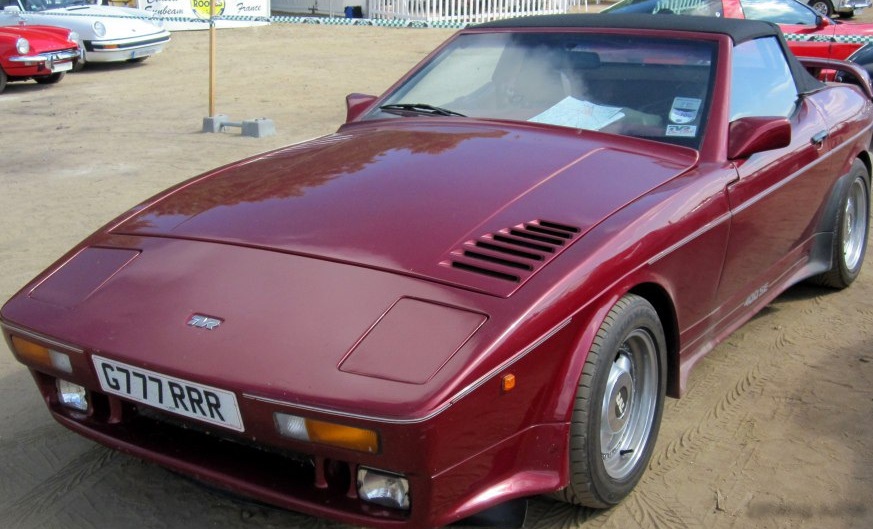
The TVR 400, produced between 1988 and 1991, represented a significant step forward for the Blackpool-based manufacturer. Positioned as the successor to the TVR 350i, the 400 aimed to deliver a more refined and powerful sports car experience. It was a key model in TVR’s lineup during a period of increasing British sports car popularity, offering a compelling alternative to established marques. The 400 was exclusively available as a two-seat roadster with a fiberglass body, embodying TVR’s commitment to lightweight construction and driver-focused performance. This article will focus specifically on the 3.9-liter, 272 horsepower variant of the TVR 400.
Technical Specifications
| Brand | TVR |
| Model | 400 |
| Generation | 400 |
| Type (Engine) | 3.9 (272 Hp) |
| Start of production | 1988 |
| End of production | 1991 |
| Powertrain Architecture | Internal Combustion engine |
| Body type | Cabriolet |
| Seats | 2 |
| Doors | 2 |
| Fuel consumption (urban) | 16 l/100 km (14.7 US mpg, 17.7 UK mpg, 6.3 km/l) |
| Fuel consumption (extra urban) | 10 l/100 km (23.5 US mpg, 28.2 UK mpg, 10 km/l) |
| Fuel Type | Petrol (Gasoline) |
| Acceleration 0 – 100 km/h | 6.5 sec |
| Acceleration 0 – 62 mph | 6.5 sec |
| Acceleration 0 – 60 mph | 6.2 sec |
| Maximum speed | 220 km/h (136.7 mph) |
| Weight-to-power ratio | 4.1 kg/Hp, 242.9 Hp/tonne |
| Weight-to-torque ratio | 3.1 kg/Nm, 326.8 Nm/tonne |
| Power | 272 Hp @ 5500 rpm |
| Power per litre | 68.9 Hp/l |
| Torque | 366 Nm @ 3500 rpm (269.95 lb.-ft. @ 3500 rpm) |
| Engine layout | Front, Longitudinal |
| Engine displacement | 3947 cm3 (240.86 cu. in.) |
| Number of cylinders | 8 |
| Engine configuration | V-engine |
| Cylinder Bore | 94 mm (3.7 in.) |
| Piston Stroke | 71.1 mm (2.8 in.) |
| Compression ratio | 9.75:1 |
| Number of valves per cylinder | 2 |
| Fuel injection system | Multi-port manifold injection |
| Engine aspiration | Naturally aspirated engine |
| Kerb Weight | 1120 kg (2469.18 lbs.) |
| Max. weight | 1425 kg (3141.59 lbs.) |
| Max load | 305 kg (672.41 lbs.) |
| Trunk (boot) space – minimum | 225 l (7.95 cu. ft.) |
| Length | 4015 mm (158.07 in.) |
| Width | 1730 mm (68.11 in.) |
| Height | 1205 mm (47.44 in.) |
| Wheelbase | 2385 mm (93.9 in.) |
| Front track | 1450 mm (57.09 in.) |
| Rear (Back) track | 1480 mm (58.27 in.) |
| Minimum turning circle | 9.6 m (31.5 ft.) |
| Drivetrain Architecture | Rear wheel drive |
| Drive wheel | Rear wheel drive |
| Number of gears | 5 gears, manual transmission |
| Front suspension | Double wishbone |
| Rear suspension | Double wishbone |
| Front brakes | Ventilated discs |
| Rear brakes | Disc |
| Assisting systems | ABS (Anti-lock braking system) |
| Steering type | Steering rack and pinion |
| Tires size | 225/50 R15 |
| Wheel rims size | 8J x 15 |
Introduction
The TVR 400 3.9, produced from 1988 to 1991, was a pivotal model for TVR, solidifying their reputation for building exhilarating, hand-built sports cars. It represented a significant power upgrade over the preceding 350i, utilizing a Rover V8 engine. The 400 was built on a strengthened version of the TVR S series chassis, known for its lightweight construction and responsive handling. This particular variant, with its 3.9-liter engine producing 272 horsepower, sat at the top of the 400 range, offering the most potent performance available in the model line.
Powertrain & Engine Architecture
The heart of the TVR 400 3.9 is the Rover V8 engine, specifically the 3.9-liter variant. This engine, derived from the Buick-Oldsmobile-Pontiac 3.5-liter V8, had been extensively developed by Rover and TVR. It featured a 90-degree V configuration, two valves per cylinder, and a cast iron block with aluminum cylinder heads. Fuel delivery was handled by a Bosch multi-port fuel injection system, contributing to improved efficiency and responsiveness. The engine’s 9.75:1 compression ratio and carefully tuned camshaft profiles helped it produce a healthy 272 horsepower at 5500 rpm and 366 Nm (269.95 lb-ft) of torque at 3500 rpm. The engine was mounted longitudinally in the front of the car, driving the rear wheels. The standard transmission was a five-speed manual gearbox, providing precise control and enhancing the driving experience. While an automatic transmission was offered on some TVR models, it was not typically paired with the 3.9-liter engine due to its power output.
Driving Characteristics
The TVR 400 3.9 offered a raw and engaging driving experience. The combination of a lightweight chassis and a powerful V8 engine resulted in exhilarating acceleration. Zero to 60 mph was achievable in around 6.2 seconds, and the car could reach a top speed of 136.7 mph. The five-speed manual transmission allowed drivers to fully exploit the engine’s powerband, while the rear-wheel-drive configuration provided excellent handling balance. The double wishbone suspension, both front and rear, contributed to a firm but controlled ride, offering good body control in corners. However, the car’s lack of electronic driver aids meant that it demanded respect and skill from the driver, particularly in wet or slippery conditions. Compared to lower-powered TVR 400 variants, the 3.9-liter model offered a significantly more visceral and rewarding driving experience, with a noticeable increase in performance across the board.
Equipment & Trim Levels
The TVR 400 3.9 was relatively spartan in terms of standard equipment, reflecting TVR’s focus on performance over luxury. The interior typically featured leather seats, a wood-rimmed steering wheel, and basic instrumentation. However, TVR offered a wide range of customization options, allowing buyers to personalize their cars to their liking. These options included upgraded audio systems, different interior trim materials, and various exterior paint colors. The dashboard layout was simple and functional, with clearly marked gauges for speed, rpm, oil pressure, and coolant temperature. Air conditioning was available as an option, but it was not a standard feature.
Chassis & Braking
The TVR 400 utilized a tubular steel space frame chassis, renowned for its strength and lightness. This chassis was a key element in the car’s handling prowess. The suspension consisted of independent double wishbones at both the front and rear, with coil springs and adjustable dampers. Braking duties were handled by ventilated discs at the front and solid discs at the rear. An anti-lock braking system (ABS) was included as standard, enhancing safety and control. The car rode on 15-inch alloy wheels, typically fitted with 225/50 R15 tires.
Market Reception & Comparison
The TVR 400 3.9 was generally well-received by automotive critics, who praised its performance, handling, and distinctive styling. However, some critics noted the car’s lack of refinement and its relatively basic interior. Compared to other sports cars of the era, such as the Porsche 944 and the Mazda RX-7, the TVR 400 offered a more raw and visceral driving experience, but lacked the same level of sophistication. Fuel economy was also a concern, with the 3.9-liter V8 consuming fuel at a rate of around 14.7 mpg in urban driving and 23.5 mpg on the highway. Reliability was also a mixed bag, as TVRs were known for requiring regular maintenance and occasional repairs.
Legacy
The TVR 400 3.9 remains a highly sought-after classic sports car today. Its combination of performance, rarity, and distinctive styling has made it a favorite among enthusiasts. The Rover V8 engine, while not known for its ultimate reliability, is relatively easy to maintain and repair, thanks to its widespread use in other British cars. Well-maintained examples of the TVR 400 3.9 can command high prices on the used car market, reflecting their enduring appeal. The car represents a golden era of British sports car manufacturing, when small, independent companies were able to produce exciting and innovative vehicles that challenged the established order.
