
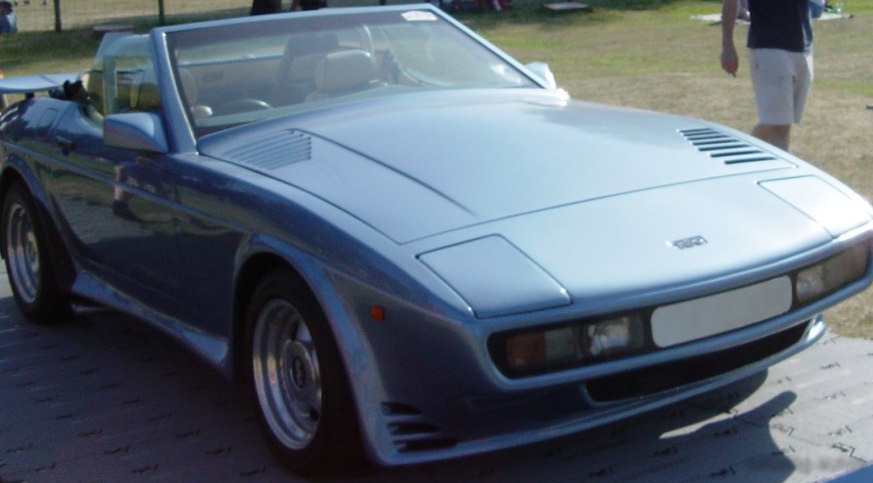
The TVR 450, produced between 1988 and 1989, represented a significant offering in the British sports car manufacturer’s lineup. Positioned as a high-performance variant, the 450 was built upon the foundation of TVR’s commitment to lightweight construction and powerful engines. It served as a flagship model during its brief production run, showcasing TVR’s engineering capabilities and appealing to enthusiasts seeking a raw, exhilarating driving experience. The 450 was a direct evolution of earlier TVR models, continuing the tradition of hand-built, visually striking sports cars. It was offered exclusively as a two-seat, two-door cabriolet.
Technical Specifications
| Brand | TVR |
| Model | 450 |
| Generation | 450 |
| Type (Engine) | 4.4 (323 Hp) |
| Start of production | 1988 |
| End of production | 1989 |
| Powertrain Architecture | Internal Combustion engine |
| Body type | Cabriolet |
| Seats | 2 |
| Doors | 2 |
| Fuel consumption (urban) | 16 l/100 km (14.7 US mpg, 17.7 UK mpg, 6.3 km/l) |
| Fuel consumption (extra urban) | 10 l/100 km (23.5 US mpg, 28.2 UK mpg, 10 km/l) |
| Fuel Type | Petrol (Gasoline) |
| Acceleration 0 – 100 km/h | 4.7 sec |
| Acceleration 0 – 62 mph | 4.7 sec |
| Acceleration 0 – 60 mph | 4.5 sec |
| Maximum speed | 250 km/h (155.34 mph) |
| Weight-to-power ratio | 3.5 kg/Hp, 285.8 Hp/tonne |
| Weight-to-torque ratio | 2.7 kg/Nm, 372.6 Nm/tonne |
| Power | 323 Hp @ 5700 rpm |
| Power per litre | 72.7 Hp/l |
| Torque | 421 Nm @ 4000 rpm (310.51 lb.-ft. @ 4000 rpm) |
| Engine layout | Front, Longitudinal |
| Engine displacement | 4441 cm3 (271.01 cu. in.) |
| Number of cylinders | 8 |
| Engine configuration | V-engine |
| Cylinder Bore | 94 mm (3.7 in.) |
| Piston Stroke | 80 mm (3.15 in.) |
| Compression ratio | 9.75:1 |
| Number of valves per cylinder | 2 |
| Fuel injection system | Multi-port manifold injection |
| Engine aspiration | Naturally aspirated engine |
| Kerb Weight | 1130 kg (2491.22 lbs.) |
| Max. weight | 1415 kg (3119.54 lbs.) |
| Max load | 285 kg (628.32 lbs.) |
| Trunk (boot) space – minimum | 225 l (7.95 cu. ft.) |
| Length | 4015 mm (158.07 in.) |
| Width | 1730 mm (68.11 in.) |
| Height | 1205 mm (47.44 in.) |
| Wheelbase | 2385 mm (93.9 in.) |
| Front track | 1450 mm (57.09 in.) |
| Rear (Back) track | 1480 mm (58.27 in.) |
| Minimum turning circle | 9.6 m (31.5 ft.) |
| Drivetrain Architecture | Rear wheel drive |
| Number of gears | 5 gears, manual transmission |
| Front suspension | Double wishbone |
| Rear suspension | Double wishbone |
| Front brakes | Ventilated discs |
| Rear brakes | Disc |
| Assisting systems | ABS (Anti-lock braking system) |
| Steering type | Steering rack and pinion |
| Tires size | 225/50 R16; 245/45 R16 |
| Wheel rims size | 9J x 16 |
Powertrain & Engine Architecture
The heart of the TVR 450 was its 4.4-liter V8 engine, a naturally aspirated powerplant producing 323 horsepower at 5700 rpm and 421 Nm (310.51 lb.-ft.) of torque at 4000 rpm. This engine, derived from the Rover V8, was a mainstay of TVR’s models for many years. TVR extensively modified the Rover block, improving its durability and performance. The engine featured a multi-port fuel injection system, contributing to its responsive throttle characteristics. The 450 utilized a five-speed manual transmission, delivering power to the rear wheels. The engine’s longitudinal front-mid engine layout helped to optimize weight distribution, enhancing handling balance. The V8’s configuration, with two valves per cylinder, was a relatively simple design, prioritizing reliability and ease of maintenance over outright complexity.
Driving Characteristics
The TVR 450 offered a visceral and engaging driving experience. Its relatively lightweight construction – around 1130 kg (2491.22 lbs) – combined with the potent V8 engine resulted in impressive acceleration. Zero to 60 mph was achievable in approximately 4.5 seconds, and it could reach a top speed of 250 km/h (155.34 mph). The manual transmission provided precise gear changes, allowing drivers to fully exploit the engine’s powerband. The 450’s suspension, featuring double wishbones at both the front and rear, delivered a firm but controlled ride. Steering was direct and communicative, providing ample feedback to the driver. Compared to potential future TVR models with more sophisticated electronic aids, the 450 offered a raw, unfiltered connection to the road. It demanded a skilled driver to extract its full potential, but rewarded them with an exhilarating experience.
Equipment & Trim Levels
The TVR 450 was not heavily laden with standard equipment, reflecting TVR’s focus on performance over luxury. The interior was functional and driver-focused, with leather upholstery and supportive bucket seats. A wood-rimmed steering wheel and aluminum trim added a touch of sporting elegance. The dashboard layout was relatively simple, with clearly visible gauges. Optional extras included upgraded audio systems, power windows, and a limited-slip differential. The 450’s trim level was essentially a single specification, with limited opportunities for customization beyond the available options. The emphasis was on providing a pure, unadulterated sports car experience.
Chassis & Braking
The TVR 450 utilized a tubular steel chassis, a hallmark of TVR’s construction methods. This lightweight and rigid chassis provided a solid foundation for the suspension and powertrain. The suspension system, with double wishbones and adjustable dampers, allowed for fine-tuning of the handling characteristics. Braking duties were handled by ventilated discs at the front and solid discs at the rear, assisted by an anti-lock braking system (ABS). The ABS system provided added safety and control during hard braking. The 450’s tires, typically 225/50 R16 at the front and 245/45 R16 at the rear, provided ample grip for its performance capabilities.
Market Reception & Comparison
The TVR 450 was generally well-received by automotive critics, who praised its performance, handling, and distinctive styling. However, some criticisms were leveled at its relatively spartan interior and lack of refinement compared to more mainstream sports cars. Compared to other TVR models of the era, such as the S3C, the 450 represented a significant step up in terms of power and performance. Its fuel economy, at 16 l/100 km (14.7 US mpg) in urban conditions and 10 l/100 km (23.5 US mpg) on the open road, was typical for a high-performance V8 sports car of the late 1980s. Reliability was a mixed bag, as with many TVRs of this period, requiring diligent maintenance and a knowledgeable owner.
Legacy
The TVR 450 remains a sought-after model among TVR enthusiasts. Its limited production run and potent performance have made it a collectible vehicle. The 4.4-liter Rover V8 engine, while requiring regular maintenance, is generally considered to be a robust and reliable powerplant. Today, the TVR 450 represents a unique and exciting piece of British automotive history, offering a raw and engaging driving experience that is increasingly rare in modern sports cars. Finding well-maintained examples can be challenging, but the rewards for those willing to invest the time and effort are substantial. The 450 stands as a testament to TVR’s commitment to building distinctive, high-performance sports cars.
