
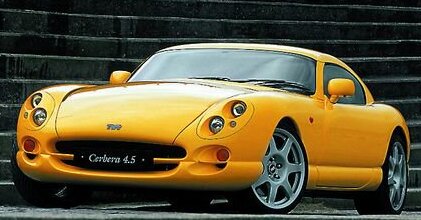
The TVR Cerbera 4.0 i 24V Speed Six, produced between 2000 and 2003, represents a high-performance iteration of TVR’s flagship grand tourer. Positioned as the top-tier engine option within the Cerbera range, it distinguished itself from the earlier 4.2 and 4.5 liter V8 models, and the later 3.9 liter Speed Six variants. The Cerbera, launched in 1996, aimed to provide a uniquely British alternative to established sports cars, emphasizing driver engagement and raw performance over outright luxury. The 4.0 i 24V Speed Six was the culmination of TVR’s in-house engine development, offering a significant power upgrade and refined driving experience.
Technical Specifications
| Brand | TVR |
| Model | Cerbera |
| Generation | Cerbera |
| Type (Engine) | 4.0 i 24V Speed Six (350 Hp) |
| Start of production | 2000 year |
| End of production | 2003 year |
| Powertrain Architecture | Internal Combustion engine |
| Body type | Coupe |
| Seats | 4 |
| Doors | 2 |
| Fuel consumption (combined) | 15 l/100 km (15.7 US mpg, 18.8 UK mpg, 6.7 km/l) |
| Fuel Type | Petrol (Gasoline) |
| Acceleration 0 – 100 km/h | 4.4 sec |
| Acceleration 0 – 62 mph | 4.4 sec |
| Acceleration 0 – 60 mph | 4.2 sec |
| Maximum speed | 273 km/h (169.63 mph) |
| Weight-to-power ratio | 3.2 kg/Hp, 309.7 Hp/tonne |
| Weight-to-torque ratio | 2.5 kg/Nm, 395.6 Nm/tonne |
| Power | 350 Hp @ 6800 rpm |
| Power per litre | 87.6 Hp/l |
| Torque | 447 Nm @ 5000 rpm (329.69 lb.-ft. @ 5000 rpm) |
| Engine layout | Front, Longitudinal |
| Engine displacement | 3996 cm3 (243.85 cu. in.) |
| Number of cylinders | 6 |
| Engine configuration | Inline |
| Cylinder Bore | 96 mm (3.78 in.) |
| Piston Stroke | 92 mm (3.62 in.) |
| Compression ratio | 10:1 |
| Number of valves per cylinder | 4 |
| Fuel injection system | Multi-port manifold injection |
| Engine aspiration | Naturally aspirated engine |
| Valvetrain | DOHC |
| Engine oil capacity | 6 l (6.34 US qt | 5.28 UK qt) |
| Coolant | 12 l (12.68 US qt | 10.56 UK qt) |
| Kerb Weight | 1130 kg (2491.22 lbs.) |
| Trunk (boot) space – minimum | 390 l (13.77 cu. ft.) |
| Fuel tank capacity | 65 l (17.17 US gal | 14.3 UK gal) |
| Length | 4280 mm (168.5 in.) |
| Width | 1865 mm (73.43 in.) |
| Height | 1220 mm (48.03 in.) |
| Wheelbase | 2566 mm (101.02 in.) |
| Front track | 1464 mm (57.64 in.) |
| Rear (Back) track | 1470 mm (57.87 in.) |
| Drivetrain Architecture | The Internal combustion engine (ICE) drives the rear wheels of the vehicle. |
| Drive wheel | Rear wheel drive |
| Number of gears and type of gearbox | 5 gears, manual transmission |
| Front suspension | Spring Strut |
| Rear suspension | Spring Strut |
| Front brakes | Ventilated discs |
| Rear brakes | Ventilated discs |
| Assisting systems | ABS (Anti-lock braking system) |
| Steering type | Steering rack and pinion |
| Tires size | 225/50 ZR16 |
Powertrain & Engine Architecture
The heart of the Cerbera 4.0 i is TVR’s 3996cc inline-six engine, internally designated as the ‘Speed Six’. This engine represented a departure from TVR’s traditional reliance on American V8s, and was designed and built entirely in-house. The engine features a cast iron block with aluminum cylinder heads, and utilizes a dual overhead camshaft (DOHC) valvetrain with four valves per cylinder. Fuel is delivered via multi-port fuel injection, and the engine boasts a compression ratio of 10:1. The 4.0-liter version produced 350 horsepower at 6800 rpm and 447 Nm (329.69 lb-ft) of torque at 5000 rpm. The engine’s longitudinal front-mid engine layout contributes to a balanced weight distribution. The standard transmission was a five-speed manual gearbox, providing a direct connection between the engine and the rear wheels.
Driving Characteristics
The Cerbera 4.0 i delivers a visceral and engaging driving experience. The 350 hp engine, coupled with the relatively lightweight chassis (approximately 2491 lbs), results in impressive acceleration. Zero to 60 mph is achievable in around 4.2 seconds, and the car can reach a top speed of 169.63 mph. The five-speed manual transmission offers precise shifts, and the rear-wheel-drive configuration provides excellent traction. Compared to the earlier 4.2 and 4.5 V8 models, the 4.0 i offers a more refined and responsive power delivery, with less low-end torque but a stronger top-end pull. The engine’s character is distinctly different from the more muscular V8s, favoring a high-revving, sporty feel. The lack of electronic driver aids means that the car demands respect and skill from the driver, particularly in wet or slippery conditions.
Equipment & Trim Levels
The Cerbera 4.0 i was generally well-equipped, though options were plentiful allowing for a degree of personalization. Standard features typically included leather upholstery, power windows, central locking, and an aftermarket stereo system. The interior design was minimalist and driver-focused, with a prominent instrument cluster and supportive sports seats. Optional extras included air conditioning, heated seats, and upgraded audio systems. Trim levels were relatively limited, with most customization occurring through the selection of individual options. The interior trim materials and color schemes could be tailored to the customer’s preferences, reflecting TVR’s commitment to bespoke craftsmanship.
Chassis & Braking
The Cerbera utilizes a steel spaceframe chassis, providing a rigid and lightweight platform. Suspension is handled by independent spring struts at all four corners. Braking duties are performed by ventilated discs on all wheels, assisted by an anti-lock braking system (ABS). The suspension setup is tuned for sporty handling, offering a firm but controlled ride. The relatively low curb weight of 2491 lbs contributes to the car’s agility and responsiveness. The steering is a rack and pinion system, providing precise and direct feedback to the driver.
Market Reception & Comparison
The TVR Cerbera 4.0 i was generally well-received by automotive critics, who praised its performance, handling, and distinctive styling. However, the car’s lack of refinement and reliability concerns were also noted. Compared to other sports cars of the era, such as the Porsche 911 and the BMW Z8, the Cerbera offered a more raw and visceral driving experience at a lower price point. Fuel economy was predictably poor, averaging around 15.7 US mpg. Reliability was a known issue, with some owners reporting problems with the engine, electrical system, and build quality. However, the car’s unique character and exclusivity appealed to a dedicated following of enthusiasts.
Legacy
The TVR Cerbera 4.0 i remains a sought-after model among TVR collectors and enthusiasts. The Speed Six engine, despite its initial reliability issues, has proven to be a robust and tunable powerplant. The car’s distinctive styling and engaging driving experience continue to attract attention. In the used car market, prices for well-maintained examples have been steadily increasing. The Cerbera 4.0 i represents a unique chapter in British automotive history, embodying TVR’s independent spirit and commitment to building exciting and unconventional sports cars. Ongoing support from specialist TVR parts suppliers and workshops ensures that these cars can be kept on the road for years to come.
