
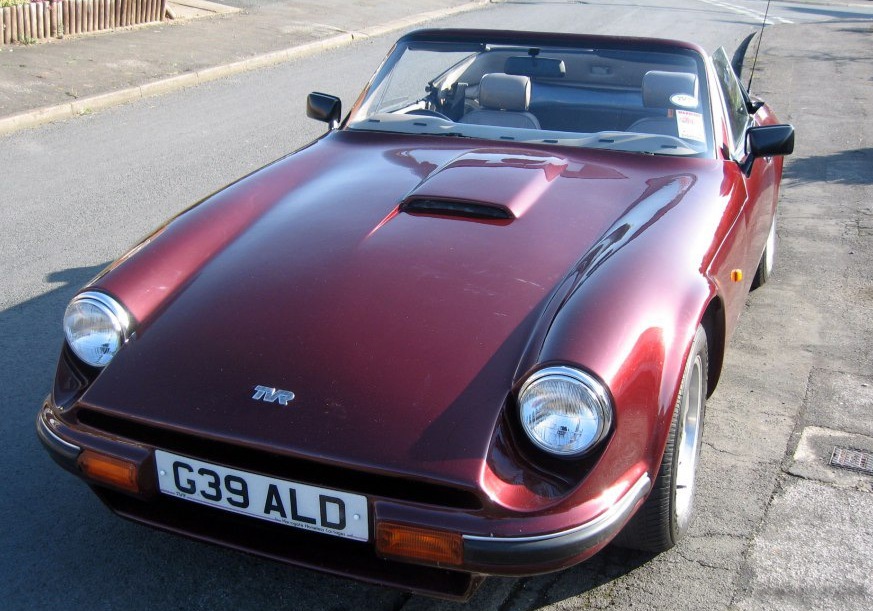
The TVR S 2.9, produced between 1988 and 1996, represents a pivotal point in the Blackpool-based manufacturer’s history. Positioned as a sporting roadster, the S model aimed to deliver a raw, engaging driving experience at a relatively accessible price point within the TVR lineup. It was built upon the TVR S series chassis, a lightweight and robust platform that prioritized handling and performance. The 2.9-liter variant, producing 170 horsepower, became a popular choice for those seeking a balance between exhilarating performance and everyday usability. It served as a bridge between the earlier, smaller-engined TVRs and the later, more powerful models that would define the brand in the 1990s.
Technical Specifications
| Brand | TVR |
| Model | S |
| Generation | S |
| Type (Engine) | 2.9 (170 Hp) |
| Start of production | 1988 |
| End of production | 1996 |
| Powertrain Architecture | Internal Combustion engine |
| Body type | Cabriolet |
| Seats | 2 |
| Doors | 2 |
| Fuel consumption (economy) – urban | 13 l/100 km (18.1 US mpg, 21.7 UK mpg, 7.7 km/l) |
| Fuel consumption (economy) – extra urban | 9 l/100 km (26.1 US mpg, 31.4 UK mpg, 11.1 km/l) |
| Fuel Type | Petrol (Gasoline) |
| Acceleration 0 – 100 km/h | 6.9 sec |
| Acceleration 0 – 62 mph | 6.9 sec |
| Acceleration 0 – 60 mph | 6.6 sec |
| Maximum speed | 226 km/h (140.43 mph) |
| Weight-to-power ratio | 6.2 kg/Hp, 160.4 Hp/tonne |
| Weight-to-torque ratio | 4.5 kg/Nm, 220.8 Nm/tonne |
| Power | 170 Hp @ 5400 rpm |
| Power per litre | 58 Hp/l |
| Torque | 234 Nm @ 3000 rpm (172.59 lb.-ft. @ 3000 rpm) |
| Engine layout | Front, Longitudinal |
| Engine displacement | 2933 cm3 (178.98 cu. in.) |
| Number of cylinders | 6 |
| Engine configuration | V-engine |
| Cylinder Bore | 93 mm (3.66 in.) |
| Piston Stroke | 72 mm (2.83 in.) |
| Compression ratio | 9:1 |
| Number of valves per cylinder | 2 |
| Fuel injection system | Multi-port manifold injection |
| Engine aspiration | Naturally aspirated engine |
| Engine oil capacity | 4.7 l (4.97 US qt | 4.14 UK qt) |
| Coolant | 10.2 l (10.78 US qt | 8.97 UK qt) |
| Kerb Weight | 1060 kg (2336.9 lbs.) |
| Max. weight | 1200 kg (2645.55 lbs.) |
| Max load | 140 kg (308.65 lbs.) |
| Trunk (boot) space – minimum | 225 l (7.95 cu. ft.) |
| Fuel tank capacity | 54 l (14.27 US gal | 11.88 UK gal) |
| Length | 3958 mm (155.83 in.) |
| Width | 1665 mm (65.55 in.) |
| Height | 1223 mm (48.15 in.) |
| Wheelbase | 2387 mm (93.98 in.) |
| Front track | 1450 mm (57.09 in.) |
| Rear (Back) track | 1480 mm (58.27 in.) |
| Minimum turning circle | 9.6 m (31.5 ft.) |
| Drivetrain Architecture | Rear wheel drive |
| Number of gears and type of gearbox | 5 gears, manual transmission |
| Front suspension | Double wishbone |
| Rear suspension | Coil spring |
| Front brakes | Ventilated discs |
| Rear brakes | Drum |
| Assisting systems | ABS (Anti-lock braking system) |
| Tires size | 205/60 R15 |
| Wheel rims size | 7J x 15 |
Powertrain & Engine Architecture
The heart of the TVR S 2.9 is its 2.9-liter V6 engine. This engine, often referred to as the ‘Rover V6’, was originally developed by Rover and later acquired by TVR. While the basic block remained largely unchanged, TVR made several modifications to enhance its performance and reliability. The engine utilizes a 90-degree V configuration, contributing to its smooth operation. It features a multi-port fuel injection system, delivering fuel directly into the intake ports for improved combustion efficiency. The engine’s 24-valve configuration (two valves per cylinder) further aids in breathing and power output. The 170 horsepower peak is achieved at 5400 rpm, while the 234 Nm (172.59 lb-ft) of torque is available at 3000 rpm. The engine is mounted longitudinally in the front of the car, driving the rear wheels. The standard transmission for the S 2.9 was a five-speed manual gearbox, providing a direct and engaging driving experience.
Driving Characteristics
The TVR S 2.9, with its relatively lightweight construction and 170 horsepower, offered a spirited driving experience. Acceleration from 0 to 60 mph was achieved in approximately 6.6 seconds, and it could reach a top speed of 140.43 mph. The manual gearbox provided precise shifts, allowing drivers to fully exploit the engine’s power band. Compared to the earlier 2.0-liter versions of the S, the 2.9 offered a noticeable increase in torque, making it more tractable in everyday driving situations. However, it wasn’t as brutally fast as the later TVR models equipped with larger engines, such as the 4.0-liter or 4.5-liter V8s. The suspension, while providing a comfortable ride, was tuned for handling, resulting in a responsive and engaging feel in corners. The rear-wheel-drive configuration contributed to a balanced chassis, although it required careful throttle control in wet conditions.
Equipment & Trim Levels
The TVR S 2.9 was relatively spartan in terms of standard equipment, reflecting TVR’s focus on driving experience over luxury. Standard features typically included leather seats, a wood-rimmed steering wheel, and basic instrumentation. The interior was functional and driver-focused, with a minimalist dashboard layout. Optional extras included air conditioning, upgraded audio systems, and various trim options. The S 2.9 generally occupied a mid-range position within the TVR lineup, offering a step up in performance from the entry-level models but lacking the outright luxury and power of the flagship cars. Interior upholstery was typically leather, available in a range of colors, and the dashboard trim could be customized to the owner’s preferences.
Chassis & Braking
The TVR S 2.9 utilized a lightweight tubular steel chassis, a hallmark of TVR engineering. This chassis provided a strong and rigid foundation for the car, contributing to its excellent handling characteristics. The suspension consisted of double wishbones at the front and coil springs at the rear. Braking duties were handled by ventilated discs at the front and drum brakes at the rear. While the front discs provided adequate stopping power, the rear drums were often criticized for their limited effectiveness, particularly during hard braking. Anti-lock braking system (ABS) was included as standard, enhancing safety and stability. The car’s relatively low curb weight of 1060 kg (2336.9 lbs) further contributed to its agility and responsiveness.
Market Reception & Comparison
The TVR S 2.9 was generally well-received by automotive critics, who praised its engaging driving experience and attractive styling. However, some criticisms were leveled at its build quality and reliability, which were often inconsistent. Compared to other sports cars of the era, such as the Mazda MX-5 or Porsche 944, the TVR S 2.9 offered a more raw and visceral driving experience, but it lacked the refinement and reliability of its Japanese and German competitors. Fuel economy was reasonable for a sports car of its time, averaging around 21.7 UK mpg (26.1 US mpg) on the extra urban cycle. The S 2.9 represented a good value proposition for those seeking a unique and exciting sports car experience.
Legacy
The TVR S 2.9 remains a popular choice among enthusiasts today, prized for its classic styling, engaging driving dynamics, and relative affordability. The Rover V6 engine, while not known for its bulletproof reliability, is generally considered to be reasonably durable with proper maintenance. Parts availability can be a challenge, as TVR went out of business in 2006, but a dedicated network of specialists and suppliers continues to support the marque. The S 2.9 represents a significant chapter in TVR’s history, embodying the brand’s commitment to building exciting and unconventional sports cars. Well-maintained examples continue to command a loyal following and are often seen at classic car events and rallies.
