
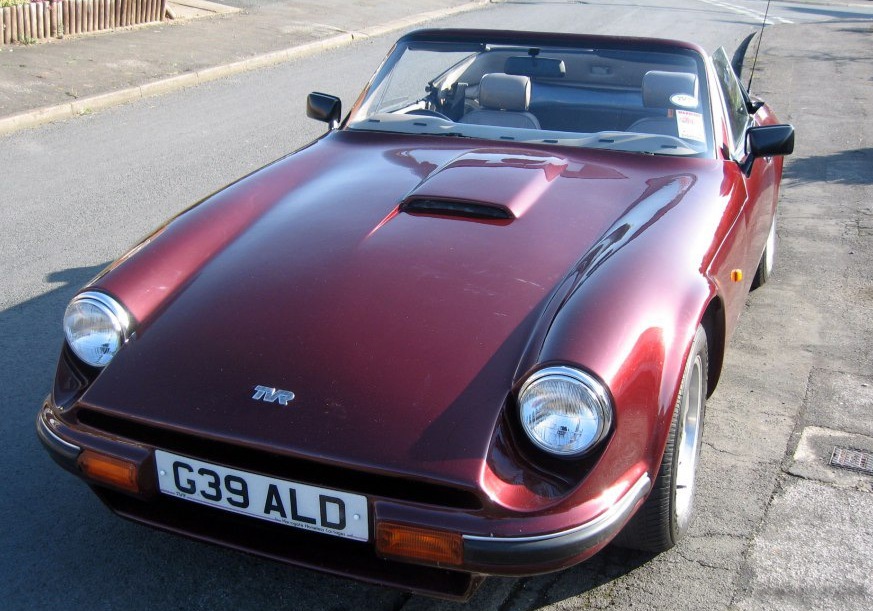
The TVR S 4.0, produced between 1988 and 1996, represents a pivotal point in the British sports car manufacturer’s history. Positioned as the flagship model within the S series, it offered a significant performance upgrade over the earlier 2.9-liter versions. The S 4.0 was a two-seat, rear-wheel-drive roadster, embodying TVR’s commitment to lightweight construction and exhilarating driving experiences. It was primarily sold in the UK and Europe, appealing to enthusiasts seeking a raw, unfiltered sports car experience. The model’s success helped solidify TVR’s reputation for building unique and powerful vehicles, albeit with a reputation for demanding ownership.
Technical Specifications
| Brand | TVR |
| Model | S |
| Generation | S |
| Type (Engine) | 4.0 (240 Hp) |
| Start of production | 1988 |
| End of production | 1996 |
| Powertrain Architecture | Internal Combustion engine |
| Body type | Cabriolet |
| Seats | 2 |
| Doors | 2 |
| Fuel consumption (urban) | 17 l/100 km (13.8 US mpg) |
| Fuel consumption (extra urban) | 10 l/100 km (23.5 US mpg) |
| Fuel Type | Petrol (Gasoline) |
| Acceleration 0 – 100 km/h | 5.2 sec |
| Acceleration 0 – 62 mph | 5.2 sec |
| Acceleration 0 – 60 mph | 4.9 sec |
| Maximum speed | 235 km/h (146.02 mph) |
| Weight-to-power ratio | 4.4 kg/Hp |
| Weight-to-torque ratio | 2.9 kg/Nm |
| Power | 240 Hp @ 5250 rpm |
| Power per litre | 60.8 Hp/l |
| Torque | 366 Nm @ 3500 rpm (269.95 lb.-ft. @ 3500 rpm) |
| Engine layout | Front, Longitudinal |
| Engine displacement | 3950 cm3 (241.04 cu. in.) |
| Number of cylinders | 8 |
| Engine configuration | V-engine |
| Cylinder Bore | 94 mm (3.7 in.) |
| Piston Stroke | 71.1 mm (2.8 in.) |
| Compression ratio | 10.5:1 |
| Number of valves per cylinder | 2 |
| Fuel injection system | Multi-port manifold injection |
| Engine aspiration | Naturally aspirated engine |
| Engine oil capacity | 5 l (5.28 US qt | 4.4 UK qt) |
| Coolant capacity | 12 l (12.68 US qt | 10.56 UK qt) |
| Kerb Weight | 1060 kg (2336.9 lbs.) |
| Trunk (boot) space | 225 l (7.95 cu. ft.) |
| Fuel tank capacity | 54 l (14.27 US gal | 11.88 UK gal) |
| Length | 3958 mm (155.83 in.) |
| Width | 1665 mm (65.55 in.) |
| Height | 1223 mm (48.15 in.) |
| Wheelbase | 2387 mm (93.98 in.) |
| Front track | 1450 mm (57.09 in.) |
| Rear track | 1480 mm (58.27 in.) |
| Minimum turning circle | 9.6 m (31.5 ft.) |
| Drivetrain Architecture | Rear wheel drive |
| Number of gears | 5 gears, manual transmission |
| Front suspension | Double wishbone |
| Rear suspension | Coil spring |
| Front brakes | Ventilated discs |
| Rear brakes | Disc |
| Assisting systems | ABS (Anti-lock braking system) |
| Tires size | 205/60 R15 |
| Wheel rims size | 7J x 15 |
Powertrain & Engine Architecture
The heart of the TVR S 4.0 is its 3,947cc Rover V8 engine. This engine, derived from the Buick-Oldsmobile-Pontiac 3.5L V8, was heavily modified by TVR to increase power and responsiveness. The 4.0-liter version featured a higher compression ratio (10.5:1) and improved cylinder heads, boosting output to 240 horsepower at 5,250 rpm and 366 Nm (270 lb-ft) of torque at 3,500 rpm. Fuel delivery was managed by a multi-port fuel injection system. The engine’s longitudinal front-mid layout contributed to a balanced weight distribution. The S 4.0 exclusively utilized a five-speed manual transmission, providing a direct connection between the driver and the engine’s power. This transmission was known for its relatively short throws and precise engagement, enhancing the sporty driving experience.
Driving Characteristics
The TVR S 4.0 delivered a raw and visceral driving experience. Its relatively lightweight construction (around 2,337 lbs) combined with the potent V8 engine resulted in impressive acceleration – 0 to 60 mph in approximately 4.9 seconds and a top speed of 146 mph. The manual transmission allowed for precise control over the engine’s power band. However, the car’s lack of electronic driver aids and its firm suspension meant that it demanded a skilled driver. The steering was direct and communicative, providing ample feedback. Compared to the earlier 2.9-liter S models, the 4.0 offered a substantial increase in performance, particularly in mid-range acceleration. While not as refined as contemporary sports cars from Porsche or Ferrari, the TVR S 4.0 offered a unique and engaging driving experience that prioritized driver involvement.
Equipment & Trim Levels
The TVR S 4.0 was relatively spartan in terms of standard equipment, reflecting its focus on performance. Standard features typically included leather upholstery, a wood-rimmed steering wheel, and basic instrumentation. Air conditioning and power windows were often optional extras. Interior trim levels were customizable, with buyers able to choose from a range of leather colors and wood veneers. The dashboard layout was simple and functional, prioritizing driver information. The S 4.0 was not designed for long-distance comfort; instead, it focused on providing a focused and engaging driving environment.
Chassis & Braking
The TVR S 4.0 utilized a steel spaceframe chassis, renowned for its strength and rigidity while keeping weight to a minimum. Suspension consisted of double wishbones at the front and coil springs at the rear. The braking system featured ventilated discs at the front and solid discs at the rear, supplemented by an anti-lock braking system (ABS). The suspension setup was firm, contributing to the car’s handling prowess but also resulting in a somewhat harsh ride quality. The relatively narrow tires (205/60 R15) provided adequate grip for the car’s power output, but were not optimized for extreme performance.
Market Reception & Comparison
The TVR S 4.0 was generally well-received by automotive critics, who praised its performance, handling, and unique character. However, it was also criticized for its lack of refinement, build quality issues, and demanding driving characteristics. Compared to the 2.9-liter S models, the 4.0 offered a significant performance upgrade, but at a higher price point. It competed with other British sports cars such as the Lotus Elise and the Porsche 944, but offered a more raw and visceral experience. Fuel economy was relatively poor, typical for a V8-powered sports car of the era.
Legacy
The TVR S 4.0 remains a sought-after classic sports car, particularly among enthusiasts who appreciate its unique character and exhilarating driving experience. The Rover V8 engine, while known for its reliability, requires regular maintenance to prevent issues. Parts availability can be challenging, as TVR went out of business in 2006. However, a dedicated community of owners and specialists continues to support the marque. The S 4.0 represents a high point in TVR’s history, embodying the company’s commitment to building uncompromising sports cars. Today, well-maintained examples command a premium in the used car market, appealing to collectors and driving enthusiasts alike.
