
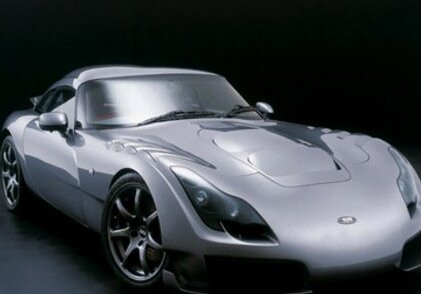
The TVR Sagaris 4.0 i V8, produced between 2004 and 2006, represents a final flourish of the Blackpool-based TVR’s independent spirit before the company’s financial difficulties led to its demise. Positioned as the flagship model within the Sagaris range, it was the most powerful iteration of a car designed to be a raw, visceral sports car experience. The Sagaris, named after a mythical centaur, was intended to be a return to TVR’s roots – lightweight, powerful, and focused on driving enjoyment. It utilized a steel spaceframe chassis and fiberglass body panels, a construction method TVR had refined over decades. The 4.0 i V8 variant was the pinnacle of this approach, offering a significant performance upgrade over the earlier 3.9-liter models.
Technical Specifications
| Brand | TVR |
| Model | Sagaris |
| Generation | Sagaris |
| Type (Engine) | 4.0 i V8 (400 Hp) |
| Start of production | 2004 |
| End of production | 2006 |
| Powertrain Architecture | Internal Combustion engine |
| Body type | Coupe |
| Seats | 4 |
| Doors | 2 |
| Fuel Type | Petrol (Gasoline) |
| Acceleration 0 – 100 km/h | 3.9 sec |
| Acceleration 0 – 62 mph | 3.9 sec |
| Acceleration 0 – 60 mph | 3.7 sec |
| Maximum speed | 300 km/h (186.41 mph) |
| Weight-to-power ratio | 3 kg/Hp, 329.2 Hp/tonne |
| Weight-to-torque ratio | 2.7 kg/Nm, 371.2 Nm/tonne |
| Power | 400 Hp @ 7000 rpm |
| Power per litre | 100.9 Hp/l |
| Torque | 451 Nm @ 5250 rpm (332.64 lb.-ft. @ 5250 rpm) |
| Engine layout | Front, Longitudinal |
| Engine displacement | 3966 cm3 (242.02 cu. in.) |
| Number of cylinders | 8 |
| Engine configuration | V-engine |
| Number of valves per cylinder | 4 |
| Fuel injection system | Multi-port manifold injection |
| Engine aspiration | Naturally aspirated engine |
| Kerb Weight | 1215 kg (2678.62 lbs) |
| Fuel tank capacity | 65 l (17.17 US gal | 14.3 UK gal) |
| Length | 4035 mm (158.86 in) |
| Width | 1895 mm (74.61 in) |
| Height | 1135 mm (44.69 in) |
| Drivetrain Architecture | Rear wheel drive |
| Number of gears and type of gearbox | 5 gears, manual transmission |
| Front suspension | Transverse stabilizer |
| Rear suspension | Coil spring |
| Front brakes | Ventilated discs |
| Rear brakes | Ventilated discs |
| Assisting systems | ABS (Anti-lock braking system) |
| Tires size | 225/35 R18 |
Powertrain & Engine Architecture
The heart of the Sagaris 4.0 i V8 is its 3,966cc (242.02 cubic inch) naturally aspirated V8 engine. This engine, designated as the TVR Speed Eight, was developed in-house by TVR and represented a significant engineering undertaking for the small manufacturer. It features a 90-degree V8 configuration with four valves per cylinder, operated by chain-driven camshafts. The engine utilizes multi-port fuel injection to deliver fuel to each cylinder, and its design prioritized a relatively high compression ratio to maximize power output. The 400 horsepower peak is achieved at 7,000 rpm, while a substantial 451 Nm (332.64 lb-ft) of torque is available at 5,250 rpm. The engine is longitudinally mounted in the front of the chassis, driving the rear wheels. The transmission is a five-speed manual gearbox, chosen for its direct feel and engagement, aligning with TVR’s focus on driver involvement. There was no automatic transmission option for this model.
Driving Characteristics
The Sagaris 4.0 i V8 delivers a truly exhilarating driving experience. The combination of a lightweight chassis and a powerful V8 engine results in blistering acceleration. The 0-60 mph sprint is dispatched in approximately 3.7 seconds, and the car can reach a top speed of 300 km/h (186 mph). However, the Sagaris is not a refined grand tourer. The ride is firm, and the steering is direct and communicative, but requires significant driver input. The five-speed gearbox, while engaging, has a relatively short ratio spread, meaning the engine is often operating at higher revs. Compared to the earlier 3.9-liter Sagaris models, the 4.0 i V8 offers a noticeable increase in power and torque throughout the rev range, resulting in stronger acceleration and improved responsiveness. The lack of electronic driver aids means that the car demands respect and a skilled driver to extract its full potential.
Equipment & Trim Levels
The Sagaris was not offered with a wide range of trim levels or options. TVR’s philosophy was to provide a fundamentally capable sports car and allow customers to personalize it to their tastes. Standard equipment included leather upholstery, power windows, and central locking. Air conditioning was often specified as an option, as were upgraded audio systems. Interior trim materials were generally of good quality, but the overall design was functional rather than luxurious. The dashboard layout was relatively simple, with clearly marked gauges and controls. Customers could choose from a variety of exterior colors and interior trim combinations, allowing for a degree of personalization. However, the emphasis was always on performance and driving experience rather than lavish features.
Chassis & Braking
The Sagaris utilizes a steel spaceframe chassis, a design TVR had perfected over many years. This chassis provides a high degree of rigidity while keeping weight to a minimum. The suspension consists of independent double wishbones at the front and rear, with coil springs and adjustable dampers. A transverse stabilizer bar is fitted at both ends to reduce body roll. Braking is provided by ventilated discs all around, offering ample stopping power. An Anti-lock Braking System (ABS) was standard equipment. The car rides on 18-inch alloy wheels, fitted with 225/35 R18 tires. The relatively lightweight construction and well-tuned suspension contribute to the Sagaris’s agile handling characteristics.
Market Reception & Comparison
The TVR Sagaris 4.0 i V8 was generally well-received by automotive critics, who praised its performance, handling, and distinctive styling. However, it was also criticized for its lack of refinement and its demanding driving characteristics. Compared to other sports cars in its price range, such as the Porsche 911, the Sagaris offered a more raw and visceral experience, but lacked the German car’s sophistication and everyday usability. Fuel economy was also relatively poor, reflecting the car’s high-performance engine and lack of fuel-saving technologies. Reliability was a concern, as with many TVRs, due to the company’s limited production volumes and reliance on specialized components.
Legacy
The TVR Sagaris 4.0 i V8 represents the culmination of TVR’s engineering expertise and a final statement of its independent spirit. While the company ultimately succumbed to financial difficulties, the Sagaris remains a highly sought-after model among enthusiasts. The Speed Eight V8 engine is considered a significant achievement for TVR, and its robust construction has proven relatively reliable in well-maintained examples. Today, the Sagaris 4.0 i V8 commands a premium in the used car market, appealing to collectors and drivers who appreciate its unique character and exhilarating performance. Its legacy is one of a bold, uncompromising sports car that dared to be different.
