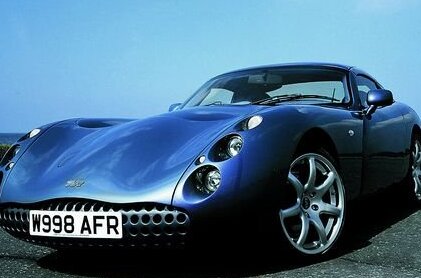
The TVR Tuscan Challenge, produced between 1989 and 1992, represents a pivotal moment for the Blackpool-based British sports car manufacturer. This model, specifically equipped with the Speed Eight 4.0-liter engine producing 228 horsepower, was designed as a dedicated race car, but also saw limited production as a road-legal vehicle. It was a direct response to the growing popularity of single-make racing series and aimed to provide a competitive platform for both amateur and professional drivers. The Tuscan Challenge was built upon the existing Tuscan chassis, but heavily modified for track use, and served as a stepping stone for TVR’s future development of high-performance sports cars. It’s important to note that while TVR had a reputation for hand-built, often idiosyncratic vehicles, the Tuscan Challenge aimed for a higher degree of consistency and reliability, crucial for a racing series.
Technical Specifications
| Brand | TVR |
| Model | Tuscan Challenge |
| Generation | Tuscan Challenge |
| Engine Type | Speed Eight 4.0 (228 Hp) |
| Production Years | 1989 – 1992 |
| Powertrain Architecture | Internal Combustion Engine |
| Body Type | Cabriolet |
| Fuel Type | Petrol (Gasoline) |
| Power Output | 228 Hp |
| Engine Aspiration | Naturally Aspirated |
Powertrain & Engine Architecture
The heart of the Tuscan Challenge is the TVR Speed Eight engine, a 4.0-liter V8. This engine was a significant departure for TVR, as it was the first entirely in-house designed and built V8 engine by the company. Prior TVR models often utilized Ford V8s. The Speed Eight featured a 90-degree V-angle, aluminum alloy block and cylinder heads, and a relatively high compression ratio for the time. Fuel delivery was managed by a Bosch fuel injection system, optimized for performance rather than fuel economy. The engine’s valvetrain employed overhead valves with two valves per cylinder. While details on the exact specifications of the Challenge-specific engine tuning are scarce, it’s understood that the engine was modified for increased durability and responsiveness on the track. The engine was mated to a five-speed manual transmission, chosen for its directness and driver control. The drivetrain was rear-wheel drive, typical of TVR sports cars, contributing to the car’s lively handling characteristics.
Driving Characteristics
The Tuscan Challenge, with its 228 horsepower and relatively lightweight construction, offered a thrilling driving experience. The power-to-weight ratio was excellent for the early 1990s, resulting in brisk acceleration and a top speed exceeding 160 mph. However, the car’s character was far from refined. The steering was direct and unassisted, providing excellent feedback but requiring significant effort, especially at lower speeds. The suspension, while designed for track use, was firm and unforgiving on public roads. The car’s limited production run and focus on racing meant that comfort and convenience were not priorities. The five-speed gearbox offered precise shifts, but the clutch was heavy. The lack of electronic driver aids meant that controlling the Tuscan Challenge required skill and concentration. Compared to more civilized sports cars of the era, the Tuscan Challenge was a raw and visceral experience, demanding respect from its driver.
Equipment & Trim Levels
Given its racing origins, the Tuscan Challenge was sparsely equipped by modern standards. The interior was functional and focused on minimizing weight. Standard features included racing bucket seats, a simple dashboard with essential gauges (speedometer, tachometer, oil pressure, water temperature), and a leather-wrapped steering wheel. There was no air conditioning, power windows, or audio system. The car’s bodywork was primarily fiberglass, designed for aerodynamic efficiency and weight reduction. The exterior featured a distinctive body kit, including a front spoiler, side skirts, and a rear wing, all aimed at improving downforce. The paint scheme was typically a bright, attention-grabbing color, often with racing stripes or sponsor decals. Options were limited, primarily consisting of different wheel sizes and tire compounds for track use.
Chassis & Braking
The Tuscan Challenge utilized a tubular steel space frame chassis, providing a rigid and lightweight platform. The suspension consisted of independent double wishbones at all four corners, with adjustable dampers and springs. This allowed for fine-tuning of the suspension to suit different track conditions. The braking system featured ventilated disc brakes at all four wheels, providing ample stopping power. However, the braking system was not equipped with ABS, requiring the driver to modulate the brakes carefully. The car’s steering was a direct, unassisted rack and pinion system, offering precise control but demanding physical effort. The wheels were typically 16-inch alloy wheels, fitted with high-performance radial tires. The car’s relatively short wheelbase and wide track contributed to its agile handling characteristics.
Market Reception & Comparison
The TVR Tuscan Challenge received a mixed reception from automotive critics. While praised for its performance and handling, it was often criticized for its lack of refinement and practicality. The car was seen as a niche product, appealing to serious sports car enthusiasts and racers. Compared to other sports cars of the era, such as the Porsche 911 or the Lotus Esprit, the Tuscan Challenge offered a more raw and visceral driving experience, but lacked the sophistication and everyday usability of its rivals. Its price was also relatively high, reflecting its limited production run and racing pedigree. However, the Tuscan Challenge’s performance on the track was undeniable, and it proved to be a competitive platform in the TVR Tuscan Challenge race series.
Legacy
The TVR Tuscan Challenge holds a significant place in TVR’s history. It demonstrated the company’s ability to design and build a competitive race car, and paved the way for future high-performance models. The Speed Eight engine, first introduced in the Tuscan Challenge, became a hallmark of TVR sports cars for many years. Today, the Tuscan Challenge is a highly sought-after collector’s item, particularly among TVR enthusiasts. Its rarity, performance, and racing heritage make it a valuable and desirable classic sports car. While maintenance can be challenging due to the car’s age and specialized components, the Tuscan Challenge continues to provide a thrilling driving experience for those willing to embrace its unique character. The long-term reliability of the Speed Eight engine is generally good, provided it has been properly maintained, but parts availability can be an issue. The Tuscan Challenge remains a testament to TVR’s independent spirit and commitment to building exciting, unconventional sports cars.