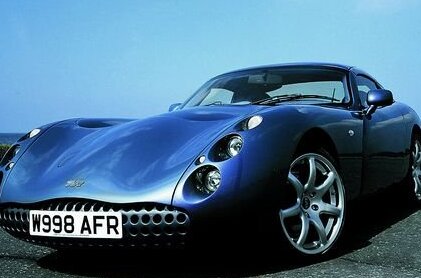
The TVR Tuscan Challenge, produced between 1989 and 1991, represents a pivotal moment in the British sports car manufacturer’s history. This model, based on the Tuscan platform, was specifically designed for racing, particularly the TVR Tuscan Challenge one-make series. While TVR was known for its lightweight, powerful, and often idiosyncratic sports cars, the Tuscan Challenge aimed to provide a relatively affordable and competitive platform for aspiring racers. It stands out as a significant example of TVR’s commitment to motorsport and its focus on delivering a raw, driver-focused experience. The Tuscan Challenge was a limited-production run, further enhancing its collectibility today.
Technical Specifications
| Brand | TVR |
| Model | Tuscan Challenge |
| Generation | Tuscan Challenge |
| Engine Type | Speed Eight 4.3 (269 Hp) |
| Production Years | 1989 – 1991 |
| Powertrain Architecture | Internal Combustion Engine |
| Body Type | Cabriolet |
| Fuel Type | Petrol (Gasoline) |
| Power Output | 269 Hp |
| Engine Aspiration | Naturally Aspirated |
Powertrain & Engine Architecture
The heart of the Tuscan Challenge is TVR’s Speed Eight engine, a 4.3-liter V8. This engine was a significant departure for TVR, as it was the first entirely in-house designed and built V8 engine by the company. Prior to this, TVR had relied on engines sourced from other manufacturers, notably Rover. The Speed Eight is a naturally aspirated engine, meaning it doesn’t utilize forced induction like a turbocharger or supercharger. It features a 90-degree V-angle, contributing to a relatively compact engine bay footprint. The engine utilizes a cast iron block and aluminum cylinder heads. Fuel delivery is managed by a Bosch fuel injection system, optimized for performance and reliability. The valvetrain consists of two valves per cylinder, operated by a single overhead camshaft per bank. The engine’s design prioritized simplicity and robustness, crucial for the demands of racing. While specific torque figures varied slightly depending on the exact specification, the engine typically produced around 280 lb-ft of torque. The Tuscan Challenge was exclusively offered with a five-speed manual transmission, chosen for its direct connection between driver and machine and its suitability for track use. The transmission was sourced from a specialist supplier, known for its durability and precise shifting.
Driving Characteristics
The Tuscan Challenge delivers a visceral driving experience. With 269 horsepower propelling a relatively lightweight chassis (approximately 2,400 lbs), the car boasts impressive acceleration. The power-to-weight ratio results in a 0-60 mph time of around 4.5 seconds, and a top speed exceeding 160 mph. The five-speed manual transmission provides precise gear changes, allowing the driver to fully exploit the engine’s power band. The car’s handling is characterized by its responsiveness and direct steering. The suspension, while relatively simple by modern standards, is tuned for track performance, offering a firm ride and minimal body roll. The lack of driver aids like traction control or ABS emphasizes the need for skilled driving. The Tuscan Challenge demands respect and rewards precision. Compared to road-going TVR Tuscans of the same era, the Challenge model benefits from a more focused suspension setup and a slightly more aggressive engine tune. The absence of sound deadening and luxury features further contributes to its raw, unfiltered driving experience. It’s a car that prioritizes performance above all else.
Equipment & Trim Levels
The Tuscan Challenge was conceived as a race car first and foremost, and its equipment level reflects this. The interior is spartan, stripped of unnecessary luxuries. The dashboard is functional, featuring essential gauges such as a speedometer, tachometer, oil pressure gauge, and water temperature gauge. Seats are typically racing bucket seats, providing excellent support during cornering. A roll cage is standard equipment, enhancing safety in the event of a collision. The exterior is equally focused on function. The body is constructed from fiberglass, keeping weight to a minimum. A rear spoiler is fitted to improve aerodynamic downforce. The car is typically finished in a simple, racing-inspired livery. Options were limited, primarily revolving around safety equipment and minor modifications to suit individual racing teams. The emphasis was on providing a cost-effective and competitive platform, rather than offering a wide range of customization options.
Chassis & Braking
The Tuscan Challenge utilizes a tubular steel space frame chassis, providing a rigid and lightweight foundation. This chassis design is a hallmark of TVR engineering, known for its strength and simplicity. The suspension consists of independent double wishbones at the front and rear, with coil springs and adjustable dampers. The braking system features ventilated disc brakes all around, providing ample stopping power. However, the braking system lacks ABS, requiring the driver to modulate the brakes carefully. The steering is unassisted, providing direct and communicative feedback. The car rides on lightweight alloy wheels, typically fitted with racing tires. The combination of a lightweight chassis, responsive suspension, and powerful brakes contributes to the Tuscan Challenge’s exceptional handling characteristics.
Market Reception & Comparison
The TVR Tuscan Challenge was well-received within the racing community. Its affordability and competitive performance made it a popular choice for privateer racers. The one-make series proved to be a success, attracting a large number of entries and providing exciting racing action. Critics praised the car’s handling, power, and overall driving experience. However, some noted the lack of refinement and the demanding nature of the car. Compared to other racing cars of the era, the Tuscan Challenge offered a unique combination of performance and affordability. It was often seen as a more accessible alternative to more expensive and complex racing machines. In terms of reliability, the Speed Eight engine proved to be reasonably robust, although regular maintenance was essential. The fiberglass bodywork was prone to damage in the event of a collision, but repairs were relatively straightforward.
Legacy
The TVR Tuscan Challenge holds a significant place in TVR’s history. It demonstrated the company’s ability to produce a competitive racing car and established the Speed Eight engine as a cornerstone of TVR’s powertrain lineup. The Tuscan Challenge helped to raise TVR’s profile within the motorsport world and attracted a loyal following of enthusiasts. Today, the Tuscan Challenge is a highly sought-after collector’s item. Its limited production run and racing pedigree contribute to its value. Well-maintained examples command significant prices in the used car market. The car remains a popular choice for historic racing events, allowing enthusiasts to experience the thrill of driving a classic TVR sports car. The Speed Eight engine, in its various iterations, continued to power TVR models for many years, cementing its legacy as one of the company’s most iconic powertrains.