
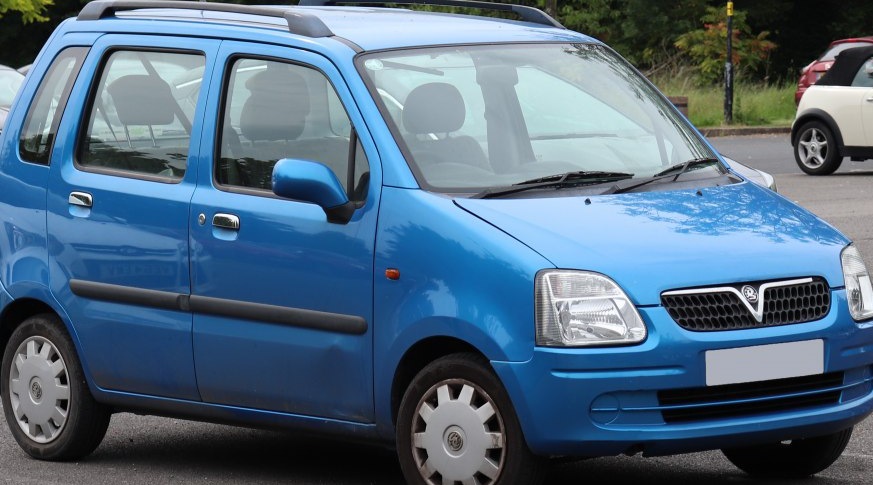
The Vauxhall Agila 1.0 12V, produced from July 2000 to July 2003, represented the entry point into the first generation (2000-2007) of this supermini MPV. Sharing its platform with the Opel Agila and Suzuki Wagon R+, the Agila aimed to provide affordable and practical transportation for small families. This particular 1.0 12V variant, with its modest 58 horsepower, was positioned as the economy-focused trim, prioritizing fuel efficiency and low running costs over outright performance. It served as a key model in the UK market, competing with vehicles like the Fiat Panda and Renault Twingo.
Technical Specifications
| Brand | Vauxhall |
| Model | Agila |
| Generation | Agila |
| Type (Engine) | 1.0 12V (58 Hp) |
| Start of production | July, 2000 |
| End of production | July, 2003 |
| Powertrain Architecture | Internal Combustion engine |
| Body type | Minivan |
| Seats | 5 |
| Doors | 5 |
| Fuel Type | Petrol (Gasoline) |
| Weight-to-power ratio | 16.2 kg/Hp, 61.7 Hp/tonne |
| Weight-to-torque ratio | 11.1 kg/Nm, 90.4 Nm/tonne |
| Power | 58 Hp @ 5600 rpm |
| Power per litre | 59.6 Hp/l |
| Torque | 85 Nm @ 3800 rpm (62.69 lb.-ft. @ 3800 rpm) |
| Engine layout | Front, Transverse |
| Engine Model/Code | Z10XE |
| Engine displacement | 973 cm3 (59.38 cu. in.) |
| Number of cylinders | 3 |
| Engine configuration | Inline |
| Cylinder Bore | 72.5 mm (2.85 in.) |
| Piston Stroke | 78.6 mm (3.09 in.) |
| Compression ratio | 10:1 |
| Number of valves per cylinder | 4 |
| Engine aspiration | Naturally aspirated engine |
| Engine oil capacity | 3 l (3.17 US qt | 2.64 UK qt) |
| Coolant | 4.3 l (4.54 US qt | 3.78 UK qt) |
| Kerb Weight | 940 kg (2072.35 lbs.) |
| Max. weight | 1325 kg (2921.12 lbs.) |
| Max load | 385 kg (848.78 lbs.) |
| Trunk (boot) space – minimum | 250 l (8.83 cu. ft.) |
| Trunk (boot) space – maximum | 595 l (21.01 cu. ft.) |
| Fuel tank capacity | 41 l (10.83 US gal | 9.02 UK gal) |
| Drivetrain Architecture | The Internal combustion engine (ICE) drives the front wheels of the vehicle. |
| Drive wheel | Front wheel drive |
| Number of gears and type of gearbox | 5 gears, manual transmission |
| Front brakes | Disc |
| Rear brakes | Drum |
| Assisting systems | ABS (Anti-lock braking system) |
| Steering type | Steering rack and pinion |
| Power steering | Hydraulic Steering |
| Tires size | 155/55 R14 |
| Wheel rims size | 4.5J X 14 |
Powertrain & Engine Architecture
The heart of the Agila 1.0 12V is the Z10XE engine, a 973cc inline three-cylinder petrol unit. This engine, part of Vauxhall/Opel’s ‘Ecotec’ family, featured a single overhead camshaft (SOHC) and four valves per cylinder. Fuel delivery was managed by a multi-point sequential fuel injection system, contributing to relatively clean emissions for its time. The 12-valve configuration (four valves per cylinder) helped to improve breathing and, consequently, power output compared to earlier two-valve designs. The engine’s relatively small displacement and three-cylinder layout resulted in a distinctive, slightly agricultural engine note. The Agila 1.0 12V was exclusively offered with a five-speed manual transmission, designed to maximize fuel economy and provide adequate acceleration for urban driving. The transmission was a standard, cable-operated unit, known for its durability and relatively low maintenance requirements.
Driving Characteristics
The 58 horsepower and 85 Nm (63 lb-ft) of torque produced by the Z10XE engine translated to modest, but adequate, performance. Acceleration from 0-60 mph took approximately 16-17 seconds, and top speed was around 95 mph. The Agila 1.0 12V was never intended to be a performance car; instead, it focused on providing a comfortable and economical driving experience. The five-speed gearbox allowed drivers to keep the engine in its optimal power band, although frequent downshifts were often necessary when overtaking or climbing hills. Compared to the slightly more powerful 1.2-liter version, the 1.0 felt noticeably slower, particularly at higher speeds. However, the lighter engine weight contributed to nimble handling in city environments.
Equipment & Trim Levels
The Agila 1.0 12V typically came with a basic, but functional, level of equipment. Standard features included central locking, power steering, and an adjustable steering column. Interior upholstery was typically a durable cloth material. Air conditioning, electric windows, and alloy wheels were generally offered as optional extras, often bundled into higher trim levels. The dashboard layout was simple and straightforward, prioritizing practicality over aesthetics. Safety features included a driver’s airbag and ABS brakes, which were becoming increasingly common on vehicles in this segment during the early 2000s.
Chassis & Braking
The Agila’s chassis was a relatively simple, but effective, design. It utilized MacPherson strut front suspension and a torsion beam rear axle. The front brakes were disc brakes, providing adequate stopping power, while the rear brakes were drums, a cost-saving measure common in this class of vehicle. The hydraulic power steering provided light and easy steering, making it ideal for maneuvering in tight urban spaces. The suspension was tuned for comfort, absorbing bumps and imperfections in the road surface reasonably well. Stabilizer bars were not standard on the base 1.0 12V model, contributing to a slightly more pronounced body roll during cornering.
Market Reception & Comparison
The Vauxhall Agila 1.0 12V was generally well-received by critics as an affordable and practical city car. Its fuel economy, averaging around 45-50 mpg, was a major selling point. However, its lack of power and relatively basic interior were often criticized. Compared to the 1.2-liter Agila, the 1.0 offered significantly lower running costs but at the expense of performance. The 1.2 was often recommended for drivers who frequently undertook longer journeys or carried passengers regularly. The Agila 1.0 12V’s reliability was generally considered good, although the three-cylinder engine could be prone to occasional oil leaks if not properly maintained.
Legacy
The Vauxhall Agila 1.0 12V remains a relatively common sight on UK roads today, testament to its durability and affordability. The Z10XE engine, while not particularly powerful, is known for its robustness and relatively simple mechanics, making it relatively easy and inexpensive to repair. In the used car market, the Agila 1.0 12V represents a very affordable entry point into MPV ownership. However, potential buyers should be aware of the possibility of oil leaks and ensure that the vehicle has been regularly serviced. The Agila’s legacy lies in providing a practical and economical transportation solution for a wide range of drivers, particularly those seeking a small, affordable, and reliable city car.
