
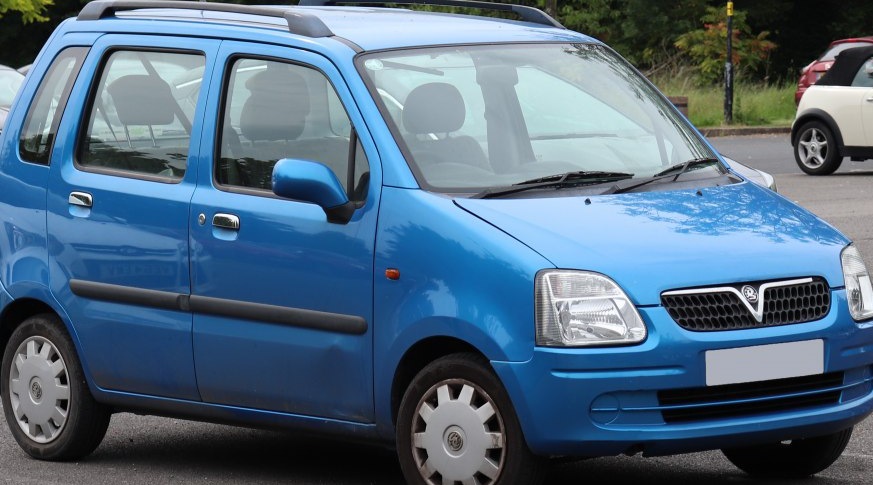
The Vauxhall Agila 1.2 16V, produced from July 2000 to December 2003, represented an entry-level offering within the first generation (2000-2007) of this supermini MPV. Sharing its platform with the Opel Agila and Suzuki Wagon R+, the Agila aimed to provide affordable and practical transportation for small families. This particular 1.2-liter, 75 horsepower variant served as the mainstay of the Agila lineup in many European markets, including the UK, offering a balance between economy and usability. It was positioned as the most accessible trim level, appealing to buyers prioritizing low running costs over outright performance.
Technical Specifications
| Brand | Vauxhall |
| Model | Agila |
| Generation | Agila |
| Type (Engine) | 1.2 16V (75 Hp) |
| Start of production | July, 2000 |
| End of production | December, 2003 |
| Powertrain Architecture | Internal Combustion engine |
| Body type | Minivan |
| Seats | 5 |
| Doors | 5 |
| Fuel Type | Petrol (Gasoline) |
| Weight-to-power ratio | 12.8 kg/Hp, 78.1 Hp/tonne |
| Weight-to-torque ratio | 8.7 kg/Nm, 114.6 Nm/tonne |
| Power | 75 Hp @ 5600 rpm |
| Power per litre | 62.6 Hp/l |
| Torque | 110 Nm @ 4000 rpm (81.13 lb.-ft. @ 4000 rpm) |
| Engine layout | Front, Transverse |
| Engine Model/Code | Z12XE |
| Engine displacement | 1199 cm3 (73.17 cu. in.) |
| Number of cylinders | 4 |
| Engine configuration | Inline |
| Number of valves per cylinder | 4 |
| Engine aspiration | Naturally aspirated engine |
| Engine oil capacity | 3.5 l (3.7 US qt | 3.08 UK qt) |
| Coolant | 4.5 l (4.76 US qt | 3.96 UK qt) |
| Kerb Weight | 960 kg (2116.44 lbs) |
| Max. weight | 1345 kg (2965.22 lbs) |
| Max load | 385 kg (848.78 lbs) |
| Trunk (boot) space – minimum | 250 l (8.83 cu. ft.) |
| Trunk (boot) space – maximum | 595 l (21.01 cu. ft.) |
| Fuel tank capacity | 41 l (10.83 US gal | 9.02 UK gal) |
| Drivetrain Architecture | The Internal combustion engine (ICE) drives the front wheels of the vehicle. |
| Drive wheel | Front wheel drive |
| Number of gears and type of gearbox | 5 gears, manual transmission |
| Front brakes | Disc |
| Rear brakes | Drum |
| Steering type | Steering rack and pinion |
| Power steering | Hydraulic Steering |
Powertrain & Engine Architecture
The heart of the Agila 1.2 16V is the Z12XE engine, a 1.2-liter inline-four cylinder petrol engine. This engine is a member of Vauxhall/Opel’s ‘Ecotec’ family, known for its relatively lightweight construction and focus on fuel efficiency. The ‘16V’ designation indicates the engine features four valves per cylinder, enhancing breathing and contributing to its modest power output. Fuel delivery is managed by a multi-point sequential fuel injection system, providing precise fuel metering for improved combustion. The engine utilizes a single overhead camshaft (SOHC) valvetrain. The Agila 1.2 16V was exclusively offered with a five-speed manual transmission during its production run. This transmission was chosen for its simplicity and cost-effectiveness, aligning with the vehicle’s entry-level positioning.
Driving Characteristics
The 75 horsepower output of the 1.2-liter engine translates to modest, but adequate, performance. Acceleration is best described as unhurried, with a 0-60 mph time estimated around 14-15 seconds. The engine’s torque peak of 110 Nm (81.13 lb-ft) at 4000 rpm provides sufficient pull for everyday driving situations, but overtaking maneuvers require careful planning. The five-speed manual gearbox is relatively light and easy to operate, although the shift quality isn’t particularly sporty. Compared to the later 1.0-liter three-cylinder engine offered in some markets, the 1.2-liter provides a smoother and more refined driving experience, albeit with slightly lower fuel economy. The gear ratios are geared towards maximizing fuel efficiency rather than outright acceleration.
Equipment & Trim Levels
The Agila 1.2 16V typically came equipped with basic, but functional, features. Standard equipment generally included power steering, central locking, and an adjustable steering column. Interior upholstery was typically a durable cloth material. Optional extras included air conditioning, electric front windows, and a radio/cassette player. Higher trim levels, though less common with the 1.2 engine, could add features like alloy wheels and upgraded interior trim. The dashboard layout is simple and functional, prioritizing ease of use over aesthetic appeal.
Chassis & Braking
The Agila utilizes a MacPherson strut front suspension and a torsion beam rear suspension. This setup provides a comfortable ride quality, particularly on smoother roads. The torsion beam rear suspension is a cost-effective solution that minimizes complexity. Braking is handled by disc brakes on the front wheels and drum brakes on the rear. While adequate for the vehicle’s weight and performance, the rear drum brakes are less effective than disc brakes in demanding situations. The steering is provided by a hydraulic power steering system, offering light and easy steering feel.
Market Reception & Comparison
The Vauxhall Agila 1.2 16V was generally well-received as an affordable and practical city car. Critics praised its spacious interior for its size and its relatively low running costs. However, the engine’s lack of power was a common criticism. Compared to rivals like the Fiat Panda and Renault Twingo, the Agila offered a more spacious interior but lacked the same level of driving engagement. Fuel economy was competitive for the time, averaging around 45-50 mpg in mixed driving conditions. Reliability was generally good, although some owners reported minor issues with the engine’s cooling system.
Legacy
The Agila 1.2 16V remains a relatively common sight on used car lots today. The Z12XE engine is known for its durability, and with regular maintenance, it can provide many years of reliable service. Parts availability is generally good, and repair costs are relatively low. However, potential buyers should be aware of the engine’s modest performance and the limitations of the rear drum brakes. The Agila 1.2 16V represents a practical and affordable option for those seeking a small, economical city car, and its simple mechanicals make it a relatively easy vehicle to maintain.
