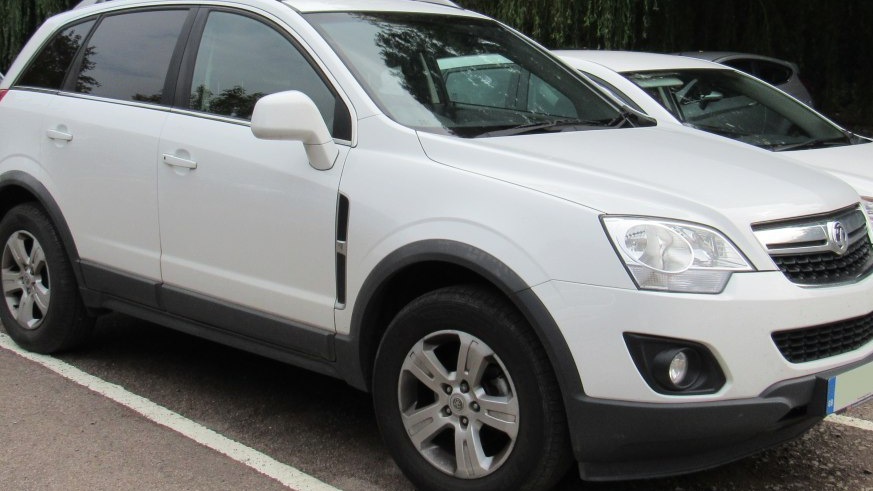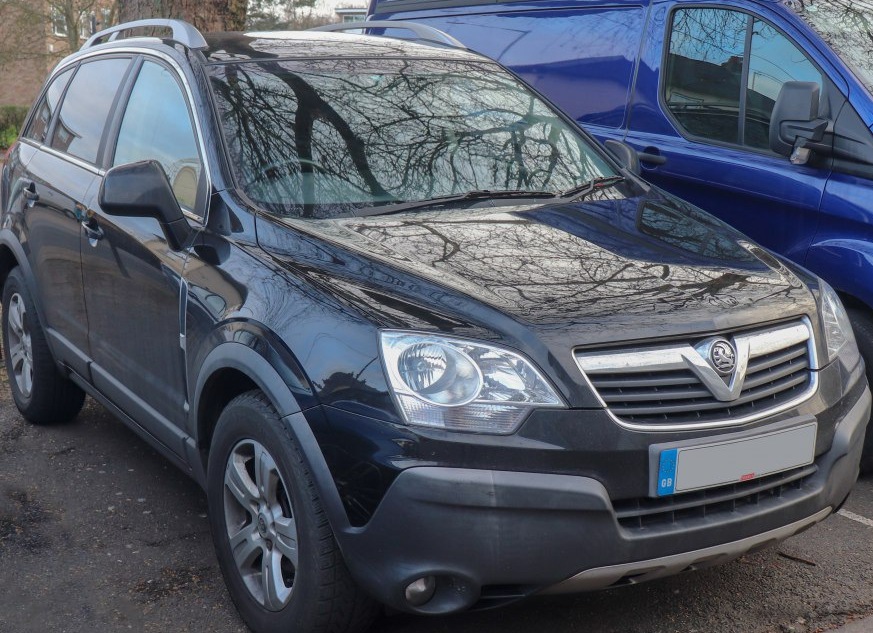
The Vauxhall Antara 2.0 CDTi ECOTEC (150 hp) 4×4, marketed from 2006 to 2010, was a compact SUV positioned as a family-friendly vehicle within the Vauxhall lineup. It represented Vauxhall’s entry into the growing crossover SUV segment, competing with vehicles like the Land Rover Freelander and Honda CR-V. The Antara was based on the GM Theta platform, shared with models like the Chevrolet Equinox and Suzuki XL7, and aimed to provide a blend of practicality, comfort, and all-weather capability. This particular 2.0 CDTi variant, equipped with a four-wheel-drive system and a five-speed manual transmission, served as a mid-range offering, balancing fuel efficiency with reasonable performance.
Technical Specifications
| Brand | Vauxhall |
| Model | Antara |
| Generation | Antara |
| Type (Engine) | 2.0 CDTi ECOTEC (150 Hp) 4×4 |
| Start of production | 2006 |
| End of production | 2010 |
| Powertrain Architecture | Internal Combustion engine |
| Body type | SUV |
| Seats | 5 |
| Doors | 5 |
| Fuel consumption (urban) | 8.7 l/100 km (27 US mpg, 32.5 UK mpg, 11.5 km/l) |
| Fuel consumption (extra urban) | 6.8 l/100 km (34.6 US mpg, 41.5 UK mpg, 14.7 km/l) |
| Fuel consumption (combined) | 7.6 l/100 km (30.9 US mpg, 37.2 UK mpg, 13.2 km/l) |
| CO2 emissions | 198 g/km |
| Fuel Type | Diesel |
| Acceleration 0 – 100 km/h | 10.3 sec |
| Acceleration 0 – 62 mph | 10.3 sec |
| Acceleration 0 – 60 mph | 9.8 sec |
| Maximum speed | 182 km/h (113.09 mph) |
| Weight-to-power ratio | 11.5 kg/Hp, 86.7 Hp/tonne |
| Weight-to-torque ratio | 5.4 kg/Nm, 185 Nm/tonne |
| Power | 150 Hp @ 4000 rpm |
| Power per litre | 75.3 Hp/l |
| Torque | 320 Nm @ 2000 rpm (236.02 lb.-ft. @ 2000 rpm) |
| Engine layout | Front, Transverse |
| Engine Model/Code | Z20DMH |
| Engine displacement | 1991 cm3 (121.5 cu. in.) |
| Number of cylinders | 4 |
| Engine configuration | Inline |
| Number of valves per cylinder | 4 |
| Fuel injection system | Diesel Commonrail |
| Engine aspiration | Turbocharger, Intercooler |
| Valvetrain | DOHC |
| Engine oil capacity | 6.2 l (6.55 US qt | 5.46 UK qt) |
| Coolant | 9 l (9.51 US qt | 7.92 UK qt) |
| Kerb Weight | 1730-1790 kg (3814 – 3946.27 lbs.) |
| Trunk (boot) space – minimum | 370 l (13.07 cu. ft.) |
| Trunk (boot) space – maximum | 1420 l (50.15 cu. ft.) |
| Fuel tank capacity | 65 l (17.17 US gal | 14.3 UK gal) |
| Permitted trailer load with brakes (12%) | 1500-2000 kg (3306.93 – 4409.25 lbs.) |
| Length | 4576 mm (180.16 in.) |
| Width | 1850 mm (72.83 in.) |
| Width including mirrors | 2085 mm (82.09 in.) |
| Height | 1747 mm (68.78 in.) |
| Wheelbase | 2707 mm (106.57 in.) |
| Front track | 1572 mm (61.89 in.) |
| Rear (Back) track | 1562 mm (61.5 in.) |
| Front overhang | 926 mm (36.46 in.) |
| Rear overhang | 943 mm (37.13 in.) |
| Ride height (ground clearance) | 200 mm (7.87 in.) |
| Drag coefficient (Cd) | 0.38 |
| Minimum turning circle (turning diameter) | 12.4 m (40.68 ft.) |
| Approach angle | 24° |
| Departure angle | 16° |
| Ramp-over (brakeover) angle | 14° |
| Wading depth | 450 mm (17.72 in.) |
| Drive wheel | All wheel drive (4×4) |
| Number of gears and type of gearbox | 5 gears, manual transmission |
| Front suspension | Independent type McPherson |
| Rear suspension | Independent multi-link suspension |
| Front brakes | Ventilated discs |
| Rear brakes | Disc |
| Assisting systems | ABS (Anti-lock braking system) |
| Tires size | 235/60 R17; 235/55 R18 |
| Wheel rims size | 17; 18 |
Powertrain & Engine Architecture
The heart of the Antara 2.0 CDTi was the Z20DMH engine, a 1991cc four-cylinder diesel. This engine belonged to Vauxhall/Opel’s ECOTEC family and featured common-rail direct injection, a turbocharger with an intercooler, and a double overhead camshaft (DOHC) valvetrain with four valves per cylinder. The common-rail system, supplied by Bosch, allowed for precise fuel delivery and contributed to improved efficiency and reduced emissions. The turbocharger boosted power output, providing 150 horsepower at 4000 rpm and 320 Nm (236 lb-ft) of torque at 2000 rpm. The five-speed manual transmission was chosen for its balance of cost and efficiency, although a four-speed automatic transmission was also offered on other Antara trims. The engine’s transverse mounting and front-wheel-drive bias, coupled with the all-wheel-drive system, optimized space utilization within the vehicle.
Driving Characteristics
The 150 hp 2.0 CDTi engine, paired with the five-speed manual, provided adequate, though not exhilarating, performance. Acceleration from 0-60 mph took around 9.8 seconds, and top speed was 113 mph. The engine’s torque peak at 2000 rpm meant that usable power was readily available for everyday driving situations, such as overtaking and climbing hills. Compared to the more powerful 2.8-liter V6 petrol engine offered in some Antara models, the 2.0 CDTi prioritized fuel economy. The manual transmission allowed for greater driver control, but the gear ratios were spaced to favor fuel efficiency over outright performance. The all-wheel-drive system provided enhanced traction in slippery conditions, making it a capable vehicle for year-round use.
Equipment & Trim Levels
The Antara 2.0 CDTi 4×4 typically came with a reasonable level of standard equipment. This included air conditioning, alloy wheels, a CD stereo, electric front and rear windows, and remote central locking. Higher trim levels, such as the Design and SE, added features like climate control, parking sensors, leather upholstery, and upgraded audio systems. Optional extras included a panoramic sunroof, heated seats, and a navigation system. Interior upholstery was generally cloth, with leather available as an upgrade. The dashboard layout was functional and straightforward, with a focus on ease of use.
Chassis & Braking
The Antara featured independent suspension all around, with McPherson struts at the front and a multi-link setup at the rear. This configuration provided a comfortable ride quality, absorbing bumps and imperfections in the road surface effectively. The all-wheel-drive system employed a multi-plate clutch to distribute torque between the front and rear axles as needed. Braking duties were handled by ventilated discs at the front and solid discs at the rear, assisted by an Anti-lock Braking System (ABS). The Antara’s chassis was designed to provide a stable and predictable handling experience, although it wasn’t particularly sporty.
Market Reception & Comparison
The Antara 2.0 CDTi 4×4 was generally well-received by automotive critics as a practical and capable family SUV. Its fuel economy was a strong point, particularly compared to petrol-powered rivals. However, some reviewers noted that the engine could feel strained when fully loaded or driving uphill. Compared to the more expensive V6 models, the 2.0 CDTi offered a more affordable entry point into the Antara range. Its reliability was generally considered good, although diesel engines can be more susceptible to issues with the fuel injection system and turbocharger over time.
Legacy
The Vauxhall Antara, while not a groundbreaking vehicle, established Vauxhall as a contender in the compact SUV market. The 2.0 CDTi engine proved to be a reliable and fuel-efficient powerplant, and examples are still relatively common on the used car market today. While not known for exceptional performance, the Antara 2.0 CDTi 4×4 remains a practical and affordable option for those seeking a versatile family vehicle with all-weather capability. Maintenance costs are generally reasonable, and parts availability is good, making it a sensible choice for budget-conscious buyers.