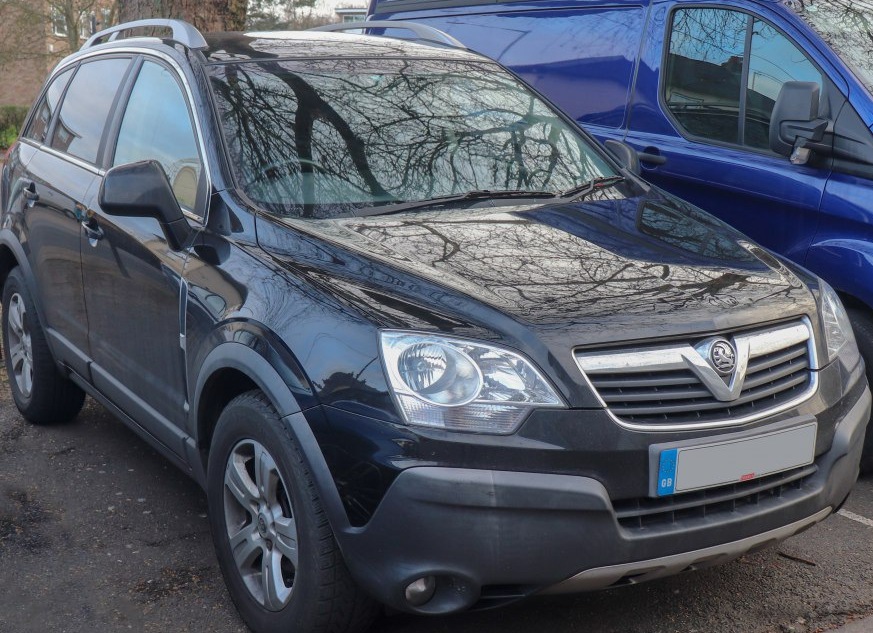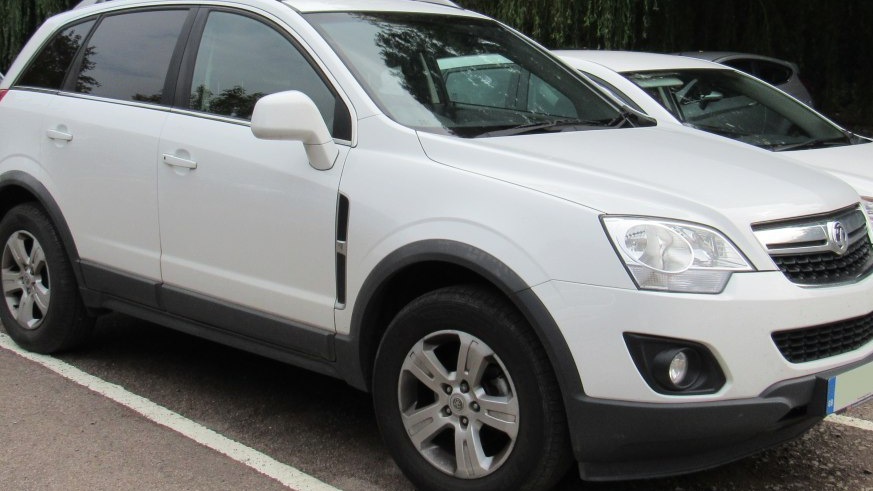
The Vauxhall Antara, marketed as the Holden Captiva 7 in Australia and New Zealand, was a compact SUV produced by Vauxhall Motors from 2006 to 2015. The facelifted model, introduced in November 2010 and continuing through March 2015, brought revised styling and updated engine options. This article focuses specifically on the 2.2 CDTI 4×4 variant, producing 184 horsepower, a popular configuration in the European market. Positioned as a mid-range offering, it aimed to balance fuel efficiency, practicality, and all-weather capability for families and individuals seeking a versatile SUV.
Technical Specifications
| Brand | Vauxhall |
| Model | Antara |
| Generation | Antara (facelift 2010) |
| Type (Engine) | 2.2 CDTI (184 Hp) 4×4 |
| Start of production | November, 2010 |
| End of production | March, 2015 |
| Powertrain Architecture | Internal Combustion engine |
| Body type | SUV |
| Seats | 5 |
| Doors | 5 |
| Fuel consumption (urban) | 8.6 l/100 km (27.4 US mpg, 32.8 UK mpg, 11.6 km/l) |
| Fuel consumption (extra urban) | 5.6 l/100 km (42 US mpg, 50.4 UK mpg, 17.9 km/l) |
| Fuel consumption (combined) | 6.6 l/100 km (35.6 US mpg, 42.8 UK mpg, 15.2 km/l) |
| CO2 emissions | 175 g/km |
| Fuel Type | Diesel |
| Acceleration 0 – 100 km/h | 9.6 sec |
| Acceleration 0 – 62 mph | 9.6 sec |
| Acceleration 0 – 60 mph | 9.1 sec |
| Maximum speed | 200 km/h (124.27 mph) |
| Emission standard | Euro 5 |
| Weight-to-power ratio | 9.8 kg/Hp, 101.7 Hp/tonne |
| Weight-to-torque ratio | 4.5 kg/Nm, 221 Nm/tonne |
| Power | 184 Hp @ 3800 rpm |
| Power per litre | 82.5 Hp/l |
| Torque | 400 Nm @ 2000 rpm (295.02 lb.-ft. @ 2000 rpm) |
| Engine layout | Front, Transverse |
| Engine Model/Code | A22DMH |
| Engine displacement | 2231 cm3 (136.14 cu. in.) |
| Number of cylinders | 4 |
| Engine configuration | Inline |
| Cylinder Bore | 86 mm (3.39 in.) |
| Piston Stroke | 96 mm (3.78 in.) |
| Compression ratio | 16.3:1 |
| Number of valves per cylinder | 4 |
| Fuel injection system | Diesel Commonrail |
| Engine aspiration | Turbocharger, Intercooler |
| Engine oil capacity | 5.4 l (5.71 US qt | 4.75 UK qt) |
| Coolant | 7.5 l (7.93 US qt | 6.6 UK qt) |
| Kerb Weight | 1810-1921 kg (3990.37 – 4235.08 lbs.) |
| Max. weight | 2258-2370 kg (4978.04 – 5224.96 lbs.) |
| Max load | 448-449 kg (987.67 – 989.88 lbs.) |
| Trunk (boot) space – minimum | 420 l (14.83 cu. ft.) |
| Trunk (boot) space – maximum | 1420 l (50.15 cu. ft.) |
| Fuel tank capacity | 65 l (17.17 US gal | 14.3 UK gal) |
| Max. roof load | 100 kg (220.46 lbs.) |
| Permitted trailer load with brakes (12%) | 2000 kg (4409.25 lbs.) |
| Permitted trailer load without brakes | 750 kg (1653.47 lbs.) |
| Length | 4596 mm (180.94 in.) |
| Width | 1850 mm (72.83 in.) |
| Height | 1717-1761 mm (67.6 – 69.33 in.) |
| Wheelbase | 2707 mm (106.57 in.) |
| Front track | 1569 mm (61.77 in.) |
| Rear (Back) track | 1576 mm (62.05 in.) |
| Ride height (ground clearance) | 176 mm (6.93 in.) |
| Minimum turning circle (turning diameter) | 12.25 m (40.19 ft.) |
| Approach angle | 20° |
| Departure angle | 24° |
| Ramp-over (brakeover) angle | 18° |
| Wading depth | 450 mm (17.72 in.) |
| Drive wheel | All wheel drive (4×4) |
| Number of gears and type of gearbox | 6 gears, manual transmission |
| Front suspension | Independent type McPherson |
| Rear suspension | Independent multi-link suspension |
| Assisting systems | ABS (Anti-lock braking system) |
| Tires size | 235/50 R19 |
| Wheel rims size | 19 |
INTRODUCTION
The facelifted Vauxhall Antara, launched in late 2010, represented a significant refresh of the original model introduced in 2006. Built on the GM Theta platform (also known as the 1HX0/A3 platform), the Antara aimed to compete with established players in the compact SUV segment like the Nissan Qashqai and the Ford Kuga. The 2.2 CDTI 4×4 variant, powered by the A22DMH engine, was a key component of the lineup, offering a blend of performance, fuel economy, and all-wheel-drive capability. It was marketed towards buyers who needed a practical and versatile vehicle for both daily commuting and occasional off-road excursions.
Powertrain & Engine Architecture
The heart of the Antara 2.2 CDTI 4×4 is the A22DMH engine, a 2.2-liter inline-four cylinder diesel. This engine utilizes a common rail direct injection system, delivering fuel at extremely high pressure for optimized combustion. A turbocharger with an intercooler further enhances performance by forcing more air into the cylinders. The engine produces 184 horsepower at 3800 rpm and a substantial 400 Nm (295 lb-ft) of torque at 2000 rpm. This torque output provides strong pulling power, particularly useful for towing or navigating challenging terrain. The engine features four valves per cylinder and a compression ratio of 16.3:1. The Antara 2.2 CDTI 4×4 was typically paired with a six-speed manual transmission, although an automatic transmission was also available as an option. The automatic gearbox was a traditional torque converter type, offering smooth shifts but potentially sacrificing some fuel efficiency compared to the manual.
Driving Characteristics
The Antara 2.2 CDTI 4×4 offers a comfortable and composed driving experience. While not a sports SUV, the 184 hp engine and 400 Nm of torque provide adequate acceleration for most driving situations. The 0-60 mph sprint takes around 9.1 seconds, and the top speed is 124 mph. The six-speed manual transmission allows drivers to keep the engine in its optimal power band, while the optional automatic provides convenience in urban traffic. The all-wheel-drive system, typically operating in front-wheel drive under normal conditions, seamlessly engages the rear wheels when traction is lost, providing enhanced stability and control on slippery surfaces. Compared to the lower-powered 1.8-liter petrol versions, the 2.2 CDTI offers significantly more torque and a more relaxed driving experience, especially when fully loaded or towing. However, it doesn’t match the performance of the higher-output 2.0 CDTI models.
Equipment & Trim Levels
The Antara 2.2 CDTI 4×4 was generally well-equipped, even in base trim. Standard features typically included air conditioning, alloy wheels, a CD/radio system with auxiliary input, electric windows and mirrors, and ABS brakes. Higher trim levels, such as the Exclusive and SE, added features like leather upholstery, heated front seats, a sunroof, parking sensors, and a more advanced infotainment system. Optional extras included satellite navigation, a premium sound system, and metallic paint. Interior upholstery was typically cloth on lower trims and leather on higher ones. The dashboard layout was functional and straightforward, with easy-to-read gauges and logically placed controls.
Chassis & Braking
The Antara’s chassis features independent suspension all around, with McPherson struts at the front and a multi-link setup at the rear. This configuration provides a good balance between ride comfort and handling. The all-wheel-drive system adds to the vehicle’s stability and traction. Braking duties are handled by disc brakes on all four wheels, with ABS (Anti-lock Braking System) as standard. The Antara’s weight, ranging from 1810 to 1921 kg (3990 to 4235 lbs), is relatively high for its class, which can impact handling agility. However, the robust suspension and all-wheel-drive system help to mitigate this effect.
Market Reception & Comparison
The Vauxhall Antara 2.2 CDTI 4×4 was generally well-received by automotive critics. It was praised for its comfortable ride, spacious interior, and strong diesel engine. However, some reviewers noted that the interior design was somewhat dated and that the handling wasn’t as sharp as some of its competitors. Fuel economy was a strong point, with combined figures around 35.6 US mpg. Compared to the 1.8-liter petrol version, the 2.2 CDTI offered significantly better fuel economy and more torque, making it a more practical choice for long-distance driving and towing. The 2.0 CDTI models offered even more power, but at a higher price point. Reliability was generally considered average, with some reports of issues with the diesel particulate filter (DPF).
Legacy
The Vauxhall Antara was discontinued in 2015, replaced by the Opel Crossland X. On the used car market, the 2.2 CDTI 4×4 variant remains a relatively affordable and practical option for buyers seeking a versatile SUV. The A22DMH engine is generally considered reliable, although regular maintenance, including DPF regeneration, is crucial. Parts availability is good, and repair costs are reasonable. While it may not offer the latest technology or the most exciting driving experience, the Antara 2.2 CDTI 4×4 continues to provide a comfortable, capable, and economical transportation solution for families and individuals alike.