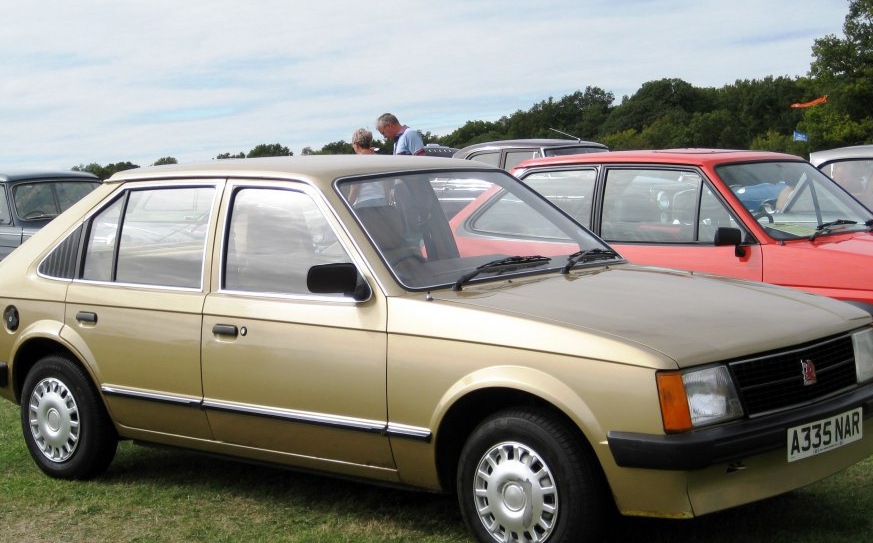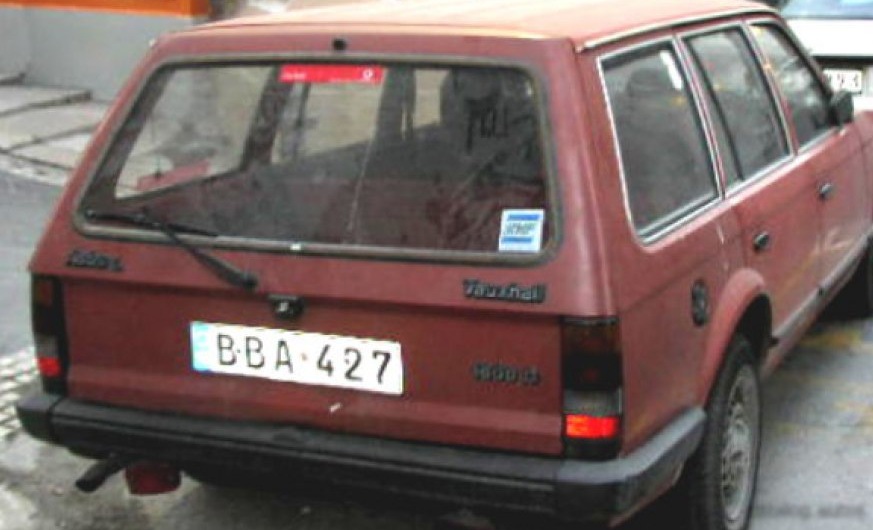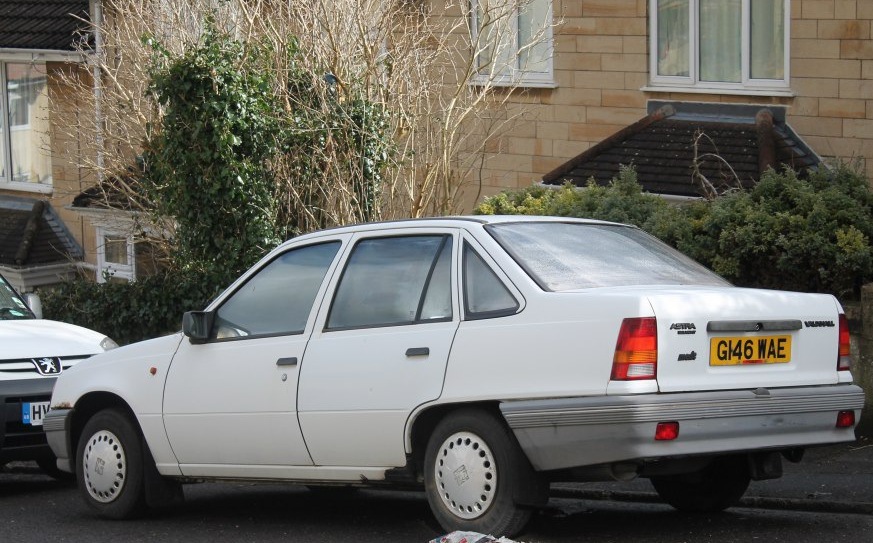
The Vauxhall Astra Mk II Belmont 1.6, producing 90 horsepower, was a mainstay of the British automotive market from 1984 to 1986. Positioned as an entry-level to mid-range offering within the Belmont sedan range (itself a variant of the Mk II Astra), it provided affordable family transportation. The Belmont, a three-box sedan, was specifically designed to appeal to buyers who preferred a more traditional saloon car shape compared to the hatchback versions of the Astra. This variant played a crucial role in Vauxhall’s sales figures during a period of increasing competition from both domestic and imported manufacturers.
Technical Specifications
| Brand | Vauxhall |
| Model | Astra |
| Generation | Astra Mk II Belmont |
| Type (Engine) | 1.6 (90 Hp) |
| Start of production | 1984 |
| End of production | 1986 |
| Powertrain Architecture | Internal Combustion engine |
| Body type | Sedan |
| Seats | 5 |
| Doors | 4 |
| Fuel Type | Petrol (Gasoline) |
| Power | 90 Hp @ 5800 rpm |
| Power per litre | 56.3 Hp/l |
| Torque | 123 Nm @ 4000 rpm |
| Torque (lb-ft) | 90.72 lb.-ft. @ 4000 rpm |
| Engine layout | Front, Transverse |
| Engine Model/Code | 16SH |
| Engine displacement | 1598 cm3 |
| Engine displacement (cu. in.) | 97.52 cu. in. |
| Number of cylinders | 4 |
| Engine configuration | Inline |
| Cylinder Bore | 79 mm |
| Cylinder Bore (in.) | 3.11 in. |
| Piston Stroke | 81.5 mm |
| Piston Stroke (in.) | 3.21 in. |
| Compression ratio | 9.2:1 |
| Number of valves per cylinder | 2 |
| Engine aspiration | Naturally aspirated engine |
| Engine oil capacity | 3.25 l |
| Engine oil capacity (US qt) | 3.43 US qt |
| Engine oil capacity (UK qt) | 2.86 UK qt |
| Coolant | 7.7 l |
| Coolant (US qt) | 8.14 US qt |
| Coolant (UK qt) | 6.78 UK qt |
| Trunk (boot) space – minimum | 550 l |
| Trunk (boot) space (cu. ft.) | 19.42 cu. ft. |
| Fuel tank capacity | 52 l |
| Fuel tank capacity (US gal) | 13.74 US gal |
| Fuel tank capacity (UK gal) | 11.44 UK gal |
| Length | 4218 mm |
| Length (in.) | 166.06 in. |
| Width | 1658 mm |
| Width (in.) | 65.28 in. |
| Height | 1400 mm |
| Height (in.) | 55.12 in. |
| Wheelbase | 2520 mm |
| Wheelbase (in.) | 99.21 in. |
| Front track | 1400 mm |
| Front track (in.) | 55.12 in. |
| Rear (Back) track | 1406 mm |
| Rear (Back) track (in.) | 55.35 in. |
| Drag coefficient (Cd) | 0.32 |
| Drivetrain Architecture | The Internal combustion engine (ICE) drives the front wheels of the vehicle. |
| Drive wheel | Front wheel drive |
| Number of gears and type of gearbox | 5 gears, manual transmission |
Powertrain & Engine Architecture
The heart of the Astra Mk II Belmont 1.6 was the 16SH engine, a 1.6-liter inline-four cylinder petrol engine. This engine featured a relatively simple design, utilizing a two-valve-per-cylinder configuration and a single overhead camshaft. Fuel delivery was managed by a carburetor, a common feature for vehicles of this era, providing adequate but not particularly sophisticated fuel atomization. The 16SH engine was known for its durability and relative ease of maintenance. The 90 horsepower output was achieved at 5800 rpm, while peak torque of 123 Nm (90.72 lb-ft) arrived at 4000 rpm. The engine’s transverse mounting and front-wheel-drive configuration were typical for European cars of the time, maximizing interior space and improving traction in adverse conditions.
Driving Characteristics
The 1.6-liter engine, paired with a five-speed manual transmission, provided adequate performance for everyday driving. Acceleration was not brisk, with a 0-60 mph time estimated around 12-13 seconds. However, the engine was reasonably responsive in the mid-range, making it suitable for overtaking maneuvers on typical roads. Compared to the more powerful Astra variants, such as those equipped with larger engines, the 1.6 felt noticeably less energetic. The five-speed gearbox allowed for efficient cruising at highway speeds, while the front-wheel-drive layout offered predictable handling. The suspension, tuned for comfort, provided a relatively smooth ride, although it wasn’t particularly sporty.
Equipment & Trim Levels
The Belmont 1.6 typically came with a modest level of standard equipment. Interior features included cloth upholstery, a basic dashboard layout, and manual windows and door locks. Power steering was not standard on all models, and air conditioning was typically an optional extra. The trim level often dictated the availability of features like a radio, upgraded seat fabrics, and exterior trim enhancements. The Belmont aimed for practicality and affordability, so luxury features were generally limited.
Chassis & Braking
The Astra Mk II Belmont utilized a MacPherson strut front suspension and a twist-beam rear suspension. This setup provided a good balance between ride comfort and handling. Braking was typically accomplished with disc brakes on the front wheels and drum brakes on the rear. The braking system was adequate for the vehicle’s weight and performance, but lacked the stopping power of more modern systems. A stabilizer bar was fitted to the front suspension to reduce body roll during cornering.
Market Reception & Comparison
The Astra Mk II Belmont 1.6 was generally well-received as a practical and affordable family car. Critics praised its fuel efficiency and reliability, but noted its lack of outright performance compared to some of its rivals. Compared to other trims in the Astra lineup, the 1.6 offered a more economical option, appealing to budget-conscious buyers. The 1.8-liter and diesel variants provided more power or better fuel economy, respectively, but at a higher price point. The Belmont 1.6 occupied a sweet spot for many buyers seeking a reliable and economical saloon car.
Legacy
The Vauxhall Astra Mk II Belmont 1.6 has become a popular classic car among enthusiasts. The 16SH engine is known for its robustness and relatively simple mechanics, making it a relatively easy engine to maintain and repair. While not a high-performance vehicle, the Belmont 1.6 offers a charming driving experience and a nostalgic connection to the 1980s. Today, well-maintained examples are sought after by collectors and enthusiasts, representing a piece of British automotive history. The availability of spare parts remains reasonably good, ensuring that these cars can continue to be enjoyed for years to come.