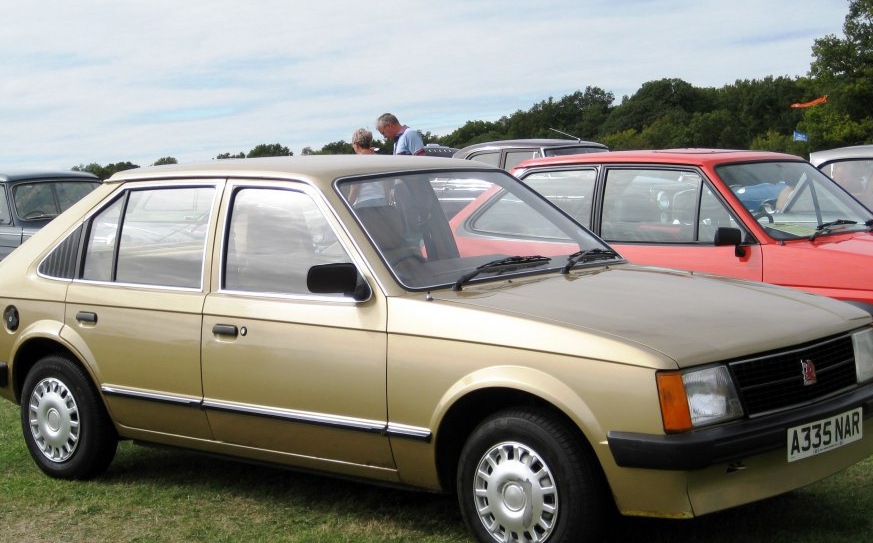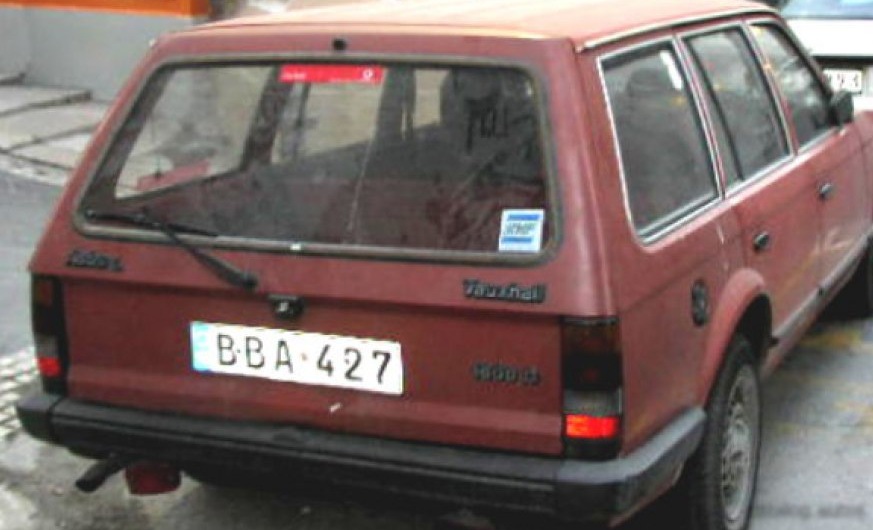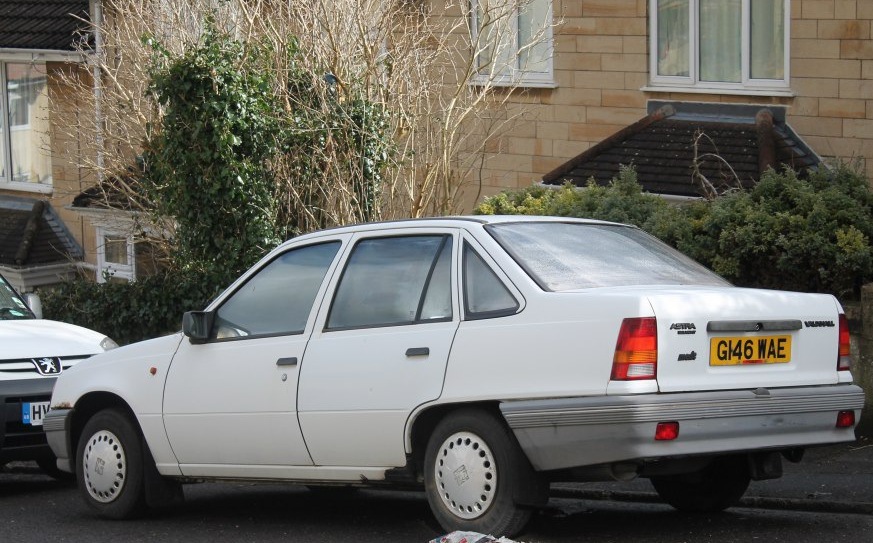
The Vauxhall Astra Mk II Belmont 1.6 D, produced between 1984 and 1989, represented the entry-level diesel offering within the Belmont (four-door sedan) range of the Mk II Astra. Positioned as a practical and economical family car, it catered to buyers prioritizing fuel efficiency over outright performance. The Belmont itself was the sedan variant of the Mk II Astra, which was a significant model for Vauxhall, solidifying their presence in the competitive European compact car segment. This particular 1.6-liter diesel variant aimed for a balance between affordability and usability, appealing to a broad customer base seeking a reliable and economical mode of transport.
Technical Specifications
| Brand | Vauxhall |
| Model | Astra |
| Generation | Astra Mk II Belmont |
| Type (Engine) | 1.6 D (54 Hp) |
| Start of production | 1984 |
| End of production | 1989 |
| Powertrain Architecture | Internal Combustion engine |
| Body type | Sedan |
| Seats | 5 |
| Doors | 4 |
| Fuel consumption (combined) | 6.1 l/100 km (38.6 US mpg, 46.3 UK mpg, 16.4 km/l) |
| Fuel Type | Diesel |
| Acceleration 0 – 100 km/h | 19.5 sec |
| Acceleration 0 – 62 mph | 19.5 sec |
| Acceleration 0 – 60 mph | 18.5 sec |
| Maximum speed | 152 km/h (94.45 mph) |
| Weight-to-power ratio | 17.8 kg/Hp, 56.3 Hp/tonne |
| Weight-to-torque ratio | 10 kg/Nm, 100 Nm/tonne |
| Power | 54 Hp @ 4600 rpm |
| Power per litre | 33.8 Hp/l |
| Torque | 96 Nm @ 2400 rpm (70.81 lb.-ft. @ 2400 rpm) |
| Engine layout | Front, Transverse |
| Engine Model/Code | 16D, 16DA |
| Engine displacement | 1598 cm3 (97.52 cu. in.) |
| Number of cylinders | 4 |
| Engine configuration | Inline |
| Cylinder Bore | 80 mm (3.15 in.) |
| Piston Stroke | 79.5 mm (3.13 in.) |
| Compression ratio | 23:1 |
| Number of valves per cylinder | 2 |
| Fuel injection system | Precombustion chamber injection |
| Engine aspiration | Naturally aspirated engine |
| Engine oil capacity | 3.8 l (4.02 US qt | 3.34 UK qt) |
| Coolant | 7.7 l (8.14 US qt | 6.78 UK qt) |
| Kerb Weight | 960 kg (2116.44 lbs.) |
| Max. weight | 1465 kg (3229.77 lbs.) |
| Max load | 505 kg (1113.33 lbs.) |
| Trunk (boot) space – minimum | 550 l (19.42 cu. ft.) |
| Fuel tank capacity | 52 l (13.74 US gal | 11.44 UK gal) |
| Length | 4218 mm (166.06 in.) |
| Width | 1658 mm (65.28 in.) |
| Height | 1400 mm (55.12 in.) |
| Wheelbase | 2520 mm (99.21 in.) |
| Front track | 1400 mm (55.12 in.) |
| Rear (Back) track | 1405 mm (55.31 in.) |
| Ride height (ground clearance) | 140 mm (5.51 in.) |
| Drag coefficient (Cd) | 0.32 |
| Drivetrain Architecture | The Internal combustion engine (ICE) drives the front wheels of the vehicle. |
| Drive wheel | Front wheel drive |
| Number of gears and type of gearbox | 5 gears, manual transmission |
Powertrain & Engine Architecture
The heart of the Astra Mk II Belmont 1.6 D was the 16D (and later 16DA) diesel engine. This 1.6-liter inline-four engine utilized precombustion chamber injection, a common diesel technology of the era. This system involved injecting fuel into a precombustion chamber connected to the main cylinder, promoting more complete combustion, especially in colder conditions. The engine produced 54 horsepower at 4600 rpm and 96 Nm (70.81 lb-ft) of torque at 2400 rpm. The relatively low compression ratio of 23:1 was typical for indirect injection diesel engines. The engine’s design prioritized durability and fuel economy over high performance. The five-speed manual transmission was the only gearbox option available with this engine, geared towards maximizing fuel efficiency and providing adequate, if not exhilarating, acceleration.
Driving Characteristics
The 1.6 D Belmont was not known for its speed. Acceleration was leisurely, taking around 19.5 seconds to reach 62 mph. The engine’s torque delivery was relatively flat, providing usable power for everyday driving, but lacking the punch of higher-output gasoline engines or even later-generation diesel engines. The five-speed gearbox allowed drivers to keep the engine in its optimal torque band, but frequent downshifts were often necessary for overtaking or climbing hills. The suspension was tuned for comfort, providing a reasonably smooth ride, but handling was not particularly sporty. Compared to the more powerful petrol versions of the Astra Mk II, the 1.6 D offered a significantly different driving experience, focused on practicality and economy.
Equipment & Trim Levels
The 1.6 D Belmont typically came with a basic level of equipment. Standard features included cloth upholstery, a basic instrument cluster, and manual windows and door locks. Power steering was not typically standard on this base model. Optional extras included a sunroof, upgraded stereo systems, and central locking. The interior was functional and durable, designed to withstand the rigors of daily use. The trim level was generally considered entry-level, appealing to buyers seeking a no-frills, affordable family car.
Chassis & Braking
The Astra Mk II Belmont featured a front-wheel-drive layout with a MacPherson strut front suspension and a twist-beam rear suspension. The braking system consisted of disc brakes on the front wheels and drum brakes on the rear wheels. The suspension setup was designed to provide a comfortable ride and adequate handling for everyday driving. The relatively lightweight nature of the car helped to compensate for the modest braking performance. Stabilizer bars were often omitted on the base models to keep costs down.
Market Reception & Comparison
The Astra Mk II Belmont 1.6 D was generally well-received as a practical and economical family car. Critics praised its fuel efficiency and durability, but noted its lack of performance. Compared to the petrol-powered Astra models, the 1.6 D offered significantly better fuel economy but considerably slower acceleration. It competed with other diesel-powered compact cars of the era, such as the Ford Escort Diesel and the Volkswagen Golf Diesel. The Vauxhall offered a competitive price point and a reputation for reliability, making it a popular choice for budget-conscious buyers.
Legacy
The 1.6 D engine, while not known for its sophistication, proved to be a durable and reliable unit. Many examples of the Astra Mk II Belmont 1.6 D are still on the road today, testament to its robust construction. In the used car market, these vehicles are often sought after by enthusiasts looking for a classic, affordable, and economical car. While not a performance icon, the Astra Mk II Belmont 1.6 D holds a significant place in automotive history as a representative of the practical and fuel-efficient cars of the 1980s. Its simplicity and durability continue to appeal to a dedicated following.