Technical Specifications
| Brand | Vauxhall |
| Model | Astra |
| Generation | Astra Mk II CC |
| Type (Engine) | 1.4 S (75 Hp) |
| Start of production | 1990 |
| End of production | 1991 |
| Powertrain Architecture | Internal Combustion engine |
| Body type | Hatchback |
| Seats | 5 |
| Doors | 3-5 |
| Fuel Type | Petrol (Gasoline) |
| Power | 75 Hp |
| Power per litre | 54 Hp/l |
| Torque | 110 Nm @ 3000 rpm (81.13 lb.-ft. @ 3000 rpm) |
| Engine layout | Front, Transverse |
| Engine Model/Code | 14NV |
| Engine displacement | 1389 cm3 (84.76 cu. in.) |
| Number of cylinders | 4 |
| Engine configuration | Inline |
| Cylinder Bore | 77.6 mm (3.06 in.) |
| Piston Stroke | 73.4 mm (2.89 in.) |
| Compression ratio | 9.4:1 |
| Number of valves per cylinder | 2 |
| Fuel injection system | Carburettor |
| Engine aspiration | Naturally aspirated engine |
| Engine oil capacity | 3.5 l (3.7 US qt | 3.08 UK qt) |
| Coolant | 6.2 l (6.55 US qt | 5.46 UK qt) |
| Trunk (boot) space – minimum | 390 l (13.77 cu. ft.) |
| Trunk (boot) space – maximum | 1000 l (35.31 cu. ft.) |
| Fuel tank capacity | 52 l (13.74 US gal | 11.44 UK gal) |
| Length | 3998 mm (157.4 in.) |
| Width | 1663 mm (65.47 in.) |
| Height | 1400 mm (55.12 in.) |
| Wheelbase | 2520 mm (99.21 in.) |
| Front track | 1400 mm (55.12 in.) |
| Rear (Back) track | 1405 mm (55.31 in.) |
| Drivetrain Architecture | The Internal combustion engine (ICE) drives the front wheels of the vehicle. |
| Drive wheel | Front wheel drive |
| Number of gears and type of gearbox | 4 gears, manual transmission |
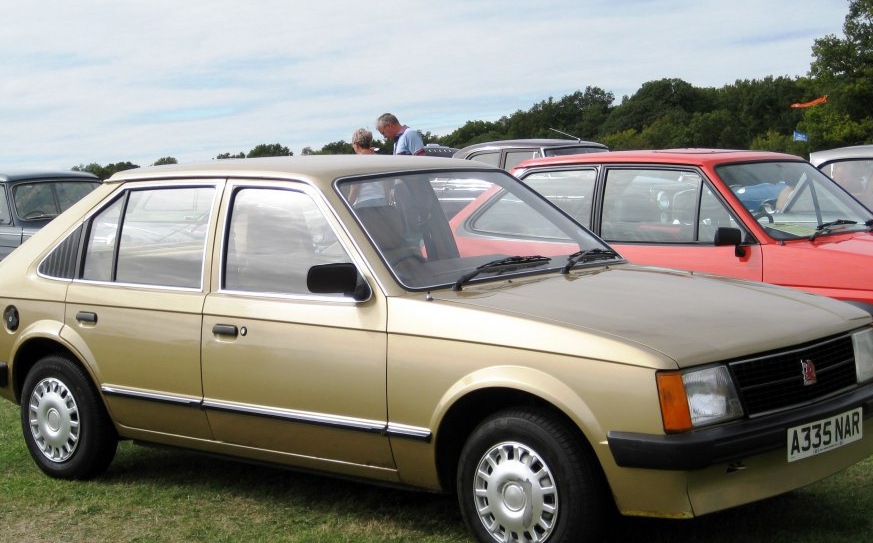
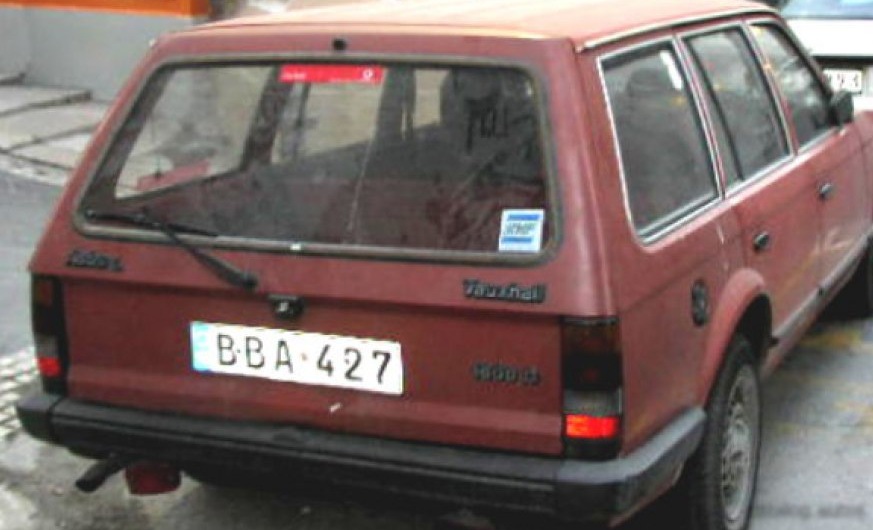
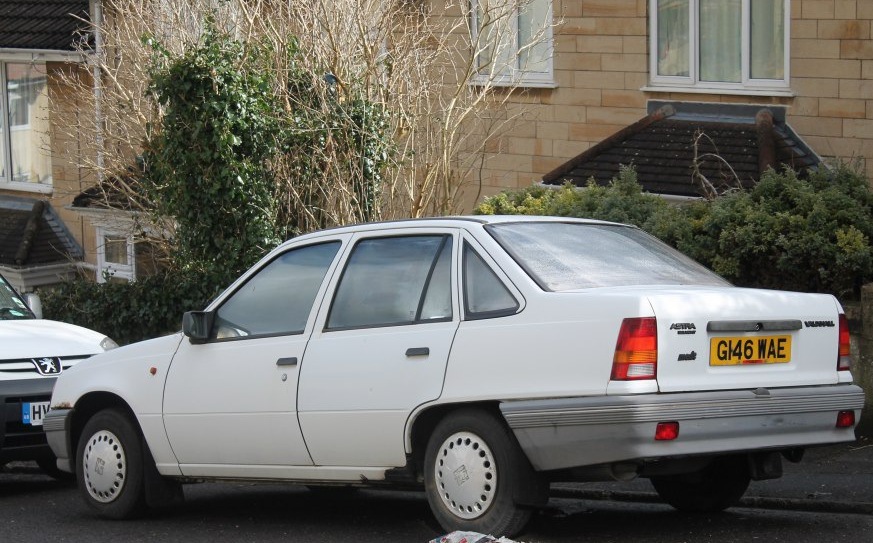
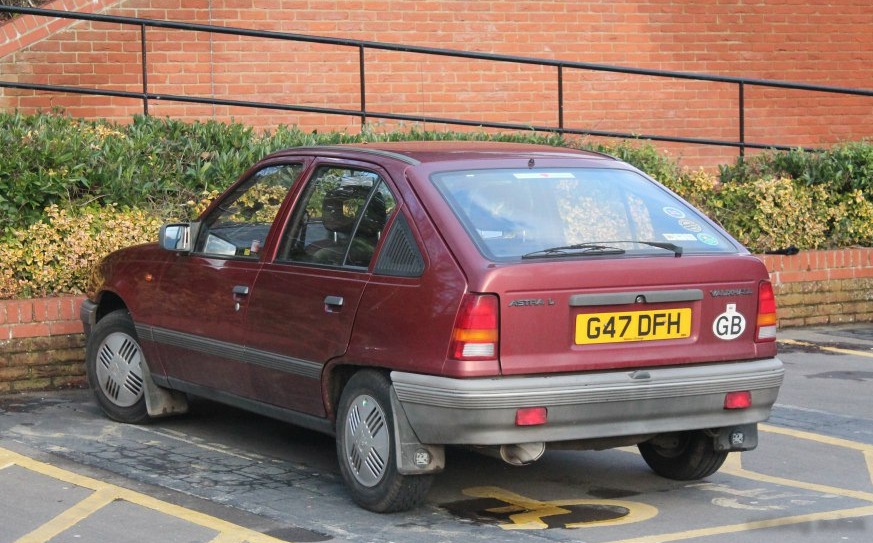
The Vauxhall Astra Mk II CC 1.4 S (75 hp) was a popular entry-level variant of the Mk II Astra range, produced between 1990 and 1991. Positioned as an affordable and practical hatchback, it served as a gateway into the Astra lineup for budget-conscious buyers. The “CC” designation stood for “Coupe Convenience,” reflecting the model’s availability in both 3-door and 5-door body styles. This variant was a key component of Vauxhall’s strategy to offer a broad range of options within the competitive small family car segment in the United Kingdom and Europe.
Powertrain & Engine Architecture
The Astra Mk II CC 1.4 S was powered by the 14NV engine, a 1.4-liter inline-four cylinder petrol engine. This engine was a relatively simple design, utilizing a single overhead camshaft (SOHC) and two valves per cylinder. Crucially, it employed a carburettor fuel delivery system – a common feature for vehicles of this era, but increasingly superseded by fuel injection. The carburettor, while cost-effective, resulted in less precise fuel metering compared to injection systems, impacting both performance and fuel efficiency. The 14NV produced 75 horsepower and 110 Nm (81.13 lb-ft) of torque at 3000 rpm. The engine’s relatively low compression ratio of 9.4:1 was typical for engines designed to run on the available fuel grades of the time. The engine was transversely mounted at the front of the vehicle, driving the front wheels.
Driving Characteristics
The 1.4 S, with its 75 hp output, offered modest performance. Acceleration was adequate for urban driving and general commuting, but overtaking on highways required careful planning. The four-speed manual transmission was geared to prioritize fuel economy over outright performance. Compared to the more powerful Astra variants, such as those equipped with 1.6 or 2.0-liter engines, the 1.4 S felt noticeably slower. The lower power output also meant that the engine needed to be revved more frequently to maintain speed, especially when carrying passengers or cargo. The handling was typical of front-wheel-drive hatchbacks of the period – safe and predictable, but not particularly sporty. The relatively light weight of the vehicle helped to mitigate the effects of the lower power output.
Equipment & Trim Levels
The “S” trim level represented a basic specification within the Astra Mk II CC range. Standard equipment typically included cloth upholstery, a basic instrument cluster, and manual windows and door locks. Central locking and electric windows were generally offered as optional extras. The interior was functional and durable, prioritizing practicality over luxury. The dashboard layout was straightforward, with clearly labeled controls. Optional extras could include a radio/cassette player, upgraded seat fabrics, and a sunroof. The 3-door version was often seen as slightly more sporty, appealing to younger buyers, while the 5-door offered greater practicality for families.
Chassis & Braking
The Astra Mk II CC utilized a MacPherson strut front suspension and a twist-beam rear suspension. This setup provided a reasonable balance between ride comfort and handling. The braking system consisted of disc brakes on the front wheels and drum brakes on the rear wheels. This configuration was common for vehicles in this price range at the time. Anti-lock braking (ABS) was not typically offered on the 1.4 S variant. The steering was rack-and-pinion, providing reasonably precise control. Stabilizer bars were fitted to both the front and rear axles to reduce body roll during cornering.
Market Reception & Comparison
The Astra Mk II CC 1.4 S was generally well-received as an affordable and reliable small family car. Critics praised its practicality and fuel economy, but noted its lack of outright performance. Compared to other 1.4-liter rivals, such as the Ford Escort and Peugeot 205, the Astra offered a competitive level of equipment and a comfortable ride. However, the carburettor-equipped engine was seen as a disadvantage compared to some competitors who had already adopted fuel injection. Fuel economy was respectable for the time, averaging around 35-40 mpg in mixed driving conditions. Reliability was generally good, although the carburettor could require occasional adjustment and maintenance.
Legacy
The Vauxhall Astra Mk II CC 1.4 S remains a relatively common sight on UK roads today, testament to its durability and affordability. The 14NV engine, while not known for its performance, is generally considered to be a reliable unit, provided it has been properly maintained. Parts availability is generally good, although some components may be becoming increasingly difficult to find. In the used car market, the 1.4 S represents an affordable entry point into classic Astra ownership, appealing to enthusiasts and those seeking a practical and economical runabout. Its simplicity and ease of maintenance make it a popular choice for those who enjoy working on their own vehicles. The 1.4 S played a significant role in establishing the Astra as a popular and trusted family car in the United Kingdom.