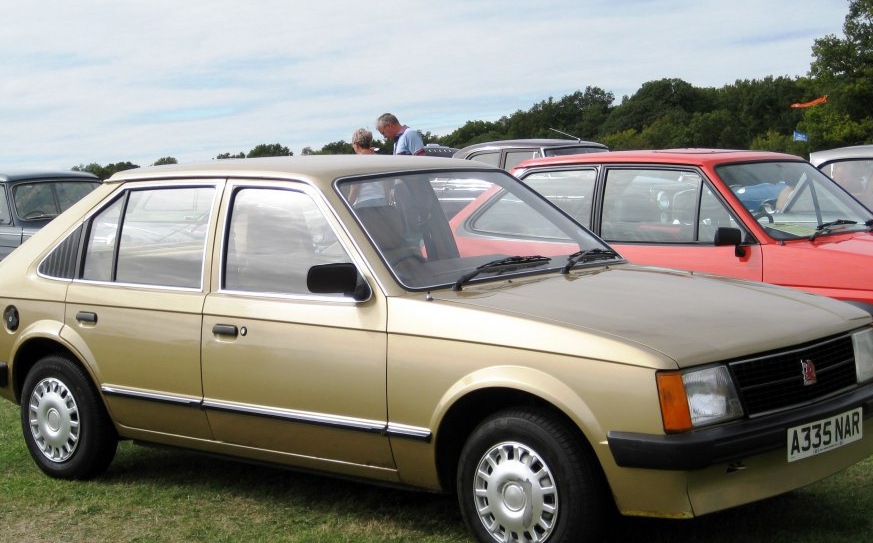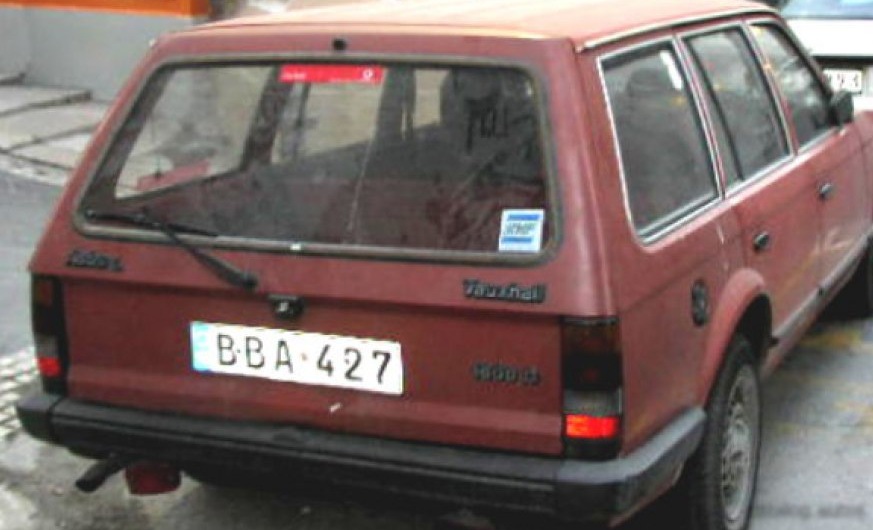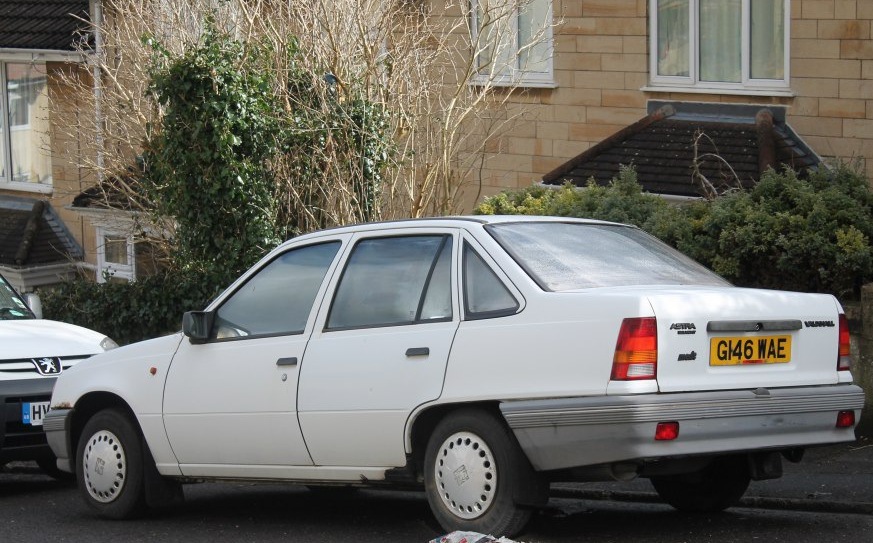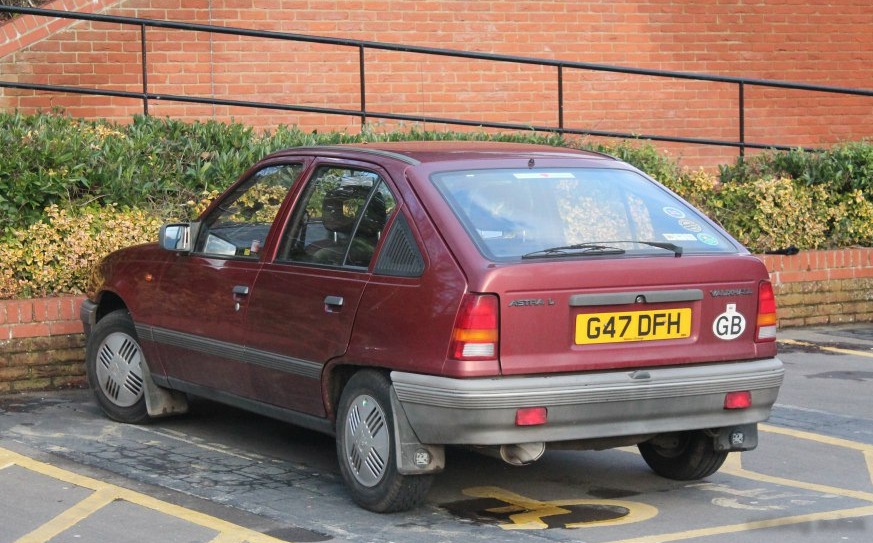
The Vauxhall Astra Mk II CC 1.6 D, produced between 1984 and 1989, represented an economical entry point into the popular Astra range. Falling within the Mk II (C-series) generation, which spanned from 1984 to 1991, this variant was primarily aimed at buyers prioritizing fuel efficiency and low running costs over outright performance. Available in both 3 and 5-door hatchback configurations, the 1.6 D served as a practical and affordable option in the British and European markets, where diesel engines were gaining traction for their economy.
Technical Specifications
| Brand | Vauxhall |
| Model | Astra |
| Generation | Astra Mk II CC |
| Type (Engine) | 1.6 D (54 Hp) |
| Start of production | 1984 |
| End of production | 1989 |
| Powertrain Architecture | Internal Combustion engine |
| Body type | Hatchback |
| Seats | 5 |
| Doors | 3-5 |
| Fuel Type | Diesel |
| Power | 54 Hp @ 4600 rpm |
| Power per litre | 33.8 Hp/l |
| Torque | 96 Nm @ 2400 rpm (70.81 lb.-ft. @ 2400 rpm) |
| Engine layout | Front, Transverse |
| Engine Model/Code | 16D, 16DA |
| Engine displacement | 1598 cm3 (97.52 cu. in.) |
| Number of cylinders | 4 |
| Engine configuration | Inline |
| Number of valves per cylinder | 2 |
| Fuel injection system | Precombustion chamber injection |
| Engine aspiration | Naturally aspirated engine |
| Engine oil capacity | 3.8 l (4.02 US qt | 3.34 UK qt) |
| Coolant capacity | 7.7 l (8.14 US qt | 6.78 UK qt) |
| Trunk (boot) space – minimum | 390 l (13.77 cu. ft.) |
| Trunk (boot) space – maximum | 1000 l (35.31 cu. ft.) |
| Fuel tank capacity | 52 l (13.74 US gal | 11.44 UK gal) |
| Length | 3998 mm (157.4 in.) |
| Width | 1663 mm (65.47 in.) |
| Height | 1400 mm (55.12 in.) |
| Wheelbase | 2520 mm (99.21 in.) |
| Front track | 1400 mm (55.12 in.) |
| Rear (Back) track | 1405 mm (55.31 in.) |
| Drivetrain Architecture | The Internal combustion engine (ICE) drives the front wheels of the vehicle. |
| Drive wheel | Front wheel drive |
| Number of gears and type of gearbox | 5 gears, manual transmission |
Powertrain & Engine Architecture
The heart of the Astra Mk II CC 1.6 D was the 16D or 16DA engine, a 1.6-liter inline-four diesel. This engine utilized a precombustion chamber injection system, a common technology for diesel engines of the era. This system involved injecting fuel into a small precombustion chamber connected to the main cylinder, where it was partially ignited before entering the main combustion chamber. This aided in cold starting and reduced engine noise compared to direct injection systems. The engine featured a simple two-valve per cylinder configuration and was naturally aspirated. The 54 horsepower output at 4600 rpm and 96 Nm (70.81 lb-ft) of torque at 2400 rpm were modest, but sufficient for everyday driving. The engine was transversely mounted, driving the front wheels.
Driving Characteristics
The 1.6 D-powered Astra was not known for its speed. Acceleration was leisurely, and overtaking required careful planning. The five-speed manual transmission was geared to maximize fuel economy rather than performance. Gear ratios were relatively tall, meaning the engine needed to be revved to access its limited power. Compared to the petrol-powered Astra variants, or even later diesel iterations, the 1.6 D felt significantly slower. However, the engine proved to be durable and relatively refined for a diesel of its time. The focus was on providing a comfortable and economical driving experience, rather than sporty handling.
Equipment & Trim Levels
The 1.6 D typically represented the base trim level within the Astra Mk II CC range. Standard equipment was fairly basic, reflecting its affordability. Interior upholstery was typically cloth, and the dashboard featured a simple, functional design. Features like central locking, electric windows, and a sunroof were often optional extras. The trim level was often denoted by a badge on the rear of the car, but specific features varied depending on the market and optional packages selected by the original purchaser. The emphasis was on providing a practical and reliable vehicle at a low price point.
Chassis & Braking
The Astra Mk II CC utilized a MacPherson strut front suspension and a twist-beam rear suspension. The braking system typically consisted of disc brakes on the front wheels and drum brakes on the rear. Stabilizer bars were often fitted to improve handling, but their thickness could vary depending on the specific trim level. The suspension was tuned for comfort, providing a relatively smooth ride, although it wasn’t particularly sporty. The chassis was designed to be lightweight, contributing to the car’s fuel efficiency.
Market Reception & Comparison
The Astra Mk II CC 1.6 D was well-received by buyers seeking an economical and reliable family car. Critics acknowledged its fuel efficiency and durability, but often noted its lack of performance. Compared to the petrol-engined Astras, the 1.6 D offered significantly better fuel economy, but at the cost of acceleration and refinement. Against competitors like the Ford Escort Diesel and Volkswagen Golf Diesel, the Astra 1.6 D offered a comparable package in terms of price and economy. Its reputation for reliability made it a popular choice for fleet operators and private buyers alike.
Legacy
The 1.6 D engine, while not a powerhouse, proved to be remarkably durable. Many examples of the Astra Mk II CC 1.6 D remain on the road today, a testament to its robust construction. In the used car market, these vehicles are often sought after by enthusiasts looking for a classic, affordable, and economical car. Maintenance is generally straightforward, and parts availability is still reasonable. While not a collector’s item in the same vein as some higher-performance Astra variants, the 1.6 D holds a significant place in the history of the model, representing a practical and accessible option for a wide range of buyers during the 1980s.