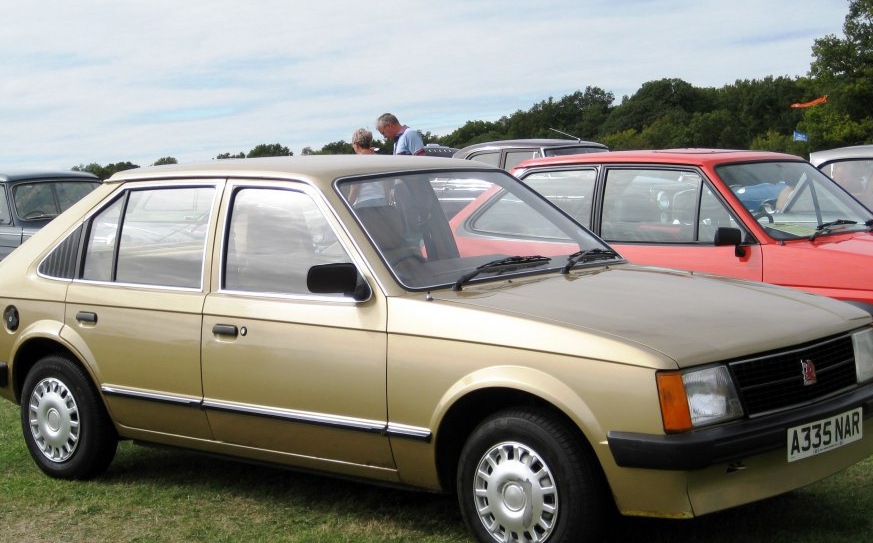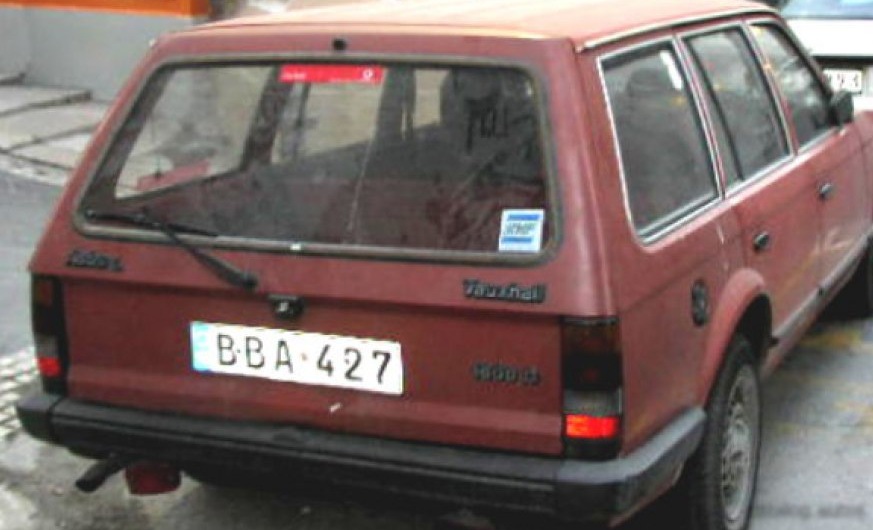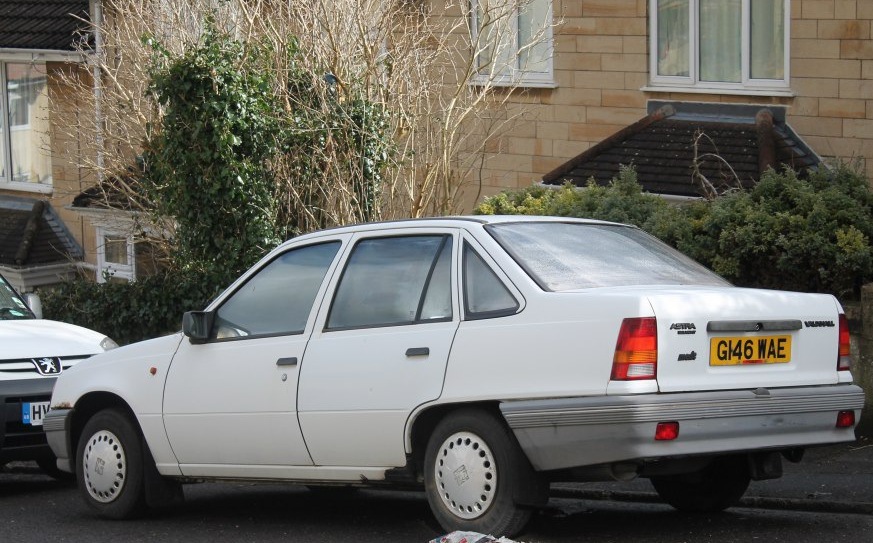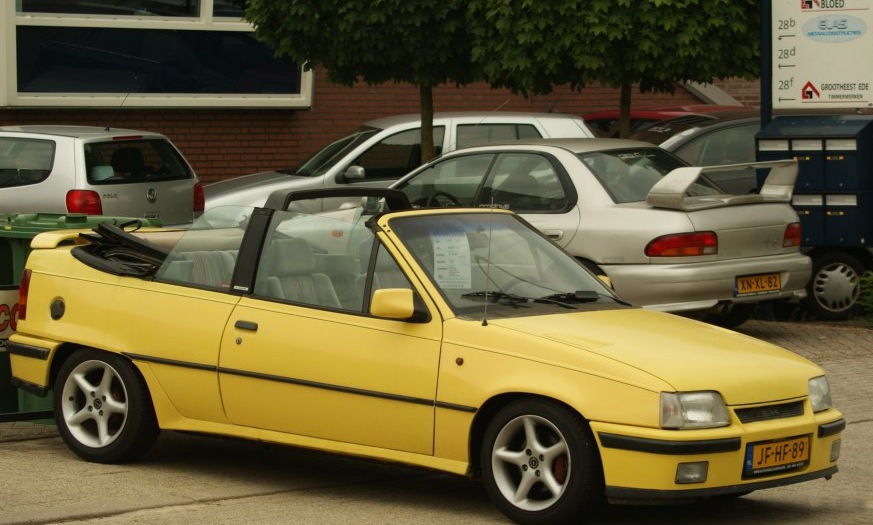
The Vauxhall Astra Mk II Convertible 1.6i, producing 75 horsepower, was a short-lived but notable variant of the Mk II Astra range, manufactured between 1987 and 1988. Positioned as the entry-level convertible option, it aimed to offer open-top motoring to a wider audience. This model occupied a unique space within the Mk II Astra lineup, which was based on the GM T platform (internally known as the 1HX0). The convertible variant, while sharing the core mechanicals with the hatchback and saloon versions, distinguished itself with its body style and targeted a different demographic – those prioritizing leisure and style over outright performance.
Technical Specifications
| Brand | Vauxhall |
| Model | Astra |
| Generation | Astra Mk II Convertible |
| Type (Engine) | 1.6i (75 Hp) |
| Start of production | 1987 |
| End of production | 1988 |
| Powertrain Architecture | Internal Combustion engine |
| Body type | Cabriolet |
| Seats | 4 |
| Doors | 2 |
| Fuel Type | Petrol (Gasoline) |
| Power | 75 Hp @ 5200 rpm |
| Power per litre | 46.9 Hp/l |
| Torque | 125 Nm @ 2600 rpm |
| Torque (lb.-ft.) | 92.2 lb.-ft. @ 2600 rpm |
| Engine layout | Front, Transverse |
| Engine Model/Code | E16NZ |
| Engine displacement | 1598 cm3 |
| Engine displacement (cu. in.) | 97.52 cu. in. |
| Number of cylinders | 4 |
| Engine configuration | Inline |
| Cylinder Bore | 79 mm |
| Cylinder Bore (in.) | 3.11 in. |
| Piston Stroke | 81.5 mm |
| Piston Stroke (in.) | 3.21 in. |
| Compression ratio | 9.2:1 |
| Number of valves per cylinder | 2 |
| Engine aspiration | Naturally aspirated engine |
| Engine oil capacity | 3.5 l |
| Engine oil capacity (US qt) | 3.7 US qt |
| Engine oil capacity (UK qt) | 3.08 UK qt |
| Coolant | 6.4 l |
| Coolant (US qt) | 6.76 US qt |
| Coolant (UK qt) | 5.63 UK qt |
| Trunk (boot) space – minimum | 290 l |
| Trunk (boot) space – minimum (cu. ft.) | 10.24 cu. ft. |
| Fuel tank capacity | 52 l |
| Fuel tank capacity (US gal) | 13.74 US gal |
| Fuel tank capacity (UK gal) | 11.44 UK gal |
| Length | 3998 mm |
| Length (in.) | 157.4 in. |
| Width | 1663 mm |
| Width (in.) | 65.47 in. |
| Height | 1385 mm |
| Height (in.) | 54.53 in. |
| Wheelbase | 2520 mm |
| Wheelbase (in.) | 99.21 in. |
| Front track | 1400 mm |
| Front track (in.) | 55.12 in. |
| Rear (Back) track | 1405 mm |
| Rear (Back) track (in.) | 55.31 in. |
| Ride height (ground clearance) | 140 mm |
| Ride height (ground clearance) (in.) | 5.51 in. |
| Drag coefficient (Cd) | 0.34 |
| Drivetrain Architecture | The Internal combustion engine (ICE) drives the front wheels of the vehicle. |
| Drive wheel | Front wheel drive |
| Number of gears and type of gearbox | 4 gears, manual transmission |
Powertrain & Engine Architecture
The Astra Mk II Convertible 1.6i was powered by the E16NZ engine, a 1.6-liter inline-four cylinder petrol engine. This engine was a relatively simple design, featuring a single overhead camshaft (SOHC) and two valves per cylinder. Fuel delivery was managed by a Bosch Mono-Jetronic fuel injection system, a relatively basic system for the time, but adequate for the engine’s modest power output. The E16NZ engine was known for its reliability, though it wasn’t particularly powerful or refined. The engine’s 75 horsepower output was achieved at 5200 rpm, while peak torque of 125 Nm (92.2 lb-ft) arrived at 2600 rpm. The engine was transversely mounted at the front of the vehicle, driving the front wheels. The standard transmission was a four-speed manual gearbox, designed to provide reasonable acceleration and fuel economy.
Driving Characteristics
The 1.6i convertible, with its 75 horsepower and relatively lightweight body, offered adequate, but not exhilarating, performance. Acceleration was modest, and overtaking required careful planning. The four-speed manual gearbox was well-matched to the engine’s characteristics, providing usable power across a reasonable rev range. Compared to the more powerful 1.8 and 2.0-liter versions of the Astra Mk II, the 1.6i felt noticeably slower. However, it offered a more economical driving experience, and its lighter weight contributed to slightly improved handling. The convertible top, while adding some weight, didn’t significantly detract from the car’s overall balance. The ride quality was typical for a car of this era – firm but generally comfortable.
Equipment & Trim Levels
The 1.6i convertible was typically equipped with a fairly basic level of trim. Standard features included cloth upholstery, a basic instrument panel, and manual windows and door locks. Power steering was often an optional extra. The interior was functional rather than luxurious, reflecting the car’s position as an entry-level model. Optional extras included upgraded stereo systems, alloy wheels, and a more comprehensive trim package. The convertible top was manually operated, adding to the car’s simplicity and affordability.
Chassis & Braking
The Astra Mk II Convertible utilized a MacPherson strut front suspension and a twist-beam rear suspension. The braking system consisted of disc brakes at the front and drum brakes at the rear. This configuration was typical for cars in this class at the time. The suspension was tuned for a balance between comfort and handling, providing a reasonably compliant ride without excessive body roll. The braking performance was adequate for normal driving conditions, but lacked the stopping power of more modern vehicles.
Market Reception & Comparison
The Astra Mk II Convertible 1.6i was generally well-received as an affordable and stylish open-top car. Critics praised its value for money and its relatively reliable engine. However, they also noted its modest performance and basic interior. Compared to the higher-spec Astra convertibles, the 1.6i offered a more economical option, but at the expense of performance and refinement. Fuel economy was a strong point, making it an attractive option for drivers seeking a cost-effective way to enjoy open-top motoring. The 1.8 and 2.0-liter versions offered significantly more power, but also came with a higher price tag and increased running costs.
Legacy
The Vauxhall Astra Mk II Convertible 1.6i, while not a high-performance model, holds a place in automotive history as an accessible entry point into the world of convertible motoring. The E16NZ engine proved to be a durable and reliable unit, and many examples are still on the road today. In the used car market, these models are often sought after by enthusiasts looking for a classic and affordable convertible. While maintenance costs can be higher due to the car’s age, the 1.6i’s simplicity and readily available parts make it a relatively easy car to keep running. Its enduring appeal lies in its combination of style, affordability, and reliability.