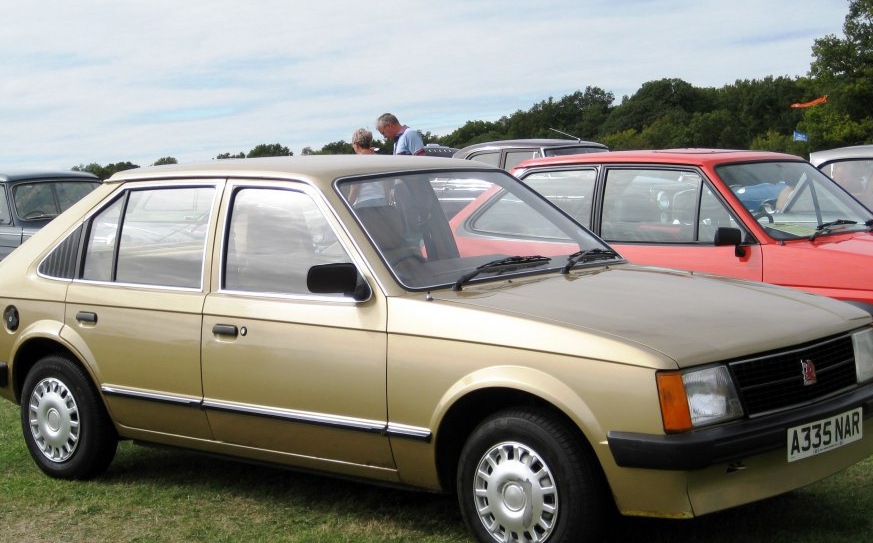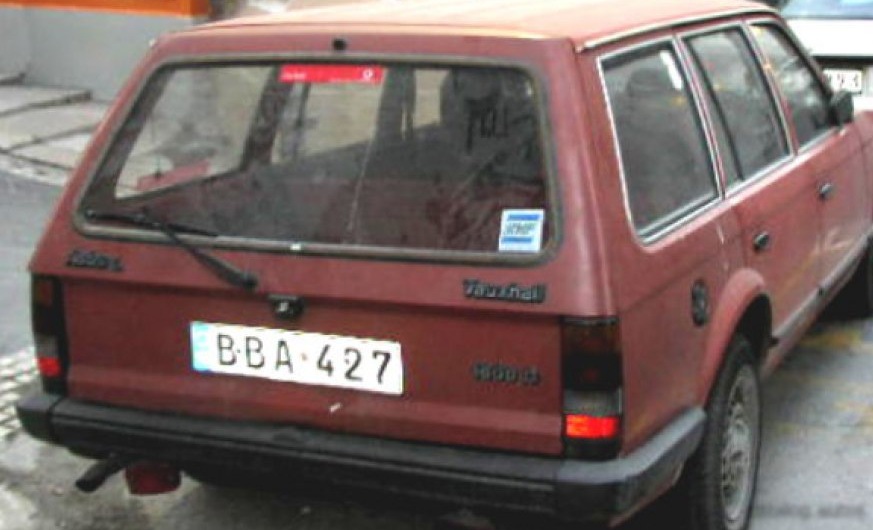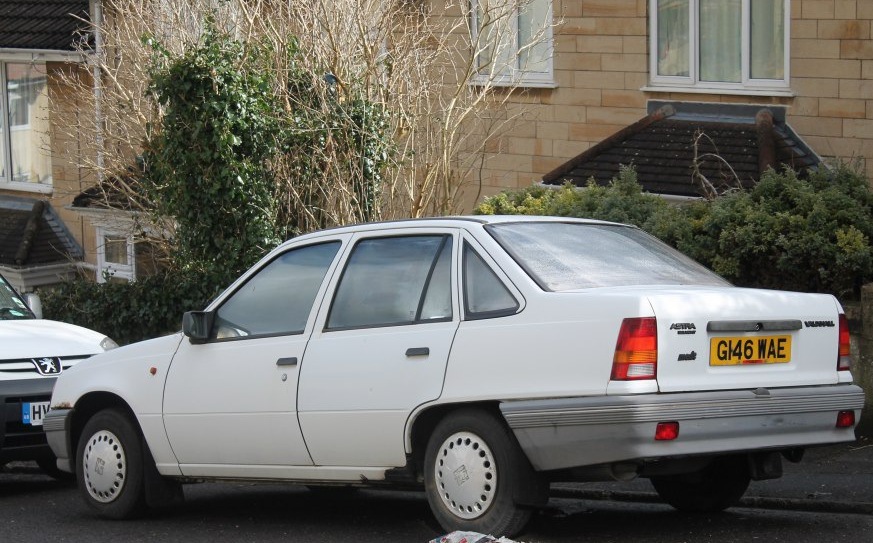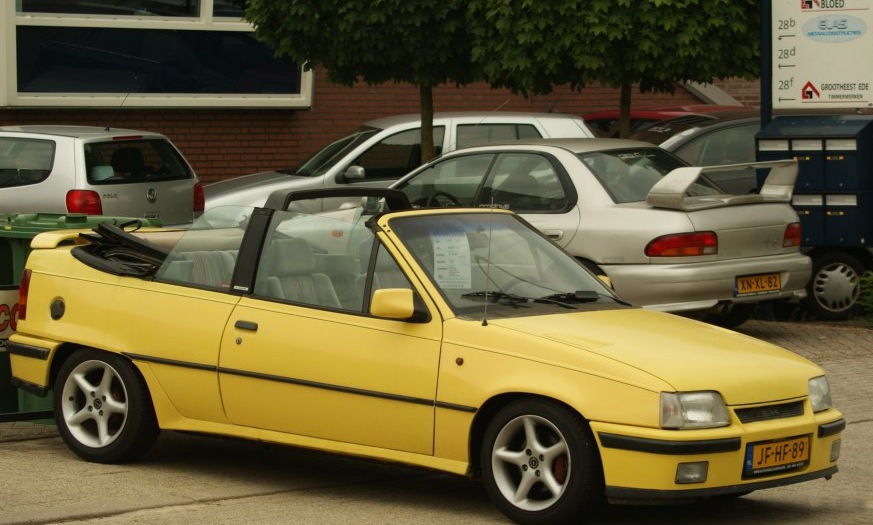
The Vauxhall Astra Mk II Convertible 2.0i, produced between 1987 and 1989, represented a significant offering in the British market for affordable open-top motoring. Based on the Mk II Astra (launched in 1984), the convertible variant was a product of collaboration with Bertone of Italy, who handled the design and manufacturing of the body shell. This model aimed to provide a stylish and accessible alternative to more expensive convertibles, capitalizing on the growing popularity of this body style. The 2.0i variant, equipped with a 115 horsepower engine, positioned itself as the performance-oriented choice within the convertible range, sitting above the lower-powered 1.6-liter models. It was a key part of Vauxhall’s strategy to broaden the Astra’s appeal and compete with rivals like the Ford Escort Convertible.
Technical Specifications
| Brand | Vauxhall |
| Model | Astra |
| Generation | Astra Mk II Convertible |
| Type (Engine) | 2.0i (115 Hp) |
| Start of production | 1987 |
| End of production | 1989 |
| Powertrain Architecture | Internal Combustion engine |
| Body type | Cabriolet |
| Seats | 4 |
| Doors | 2 |
| Fuel Type | Petrol (Gasoline) |
| Power | 115 Hp @ 5400 rpm |
| Power per litre | 57.6 Hp/l |
| Torque | 170 Nm @ 3000 rpm / 125.39 lb.-ft. @ 3000 rpm |
| Engine layout | Front, Transverse |
| Engine Model/Code | 20NE |
| Engine displacement | 1998 cm3 / 121.93 cu. in. |
| Number of cylinders | 4 |
| Engine configuration | Inline |
| Cylinder Bore | 86 mm / 3.39 in. |
| Piston Stroke | 86 mm / 3.39 in. |
| Compression ratio | 9.2:1 |
| Number of valves per cylinder | 2 |
| Fuel injection system | Single-point injection |
| Engine aspiration | Naturally aspirated engine |
| Engine oil capacity | 4 l / 4.23 US qt | 3.52 UK qt |
| Coolant | 6.9 l / 7.29 US qt | 6.07 UK qt |
| Trunk (boot) space – minimum | 290 l / 10.24 cu. ft. |
| Fuel tank capacity | 52 l / 13.74 US gal | 11.44 UK gal |
| Length | 3998 mm / 157.4 in. |
| Width | 1663 mm / 65.47 in. |
| Height | 1385 mm / 54.53 in. |
| Wheelbase | 2520 mm / 99.21 in. |
| Front track | 1400 mm / 55.12 in. |
| Rear (Back) track | 1405 mm / 55.31 in. |
| Ride height (ground clearance) | 140 mm / 5.51 in. |
| Drag coefficient (Cd) | 0.34 |
| Drivetrain Architecture | The Internal combustion engine (ICE) drives the front wheels of the vehicle. |
| Drive wheel | Front wheel drive |
| Number of gears and type of gearbox | 5 gears, manual transmission |
Powertrain & Engine Architecture
The heart of the Astra Mk II Convertible 2.0i was the 20NE engine, a 1998cc inline four-cylinder unit. This engine featured a cast iron block and an aluminum cylinder head, a common configuration for European engines of the period. The 20NE utilized a single-point fuel injection system (Bosch Mono-Jetronic), which, while less sophisticated than multi-point injection, offered a good balance of cost and efficiency. The engine’s valvetrain consisted of two valves per cylinder, operated by a single overhead camshaft. The 20NE was known for its relatively robust construction and straightforward maintenance. The engine was transversely mounted, driving the front wheels. The five-speed manual transmission provided a reasonable spread of gears, although it wasn’t particularly sporty in its ratios, prioritizing fuel economy and ease of driving over outright performance.
Driving Characteristics
The 2.0i Convertible offered a noticeable step up in performance compared to the 1.6-liter versions. With 115 horsepower, it could achieve a 0-60 mph time of around 9.5 seconds, which was respectable for a car of its class in the late 1980s. However, the single-point fuel injection and relatively high weight (due to the convertible top mechanism and structural reinforcements) meant that the engine felt somewhat strained at higher revs. The five-speed gearbox, while functional, lacked the precision and short throws of more performance-focused transmissions. The power delivery was fairly linear, making it easy to drive in everyday conditions, but it didn’t offer the exciting surge of power found in some of its rivals. The convertible top, while adding to the car’s appeal, also contributed to noticeable scuttle shake, a common characteristic of older convertibles.
Equipment & Trim Levels
The 2.0i Convertible typically came with a reasonably well-equipped specification for its time. Standard features included power steering, central locking, and a basic stereo system. Interior upholstery was typically cloth, with options for upgraded materials. The dashboard layout was functional and straightforward, with clearly labeled controls. Optional extras included alloy wheels, a more sophisticated stereo system, and a leather steering wheel. The trim level generally sat in the mid-range of the Astra Convertible lineup, offering a good balance of features and affordability. The convertible top was manually operated, although some later models may have featured an optional electric operation.
Chassis & Braking
The Astra Mk II Convertible utilized a MacPherson strut front suspension and a twist-beam rear suspension. The suspension setup was tuned for comfort rather than outright handling prowess, providing a reasonably smooth ride on most road surfaces. Braking was initially provided by disc brakes on the front wheels and drum brakes on the rear. Later models often featured disc brakes all around. The braking system was adequate for normal driving conditions, but lacked the stopping power of more modern systems. A stabilizer bar was fitted to the front suspension to reduce body roll during cornering.
Market Reception & Comparison
The Astra Mk II Convertible 2.0i was generally well-received by motoring journalists as an affordable and stylish open-top car. Critics praised its value for money and its comfortable ride. However, some criticized its lack of outright performance and the noticeable scuttle shake. Compared to the 1.6-liter versions, the 2.0i offered a significant improvement in performance, but at a higher price point. It also offered better fuel economy than some of its larger-engined rivals. Compared to the Ford Escort Convertible, the Astra offered a more modern design and a slightly more refined interior.
Legacy
The Vauxhall Astra Mk II Convertible 2.0i remains a popular choice among classic car enthusiasts today. The 20NE engine is known for its reliability, provided it is properly maintained. Parts availability is generally good, although some trim-specific items can be difficult to find. The convertible top mechanism can be prone to wear and tear, requiring occasional repairs. The car’s relatively simple construction makes it a good candidate for home restoration projects. In the used car market, well-maintained examples of the 2.0i Convertible command a premium over the lower-powered models, reflecting their greater performance and desirability. The Astra Mk II Convertible played a significant role in popularizing affordable open-top motoring in the UK and remains a fondly remembered example of 1980s British automotive design.