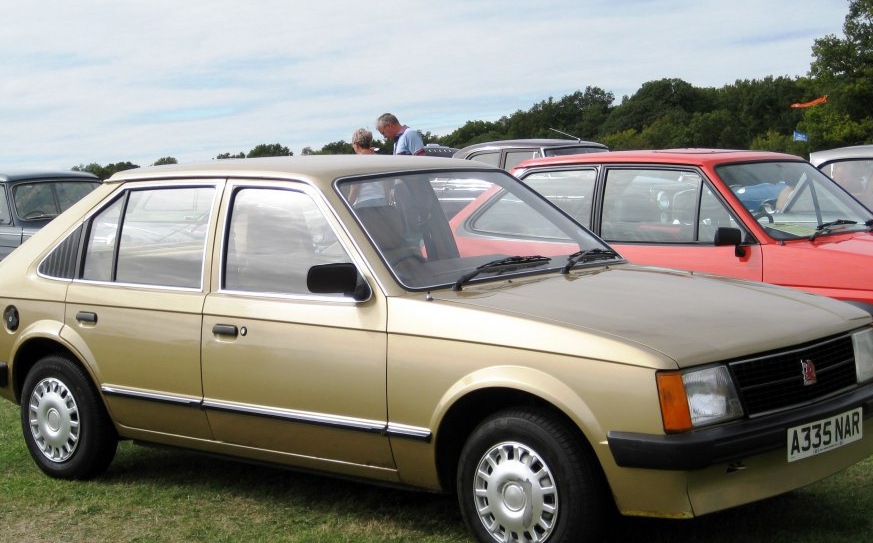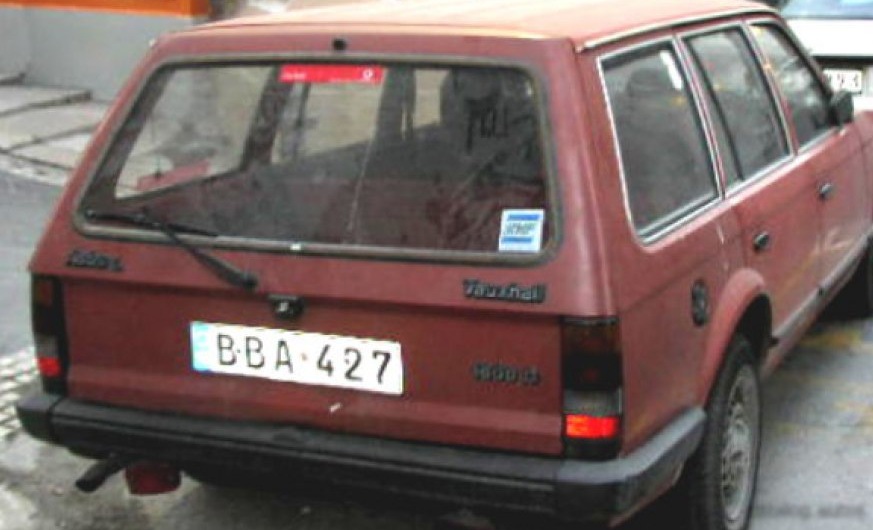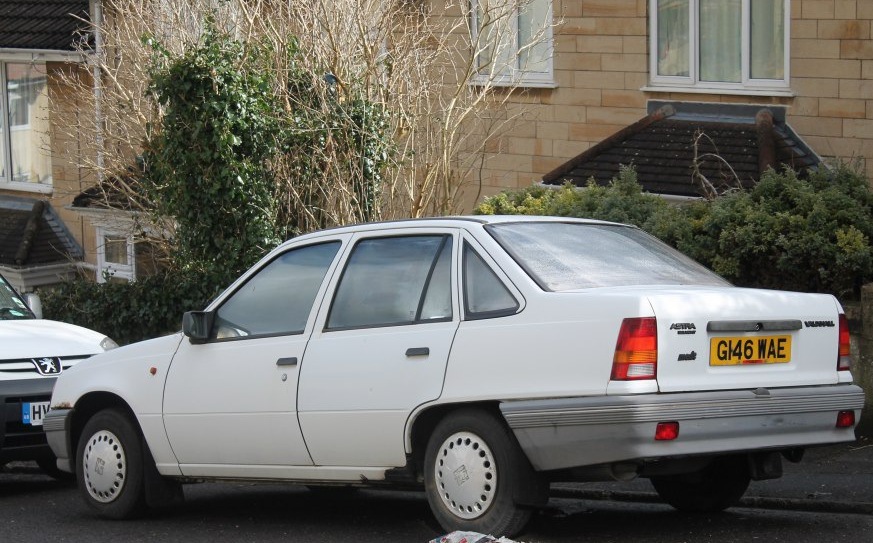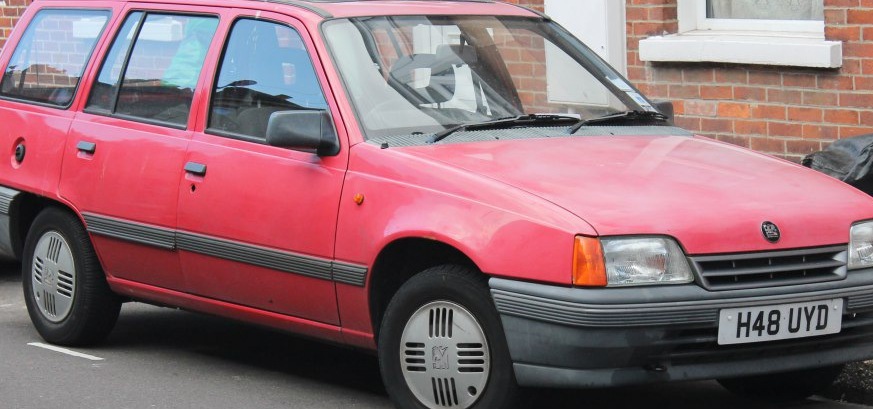
The Vauxhall Astra Mk II Estate 1.6 D, produced between 1984 and 1989, represented a practical and economical offering within the broader Astra Mk II range. Positioned as the entry-level diesel variant of the estate (station wagon) body style, it catered to buyers prioritizing fuel efficiency and load-carrying capacity over outright performance. The Mk II Astra, internally designated as the 4200 series, was a significant model for Vauxhall, building upon the success of the original Astra (Mk I) and establishing a strong presence in the competitive European small family car segment. This particular 1.6 D model, with its modest 54 horsepower, was aimed at fleet buyers, families needing a workhorse vehicle, and those covering high annual mileages.
Technical Specifications
| Brand | Vauxhall |
| Model | Astra |
| Generation | Astra Mk II Estate |
| Type (Engine) | 1.6 D (54 Hp) |
| Start of production | 1984 |
| End of production | 1989 |
| Powertrain Architecture | Internal Combustion engine |
| Body type | Station wagon (estate) |
| Seats | 5 |
| Doors | 5 |
| Fuel Type | Diesel |
| Acceleration 0 – 100 km/h | 21 sec |
| Acceleration 0 – 62 mph | 21 sec |
| Acceleration 0 – 60 mph | 20 sec |
| Maximum speed | 147 km/h (91.34 mph) |
| Weight-to-power ratio | 18.7 kg/Hp, 53.5 Hp/tonne |
| Weight-to-torque ratio | 10.5 kg/Nm, 95 Nm/tonne |
| Power | 54 Hp |
| Power per litre | 33.8 Hp/l |
| Torque | 96 Nm @ 2400 rpm (70.81 lb.-ft. @ 2400 rpm) |
| Engine layout | Front, Transverse |
| Engine Model/Code | 16D, 16DA |
| Engine displacement | 1598 cm3 (97.52 cu. in.) |
| Fuel injection system | Precombustion chamber injection |
| Engine aspiration | Naturally aspirated engine |
| Engine oil capacity | 3.8 l (4.02 US qt | 3.34 UK qt) |
| Coolant | 7.7 l (8.14 US qt | 6.78 UK qt) |
| Kerb Weight | 1010 kg (2226.67 lbs.) |
| Trunk (boot) space – minimum | 470 l (16.6 cu. ft.) |
| Trunk (boot) space – maximum | 1520 l (53.68 cu. ft.) |
| Fuel tank capacity | 50 l (13.21 US gal | 11 UK gal) |
| Length | 4228 mm (166.46 in.) |
| Width | 1666 mm (65.59 in.) |
| Height | 1430 mm (56.3 in.) |
| Wheelbase | 2520 mm (99.21 in.) |
| Front track | 1400 mm (55.12 in.) |
| Rear (Back) track | 1405 mm (55.31 in.) |
| Drag coefficient (Cd) | 0.35 |
| Drivetrain Architecture | The Internal combustion engine (ICE) drives the front wheels of the vehicle. |
| Drive wheel | Front wheel drive |
| Number of gears and type of gearbox | 4 gears, manual transmission |
Powertrain & Engine Architecture
The heart of the Astra Mk II Estate 1.6 D was the 16D (and later 16DA) diesel engine. This 1.6-liter, four-cylinder unit employed indirect injection via precombustion chambers – a common technology for diesel engines of the era. This system involved injecting fuel into a small chamber connected to the main cylinder, where it was partially combusted before igniting the main charge. This design aided in smoother combustion and reduced engine noise, although it generally resulted in lower power output compared to direct injection systems. The engine featured a naturally aspirated configuration, meaning it did not utilize a turbocharger or supercharger. The 16D produced 54 horsepower and 96 Nm (70.81 lb-ft) of torque at 2400 rpm. The engine was transversely mounted, driving the front wheels. The four-speed manual transmission was the only gearbox option available with this engine.
Driving Characteristics
The 1.6 D-powered Astra Estate was not known for its speed. Acceleration was leisurely, taking approximately 21 seconds to reach 62 mph (100 km/h). The engine’s strength lay in its torque delivery, providing reasonable pulling power for everyday driving and load-carrying. The four-speed gearbox, while simple and robust, had relatively widely spaced gear ratios, requiring frequent shifting to maintain optimal engine speed. Compared to the petrol-powered Astra variants, the 1.6 D offered significantly better fuel economy, but at the expense of performance. The manual transmission allowed for greater driver control, but the engine’s limited power meant that spirited driving was not its forte. It was a vehicle designed for practicality and economy, not excitement.
Equipment & Trim Levels
The 1.6 D Estate typically represented the base trim level within the Astra Estate range. Standard equipment was relatively sparse, focusing on essential features. Interior upholstery was typically a durable cloth material, often in a plain pattern. The dashboard layout was functional, with basic instrumentation including a speedometer, fuel gauge, and temperature gauge. Power steering and central locking were generally not standard features on this trim level, although they could be specified as optional extras. Other optional equipment included a radio/cassette player and upgraded interior trim.
Chassis & Braking
The Astra Mk II Estate utilized a MacPherson strut front suspension and a twist-beam rear suspension. The 1.6 D variant, due to its lower weight compared to some of the higher-spec models, generally featured a slightly softer suspension setup, prioritizing ride comfort over handling precision. Braking was typically accomplished with disc brakes on the front wheels and drum brakes on the rear. The braking system was adequate for the vehicle’s performance capabilities, but lacked the stopping power of more modern systems. Stabilizer bars were fitted to both the front and rear axles, helping to reduce body roll during cornering.
Market Reception & Comparison
The Astra Mk II Estate 1.6 D was generally well-received as a practical and economical workhorse. Critics acknowledged its fuel efficiency and spacious load-carrying capacity, but noted its lack of performance. Compared to the petrol-engined Astra Estates, the 1.6 D offered significantly better fuel economy, making it a popular choice for fleet operators and high-mileage drivers. However, the petrol variants provided a more refined driving experience and superior acceleration. Against competitors like the Ford Escort Estate and the Volkswagen Golf Estate, the Astra Estate 1.6 D offered a competitive package in terms of price and practicality.
Legacy
The 16D engine, while not renowned for its longevity or refinement, proved to be reasonably durable with proper maintenance. Today, surviving examples of the Astra Mk II Estate 1.6 D are relatively rare, and are often sought after by enthusiasts looking for a classic, affordable, and practical vehicle. Parts availability can be a challenge, but many components are still available through specialist suppliers. The 1.6 D powertrain, while slow by modern standards, represents a significant piece of automotive history, showcasing the technology and engineering of the 1980s. Its enduring appeal lies in its simplicity, robustness, and the nostalgic charm of a bygone era.